Mobile Home Curb Appeal Makeovers That Turn Heads From the Street
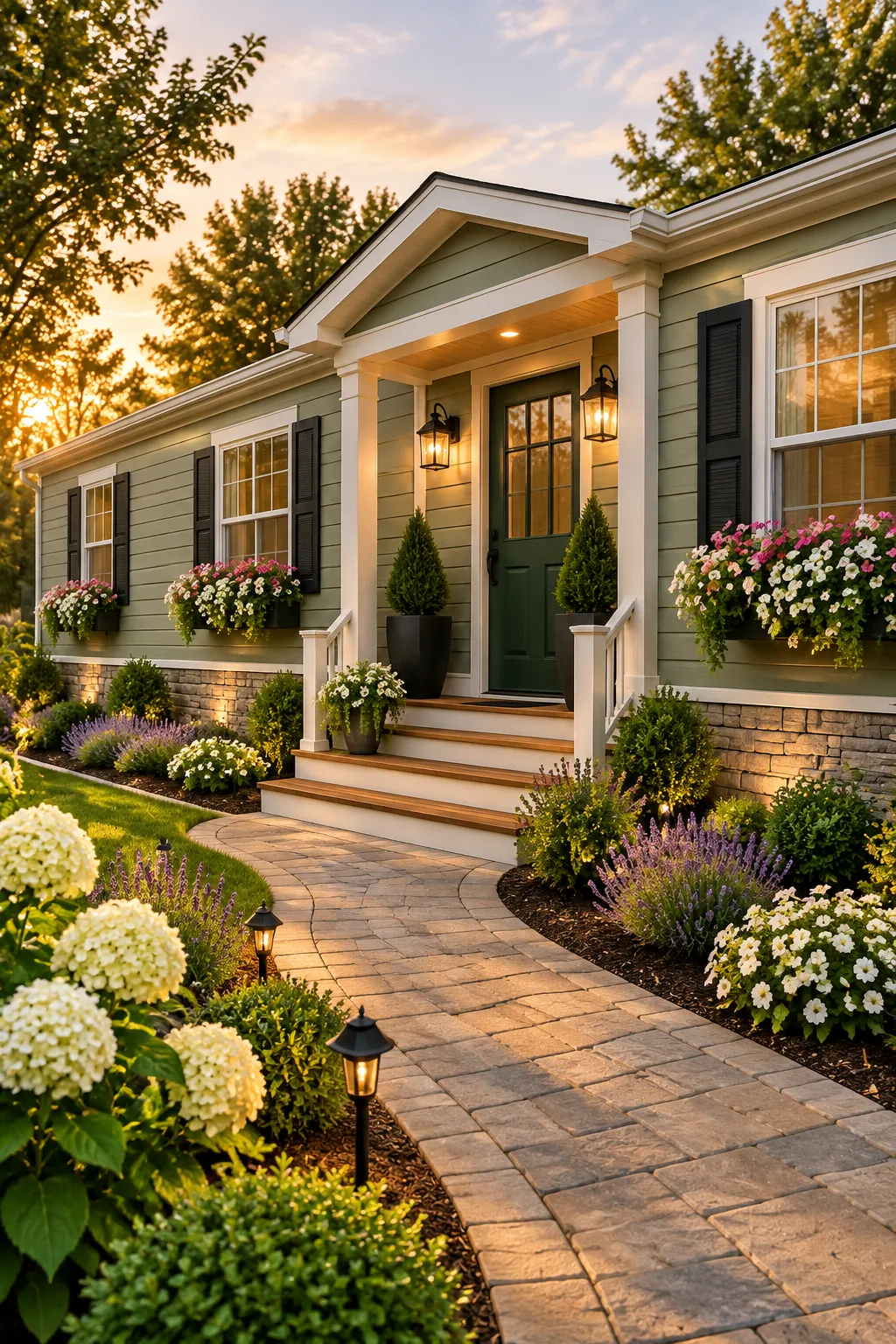

Drive through any mobile home community and you’ll spot it right away: the one house everyone slows down for. It’s rarely the biggest or the newest. It’s the one with a real porch, a front door with some color, and flowers spilling out of every box and bed. Here are fifteen makeovers that give your home that same pull from the street, starting with the ones people notice first.
Stone Skirting That Makes It Look Built to Stay
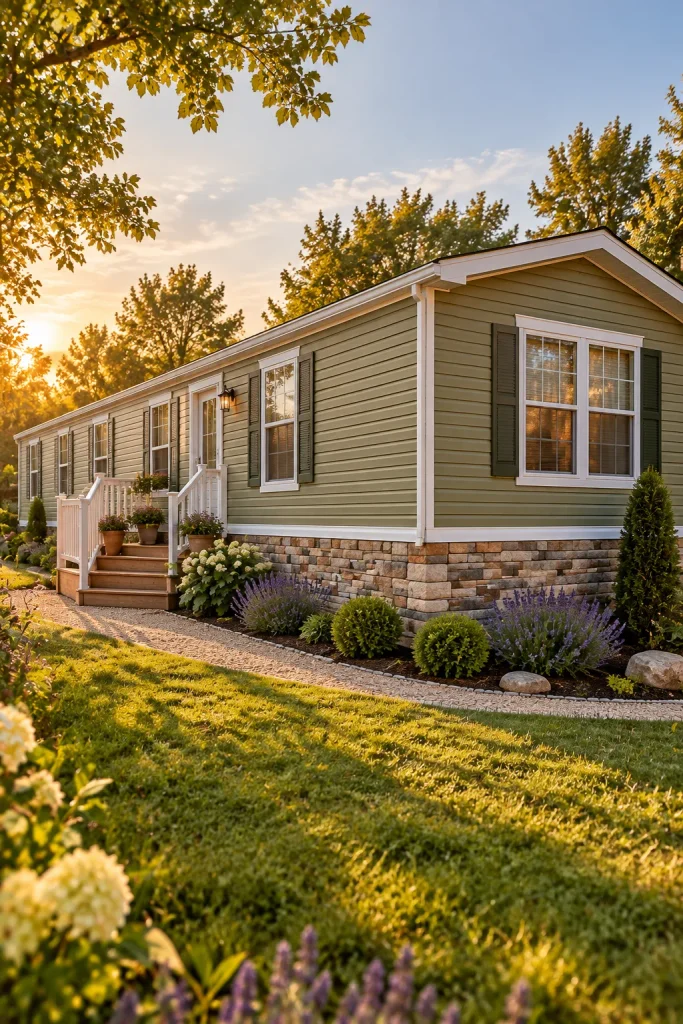
Skirting is the first thing to fix, and most people save it for last. Thin vinyl panels with a gap at the bottom make even a freshly painted home look temporary. Faux stone panels in a stacked ledgestone pattern change that from the ground up. The house reads as if it’s sitting on a proper foundation, which is exactly the look you want.
Look for stone with a blend of warm gray, sand, and a hint of rust so it plays nicely with your siding and your plants. Wrap it around the sides too, because people see those from the road more than you’d expect. A narrow bed of lavender along the base softens the stone and smells amazing on a warm afternoon.
Go Dark With Charcoal Siding and Cedar
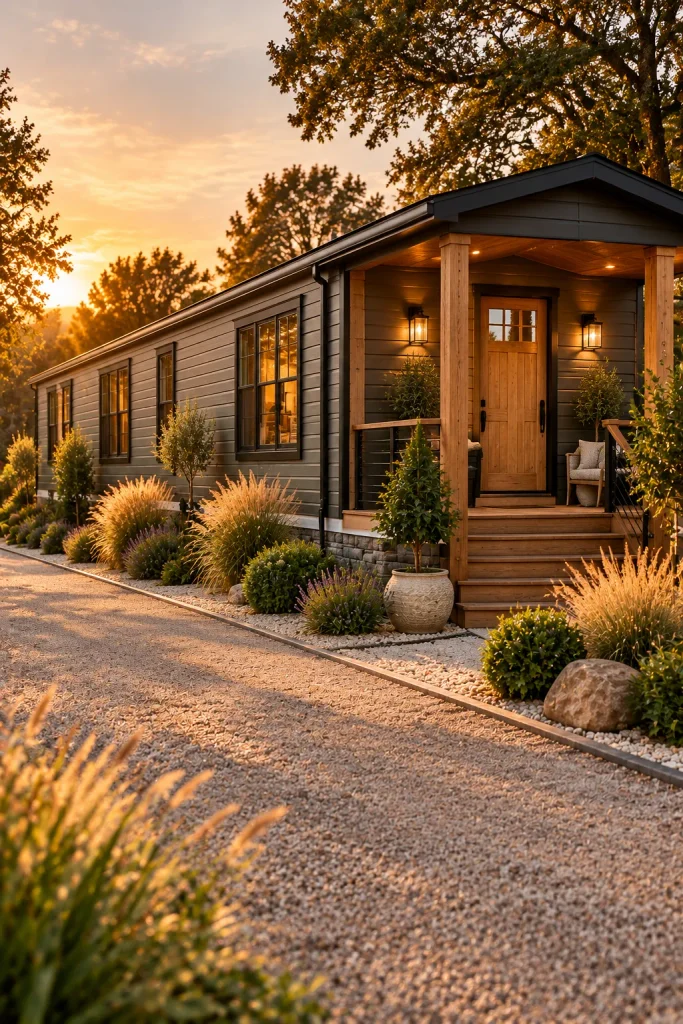
If you want the kind of home people photograph from their car window, paint it charcoal. Deep, almost-black siding with black window frames looks sleek and a little mysterious, especially on a long, low mobile home. The secret is warmth. Bring in natural cedar on the front door, the porch posts, or a slatted panel beside the entry so the dark color feels cozy rather than cold. Tall ornamental grasses in front catch the light and sway in the breeze, which keeps the look soft. Not ready for charcoal? A warm greige with black trim gives you the same crisp contrast in a lighter key.
Add a Gable Porch Roof and Watch the Shape Change
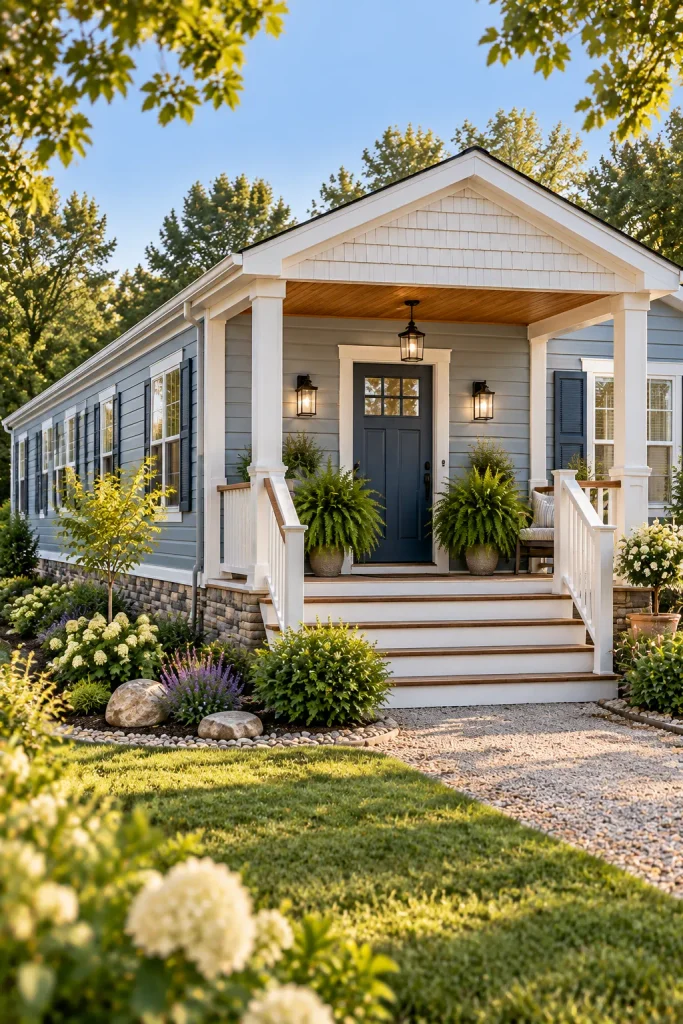
The long, flat roofline is what makes a mobile home look like a mobile home. Break it with a small covered porch topped by a pitched gable, and the whole outline shifts. From the street, it starts to read as a little cottage.
Size is everything here. The gable should frame the front door, not swallow the front of the house, so keep it roughly as wide as your steps plus a little breathing room. Fill the triangle with shake shingles or board and batten in the trim color. Two chunky square columns finish it off.
This is one of the bigger projects on the list, and it usually needs a contractor. It’s also the one that gets the most double takes. If you only make one structural change, make it this one.
Trade Metal Stairs for Wide Wooden Steps
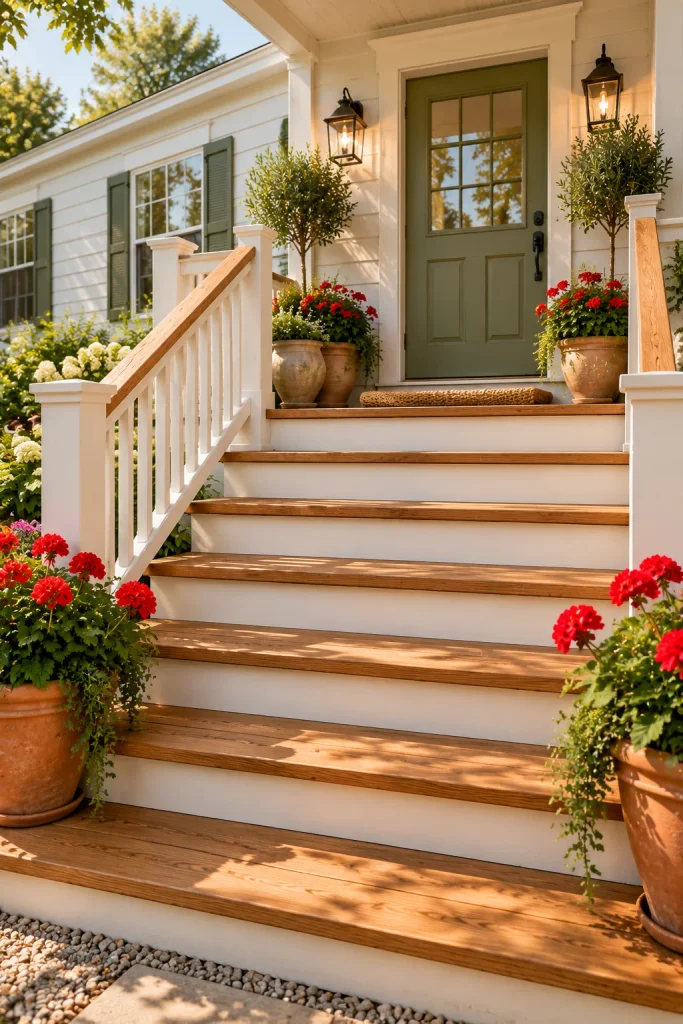
Those narrow metal stairs with a skinny railing are doing your house no favors. Replace them with wide wooden steps, ideally a bit wider than the door, and the entry feels open and generous. Stain them a warm honey tone, paint the risers white, and set a terracotta pot of geraniums on each side of the bottom tread. It’s the kind of change that makes people want to walk up and knock.
Symmetry at the Front Door
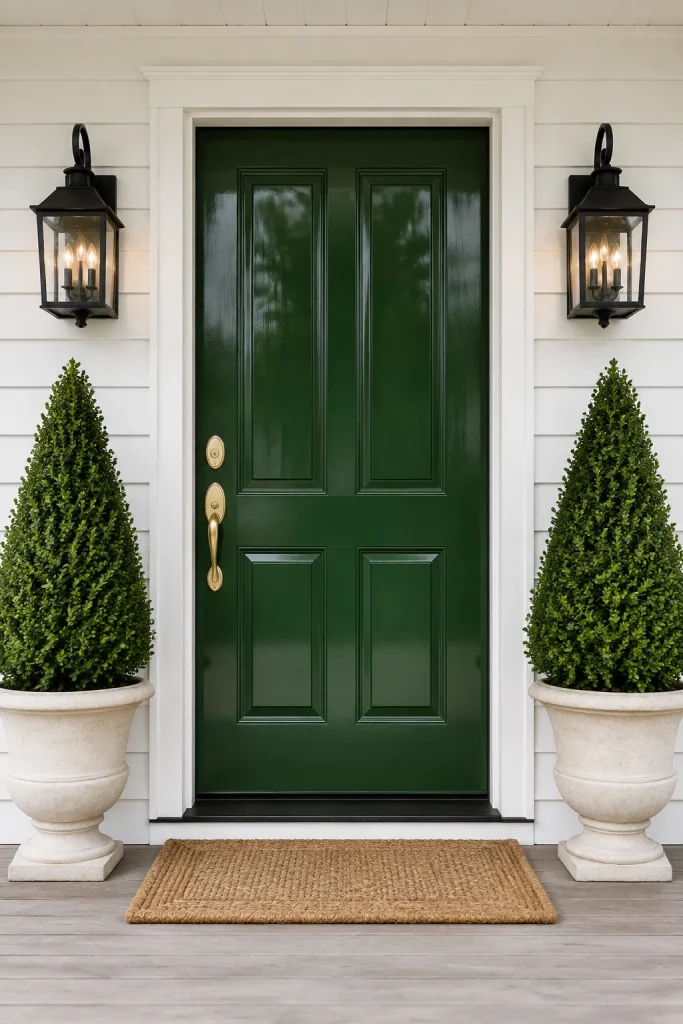
There’s a reason grand old houses lean on symmetry. It’s calming, and it pulls your eye straight to the door. You can borrow the same trick with two matching lantern sconces, two identical planters, and the door right in the middle. Cone-shaped boxwoods look classic, while tall grasses in black fiberglass pots feel more modern. Either way, the balance does the work.
Now give the door itself some nerve. Glossy forest green, inky black, or rich terracotta all look fantastic against pale siding. Swap the builder-grade knob for a brass or matte black handle and step back to admire it.
Window Boxes That Spill Over the Edge
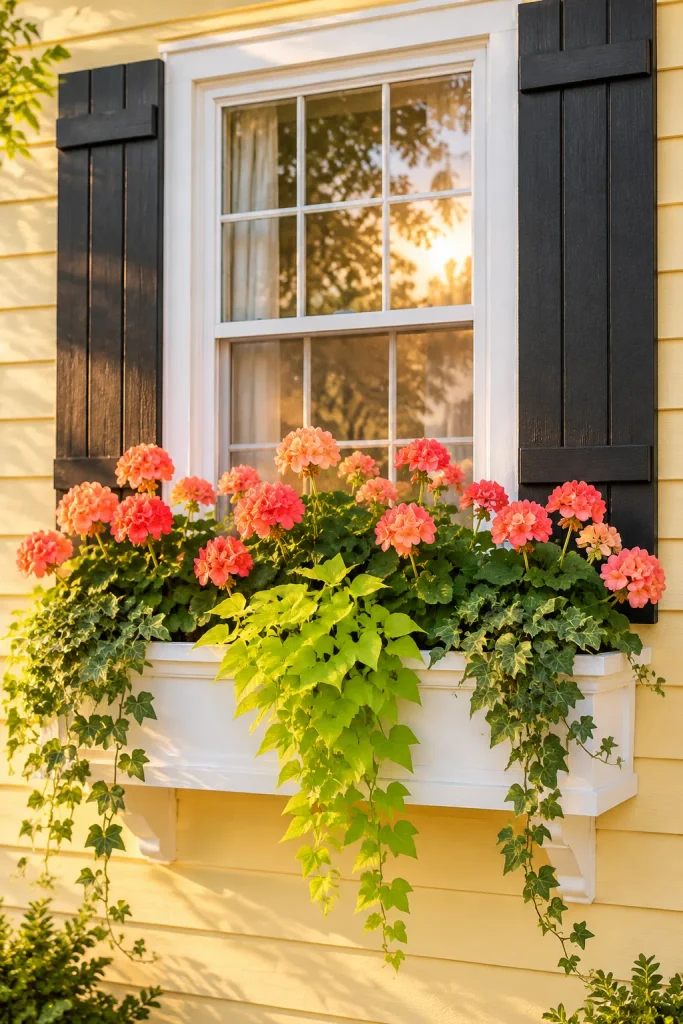
Mobile home windows tend to be small and sit on a long stretch of plain siding. A window box gives each one a frame and a burst of color. It also makes the house look cared for, which is half of curb appeal.
The prettiest boxes mix height with spill. Coral geraniums or begonias stand up in the back, while sweet potato vine and ivy tumble over the front. Paint the boxes the same color as your trim so they look built in. Add simple board-and-batten shutters if you want the full storybook look. Just water often in summer, since boxes dry out faster than beds.
Curved Beds That Soften All Those Straight Lines
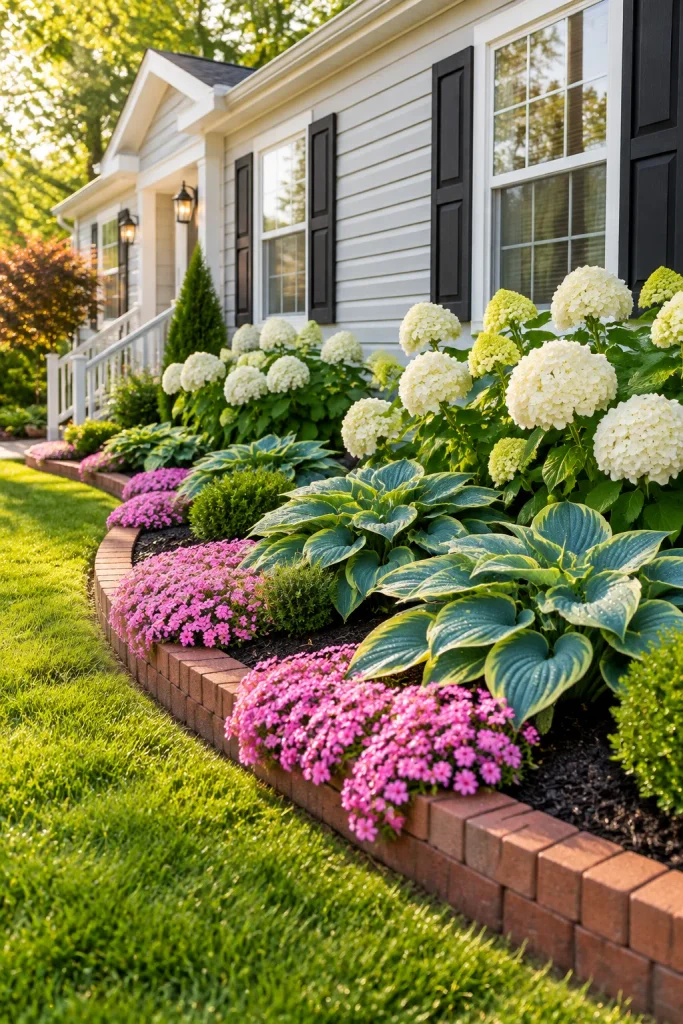
Everything about a mobile home is straight: the roofline, the siding, the long front wall. Curved garden beds are the easiest way to soften all those hard edges. Let the bed swell out wider near the front door and taper toward the corners, like a gentle wave. Plant in layers so it looks full from the road, with white hydrangeas at the back, blue-green hostas in the middle, and pink creeping phlox spilling over the front. Dark mulch makes every color pop. Finish the curve with brick or steel edging so the line stays crisp all season. The effect is relaxed and a little romantic, as if the garden grew up around the house on its own.
Raised Beds Tucked Against the House
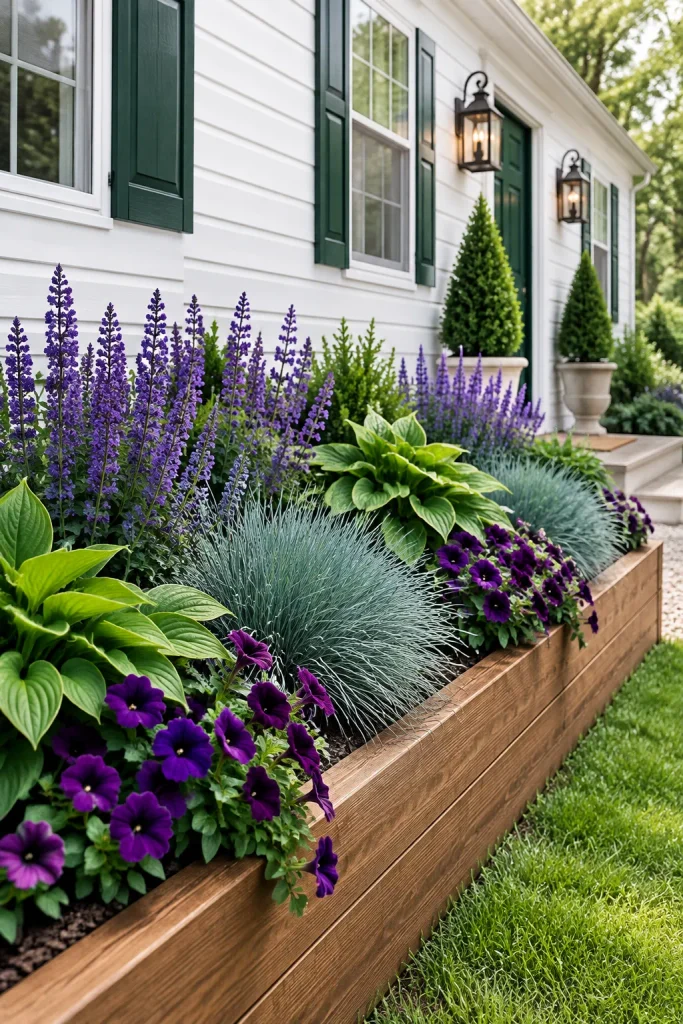
Mobile homes sit low, so the front can feel flat at ground level. Raised beds built right against the house add height and depth where you need it most. They also hide a good chunk of skirting, which is a nice bonus.
Build them from stained timber, stacked stone, or block that matches your porch or skirting. Put taller plants like purple salvia at the back, and set spiky blue fescue next to broad hostas for contrast. A mix of leaf shapes matters more than piling in lots of flower colors.
A Porch That Feels Like Your Favorite Room
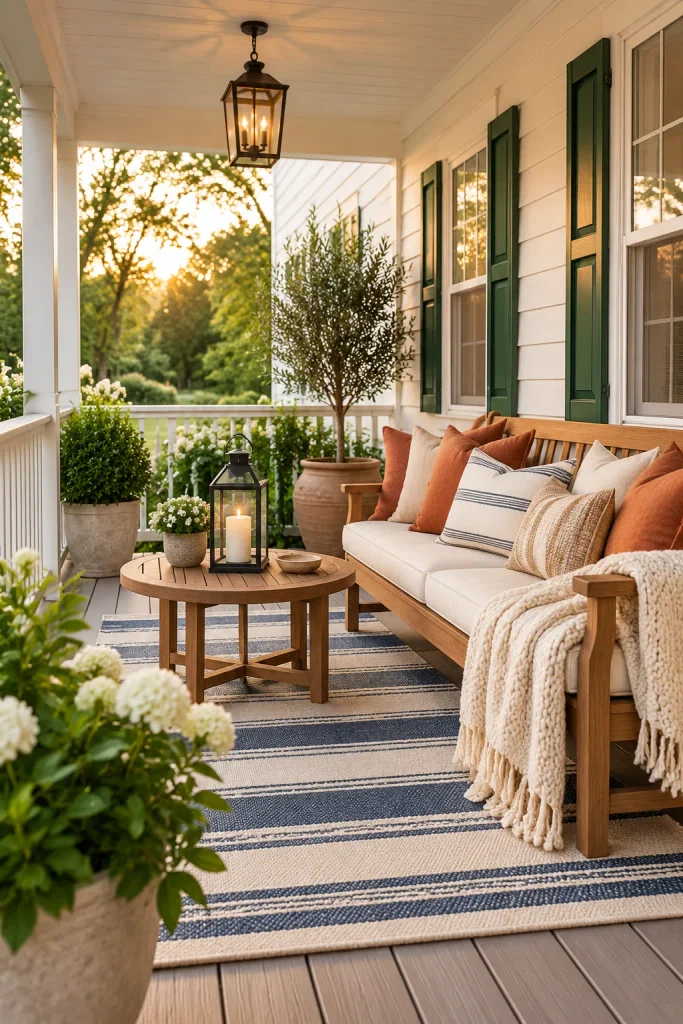
Once you have a porch, treat it like a room instead of a landing. People can tell from the street when a porch actually gets used. A bench piled with cushions, a rug underfoot, and a little table for your coffee send that message fast. It looks inviting even when nobody’s sitting there.
Keep the palette tight, two or three colors at most. Cream linen cushions, a blue-and-white striped rug, and terracotta accents feel easy and coastal. A potted olive tree in the corner adds height and a bit of Mediterranean charm.
Finish with the small things. A black lantern on the table, a throw draped over the arm, maybe a wind chime if you like the sound. These are the details that make the space feel lived in rather than staged. Don’t overcrowd it, though, because you still want room to move.
Layered Lighting for After Dark
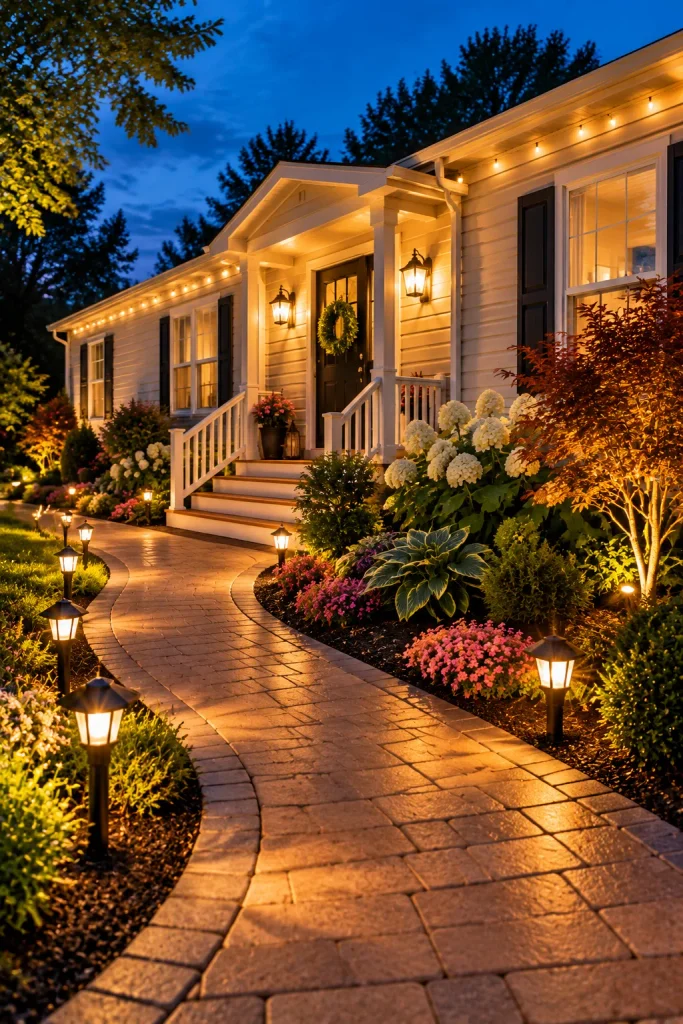
A good-looking house should still look good at 9 p.m. The trick is layering. Path lights guide people up the walk, wall sconces frame the door, and warm string lights along the porch add a soft golden glow. Uplights under a small tree or aimed at stone skirting give the front real depth after dark. Together they make the house feel like it’s waiting for you.
Stick with warm white bulbs, around 2700K. Cool white light looks harsh and makes a home feel like a gas station. Solar path lights are an easy win if you don’t have outdoor outlets. Put the rest on a timer and you’ll never think about them again.
A Cedar Pergola Over the Deck
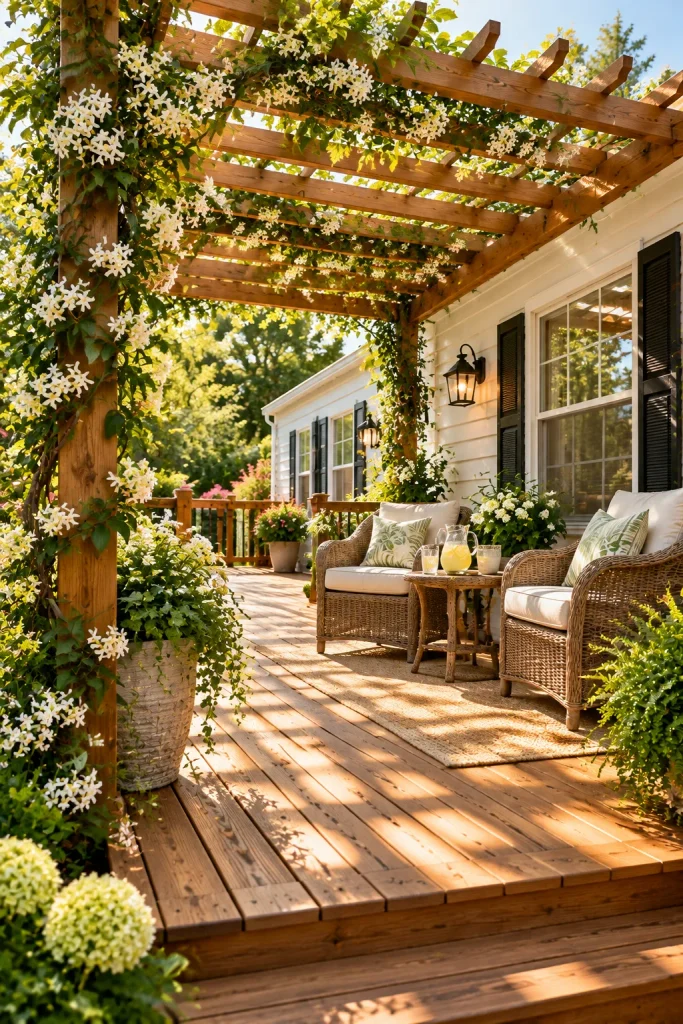
A pergola gives you architecture without adding walls. Set one over a side deck or front patio and the home gains height, shade, and a spot that looks made for summer evenings. Natural cedar weathers to a soft silver over time, while a black-stained frame looks sharp against white or pale siding. Plant jasmine or a climbing rose at one post and let it creep across the beams. In a couple of seasons, it’ll look like part of the original house.
Turn the Blank Side Wall Into a Vertical Garden
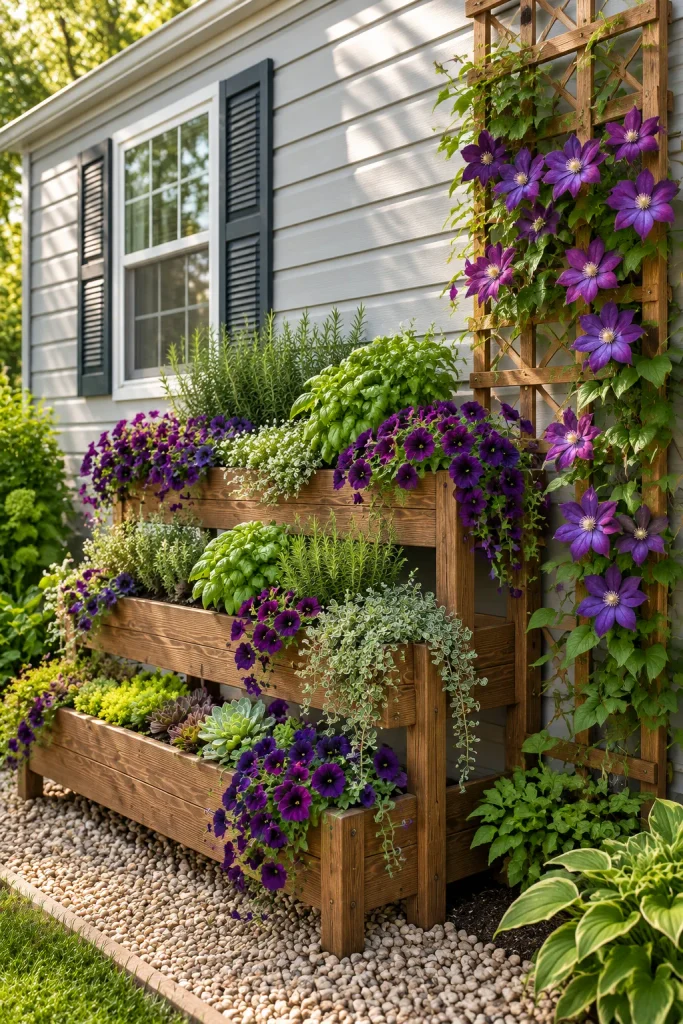
Most mobile homes have at least one long, blank wall that nobody knows what to do with. Turn it into a vertical garden. A tall wooden trellis or a tiered wall planter fills that space with green without eating into your yard. It’s one of the smartest moves you can make on a small lot.
Clematis and star jasmine cover a trellis quickly and flower for weeks. Tiered planters suit herbs, trailing petunias, or succulents if you’d rather not fuss. Either way, the side of the house finally looks finished.
A Clean-Edged Path Straight to the Door
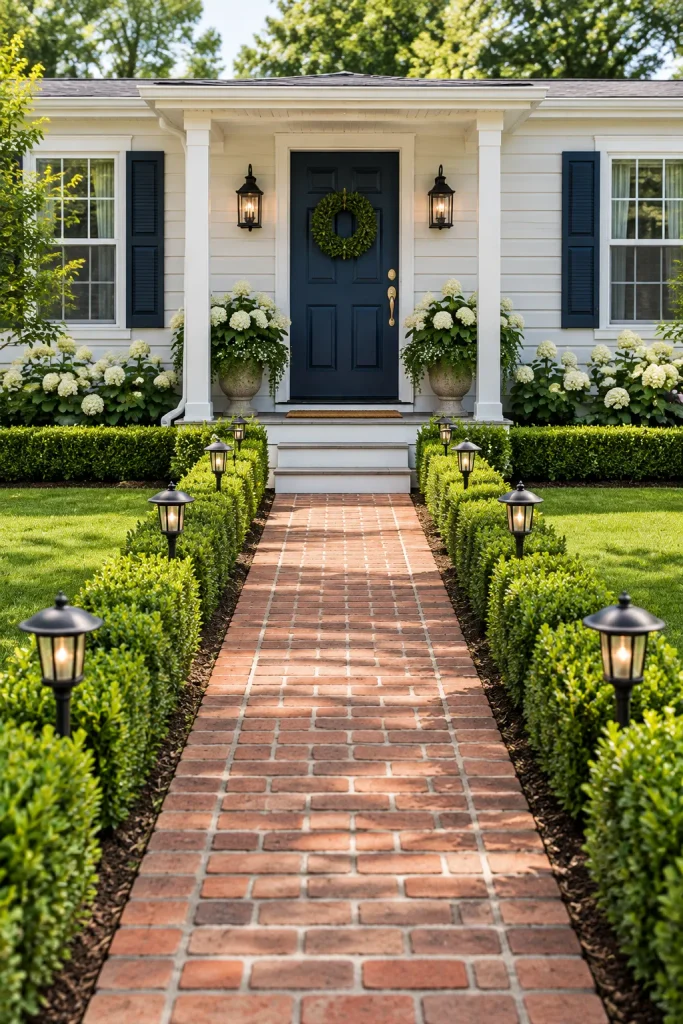
A clear path to the door makes the whole yard feel intentional. Line a brick or stone walk with clipped boxwoods or low stone edging, and your eye follows it right to the entry. Pavers set in pea gravel lean modern and relaxed, while old red brick with hedges on both sides feels classic and a little English. Whichever you pick, keep the edges trimmed sharp, because a messy edge undoes the whole effect.
One Flower Color, Repeated Everywhere
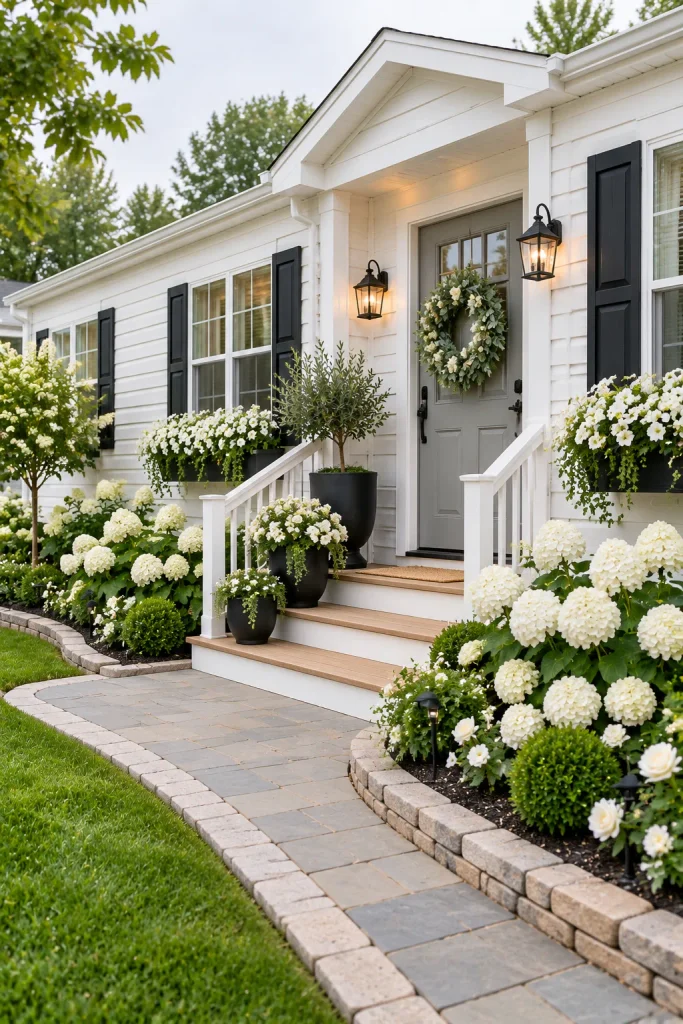
Pick one flower color and repeat it all over the front. White hydrangeas by the steps, white petunias in the window boxes, white roses along the border. That repetition makes the yard look planned, even if you planted it over three summers.
Planters work the same way. Three matching pots in different sizes look far more polished than a mix of whatever was on sale. Hang a eucalyptus wreath on the door in a similar soft tone to tie it together. The result is calm and elegant, and it photographs beautifully.
House Numbers Big Enough to Notice
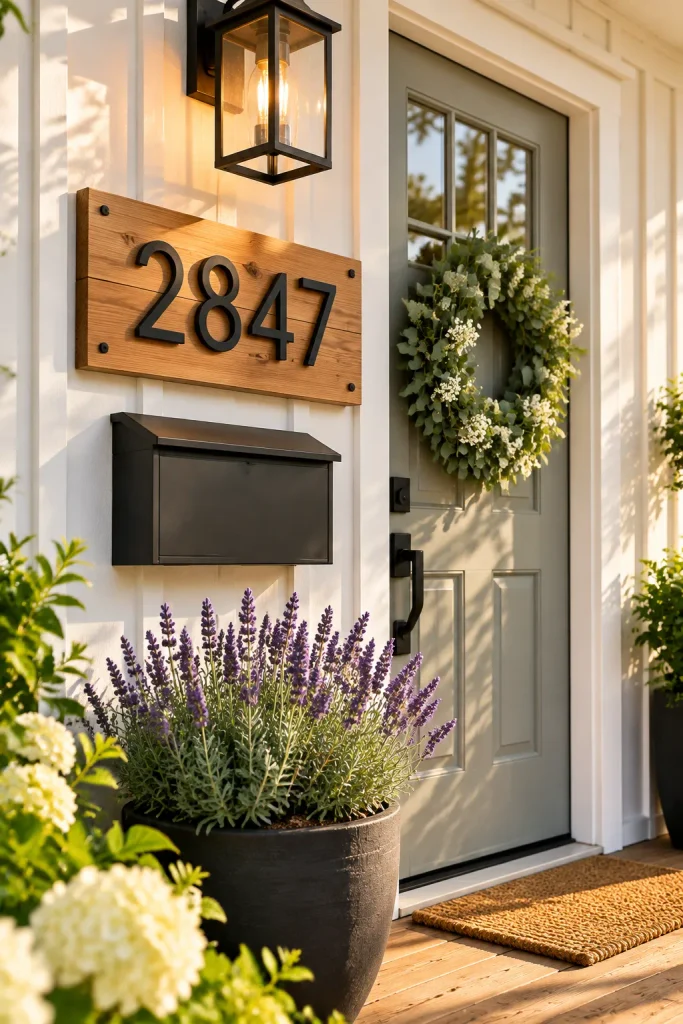
Big, modern house numbers are a small detail that looks surprisingly custom. Mount them on a horizontal cedar plaque beside the door, and pair them with a mailbox in the same matte black or brushed brass finish. Skip the tiny stick-on digits, because this is one of the first places a visitor’s eye lands.