How to Style a Nature-Inspired Table Without a Florist
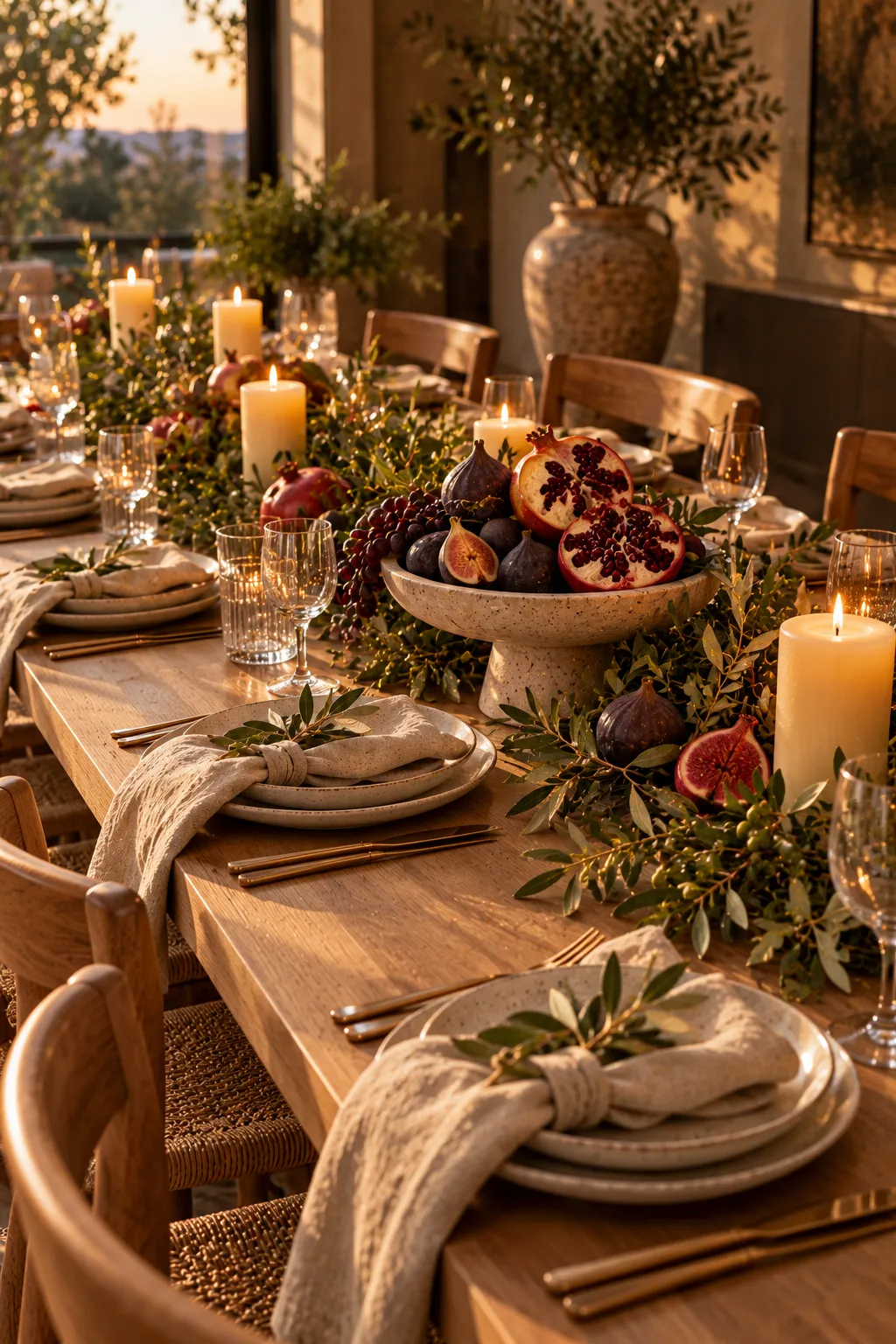

You don’t need a florist to set a table people stop and photograph. Branches, fruit, herbs, and a few garden cuttings can do the job beautifully. A nature-inspired table works best when it feels gathered, not arranged. Here are fifteen modern ideas, each with simple steps so you can actually pull them off.
Let One Sculptural Branch Become the Centerpiece
This is the easiest way to make a table look designed. Find one long branch with real character, like a twisting olive cutting or a lichen-dusted birch limb. Lay it flat down the center of a bare wood table. It reads like modern sculpture, not decor.
Look for a fallen branch about two-thirds the length of your table. Brush off loose bark outside, then wipe it with a dry cloth. Add a few low glass votives along its length for evening dinners. Keep plates white and glasses clear so the branch stays the star.
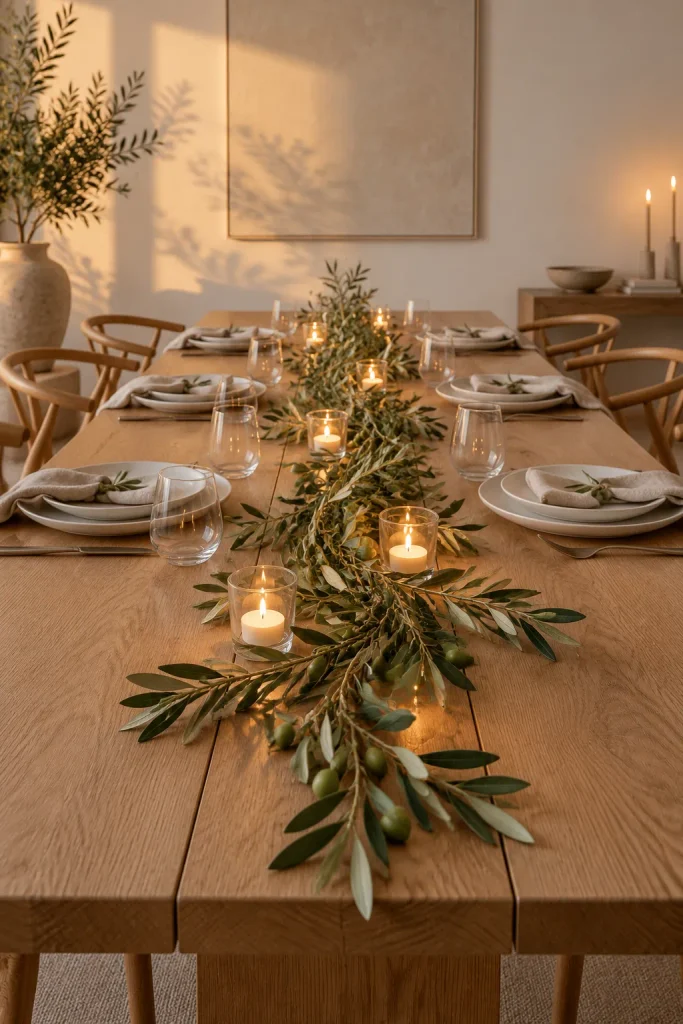
Turn Seasonal Fruit into a Modern Still Life
A pedestal of fruit looks rich, artistic, and completely current. Think of an old Dutch painting, only cleaner. Right now, pomegranates, figs, deep red pears, and dark grapes are perfect.
Start with a low stone or ceramic cake stand. Place the biggest fruit first, then fill the gaps with smaller pieces. Split a pomegranate or two to show the seeds. Let grapes spill over one side, and keep stems and leaves on wherever you can.
Nothing goes to waste here, because the whole centerpiece becomes dessert. In winter, switch to leafy citrus. In summer, try peaches and cherries.
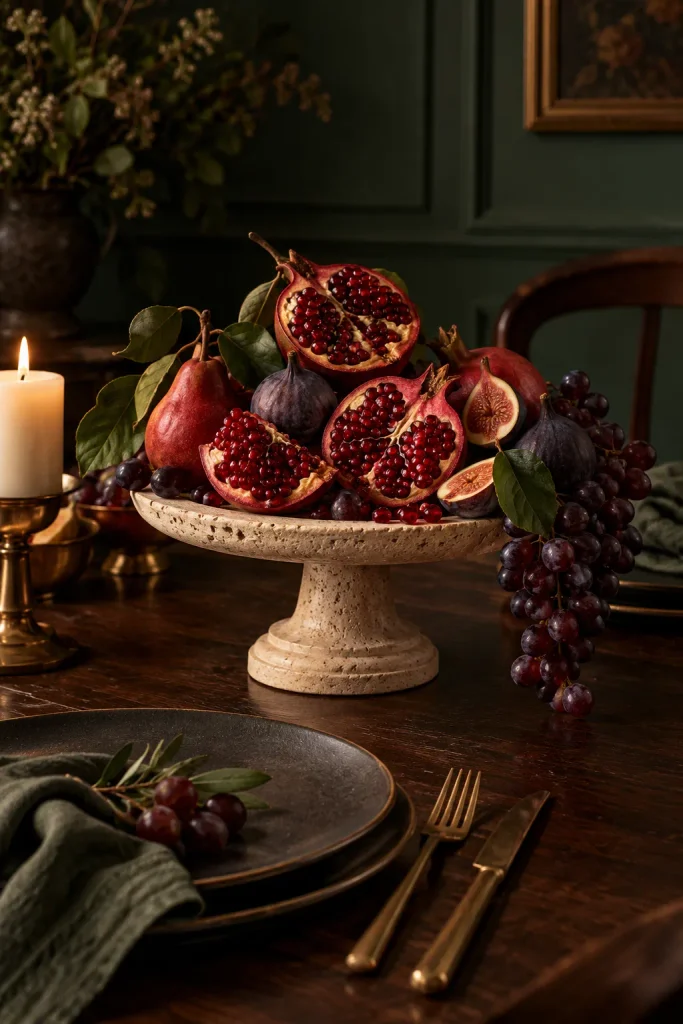
Build a Woodland Forest-Floor Table
This idea brings the quiet of a forest walk to your dinner table. Bark, moss, and mushrooms create a moody, earthy landscape that feels very on trend. It looks especially good with black or dark stoneware dishes.
Use a long live-edge wooden slab or a few wood rounds as your base. Press sheet moss into soft mounds across it, leaving some wood showing. Add clusters of fresh oyster or king trumpet mushrooms from the grocery store, a few small pinecones, and two or three chunky candles. Mist the moss an hour before guests arrive so it looks fresh.
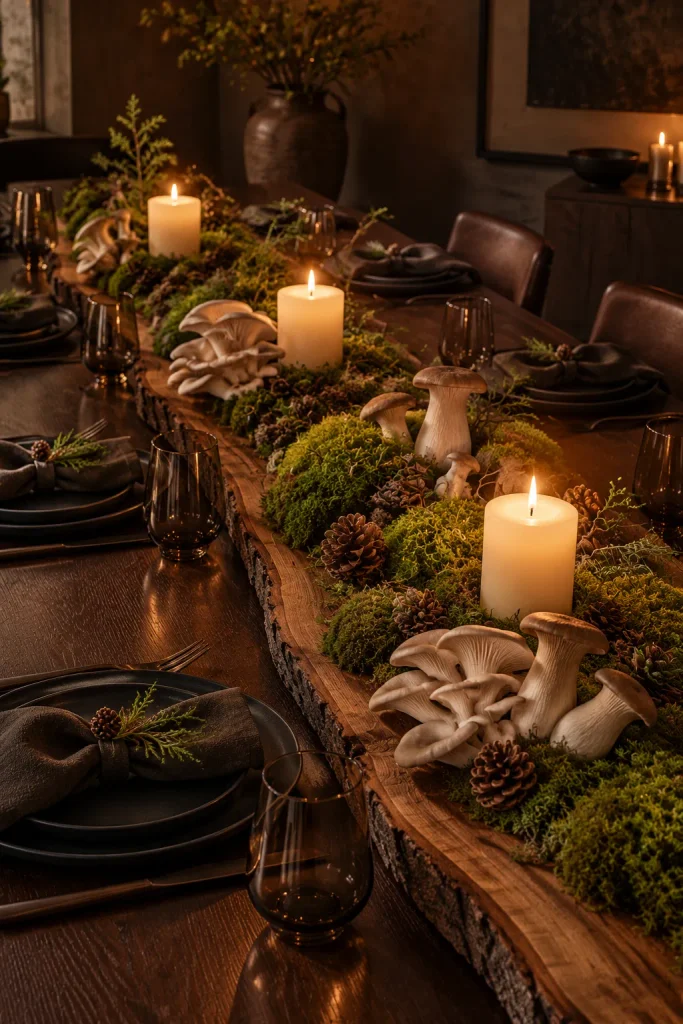
Give Every Stem Its Own Bud Vase
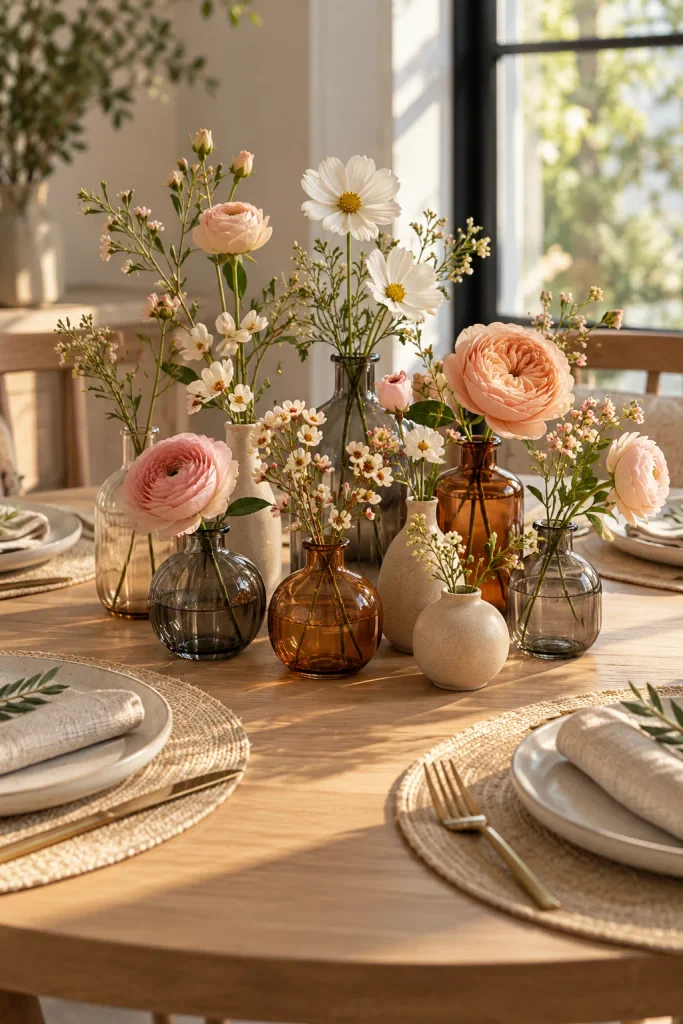
One bunch of supermarket flowers can dress a whole table if you stop trying to arrange it. Give each stem its own little vase instead. The result looks airy, curated, and far more expensive than it was.
Pull the bouquet apart and trim each stem to a different height. Place them in seven to nine small bud vases. Mix smoked grey glass, amber glass, and matte ceramic for a modern, collected look. Cluster them in the center, or scatter small groups down a long table.
Plant a Living Herb Garden Down the Middle
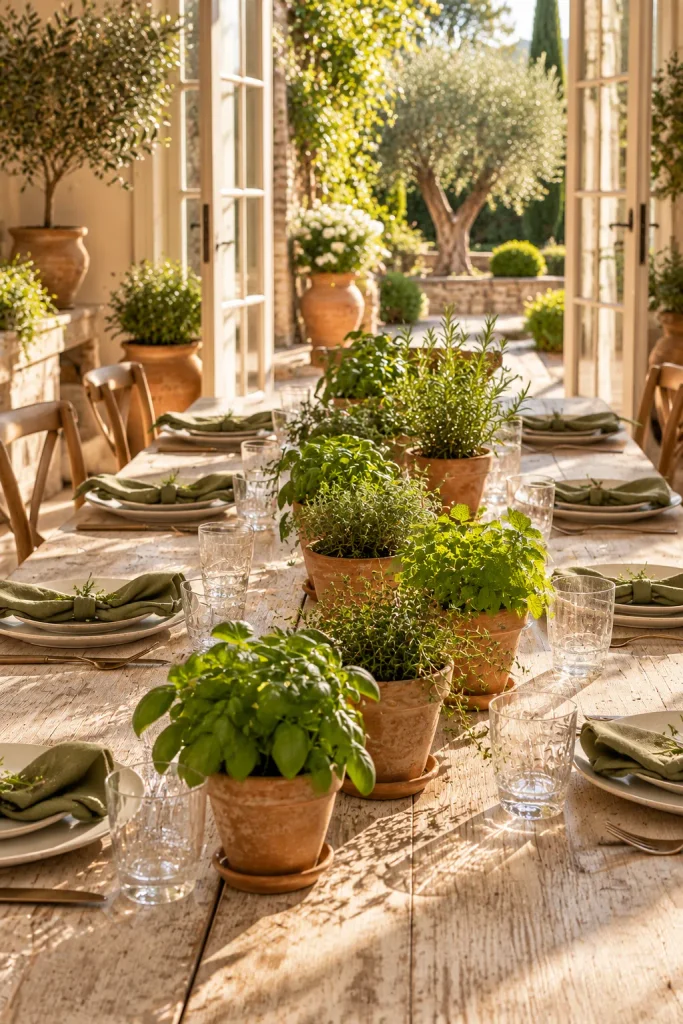
Why cut herbs when you can bring the whole plant to the table? A row of potted basil, thyme, rosemary, and lemon balm looks fresh and smells wonderful. Guests can’t resist touching the leaves.
Buy small potted herbs from the grocery store or a garden center. Move them into matching terracotta or unglazed clay pots. Line them up in a straight row or a relaxed zigzag. At the end of the night, send each guest home with one.
Style Dried Grasses in Sculptural Ceramics
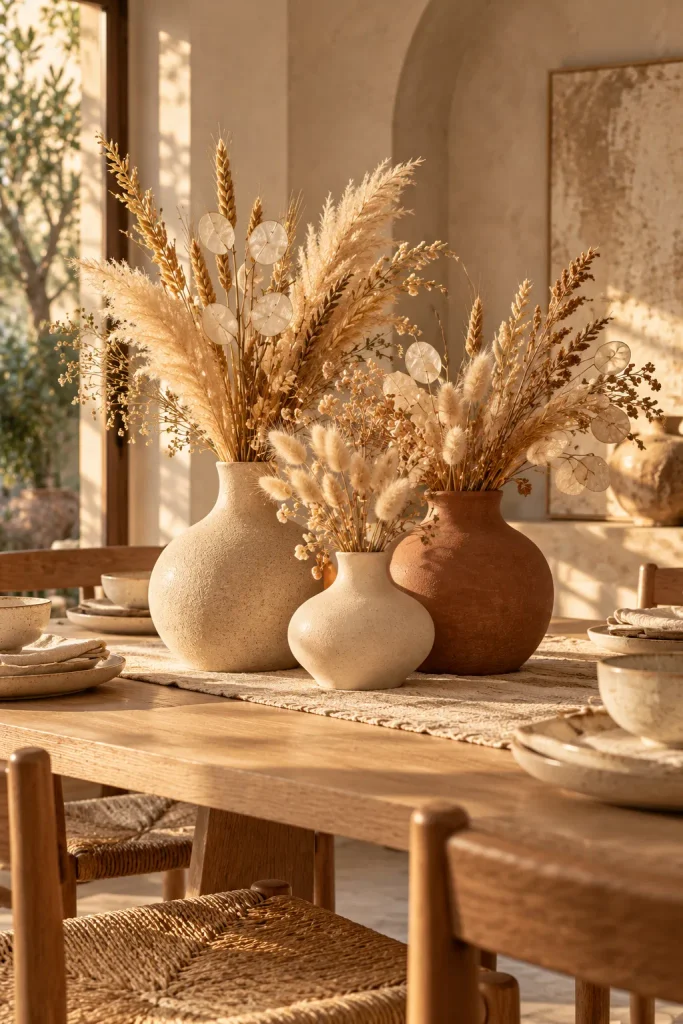
Dried stems have gone fully modern. Paired with curvy ceramics, they look like something from a design gallery. They also last for months, so your table stays styled long after the party.
Choose two or three organic-shaped vases in sand, bone, or clay tones. Fill them with bunny tails, wheat, lunaria, and a few soft pampas plumes. Keep everything in one tonal family so the shapes stand out. Cut the stems short enough that guests can still see each other.
Float Flowers in a Long Glass Trough
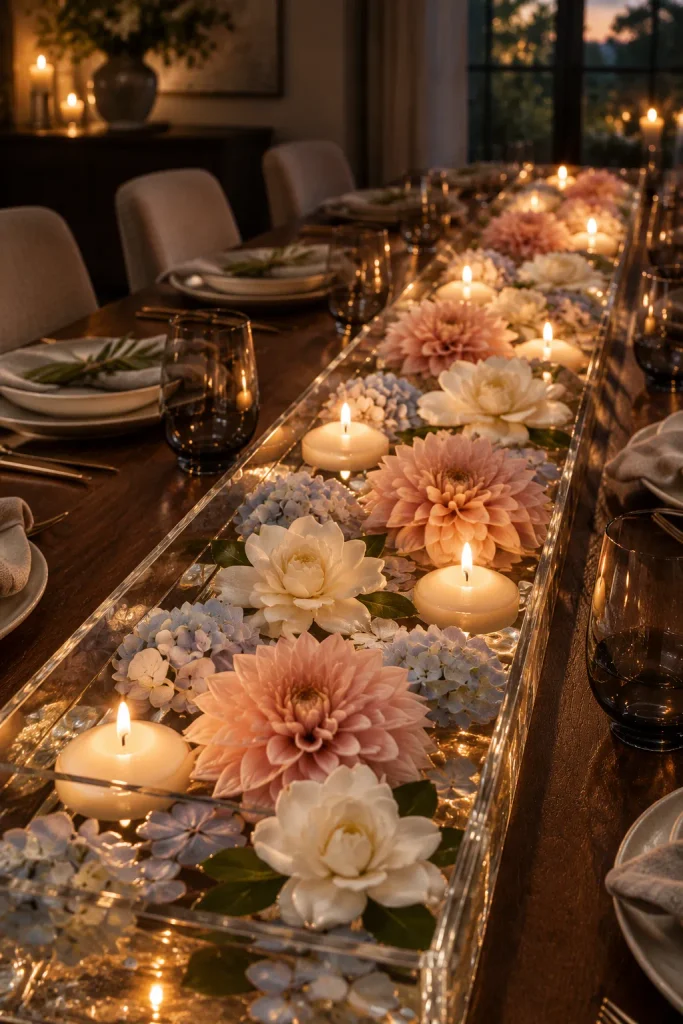
Floating flowers feel calm, elegant, and a little magical. A long glass trough instead of a round bowl makes the idea feel fresh and modern. It also stays low, so nobody has to talk around it.
Fill a long, shallow glass or ceramic tray with water. Cut the flower heads short, leaving about an inch of stem. Gardenias, dahlias, camellias, and hydrangea florets all float well. Add a few floating candles between them just before guests sit down. This is also a smart way to save blooms with drooping stems.
Use Farmers’ Market Vegetables Like Flowers
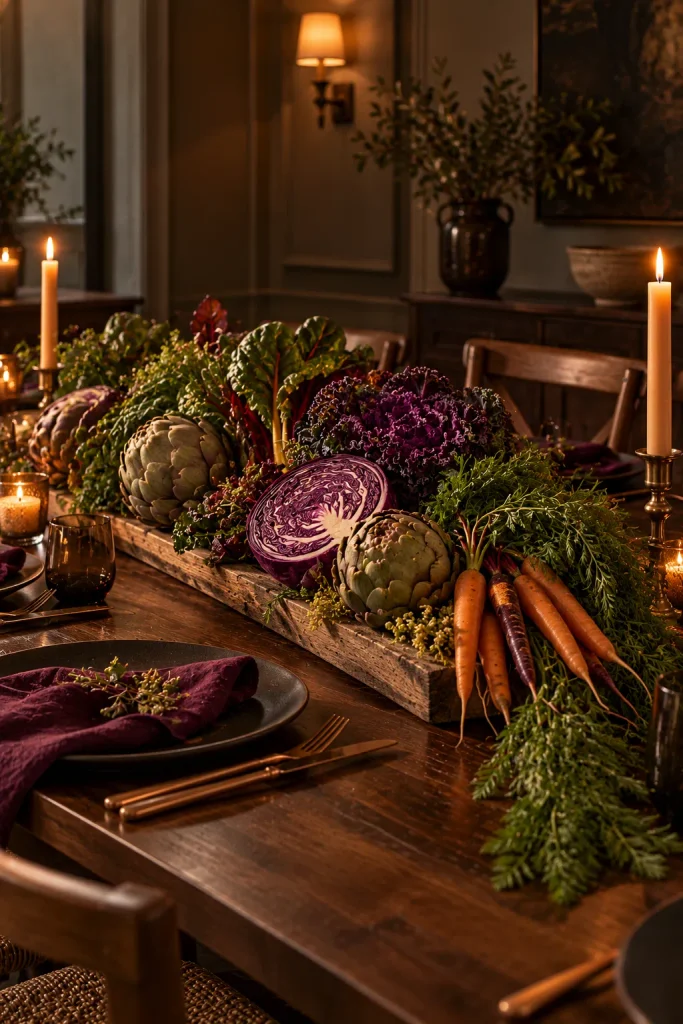
Some vegetables are just as beautiful as blooms. Artichokes, purple cabbage, ornamental kale, and rainbow chard bring deep plum and dusty green tones to the table. The look is rich, moody, and made for harvest dinners.
Lay a long wooden board down the center. Group the larger pieces first, then fill in with smaller ones. Slice one cabbage in half to show the swirl inside. Let a few carrot tops trail over the edge for movement. Afterward, everything goes straight to the kitchen.
Gather a Wild Meadow from Your Backyard
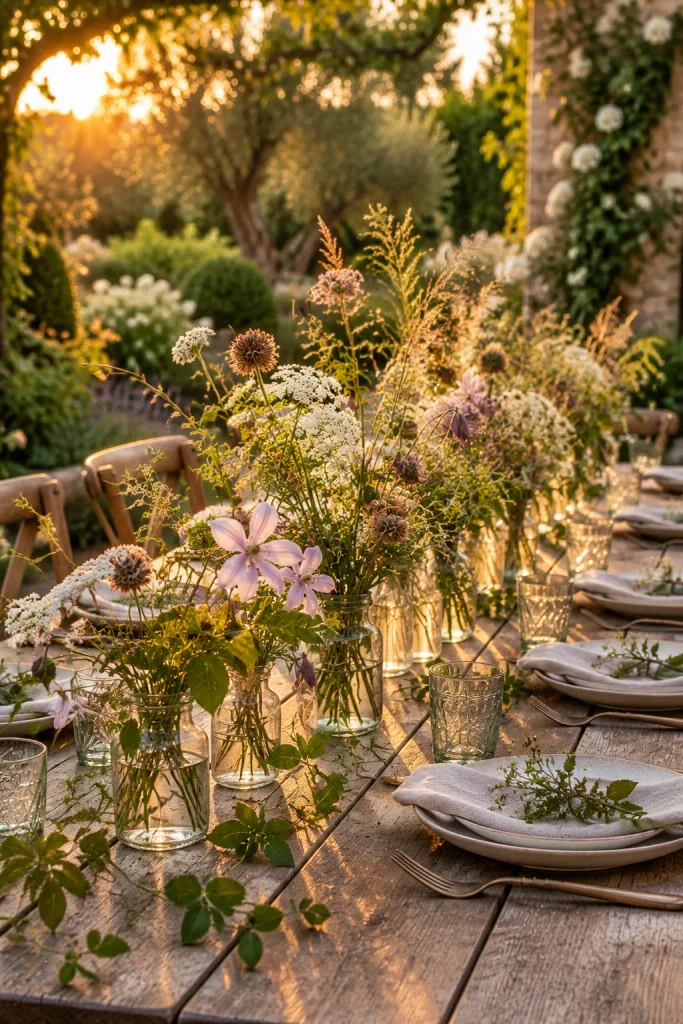
This one is for anyone who loves a just-picked look. You simply cut what’s growing outside and let it stay loose. The less you fuss, the better it looks.
Walk your garden early in the morning, when stems are full of water. Cut grasses, ferns, seed heads, Queen Anne’s lace, and wild clematis. Stand them in a bucket of cool water for a few hours. Then drop them into a row of mismatched jam jars without shaping them. Only cut where you have permission, and shake each stem outside to remove bugs.
Hang Greenery Above the Table
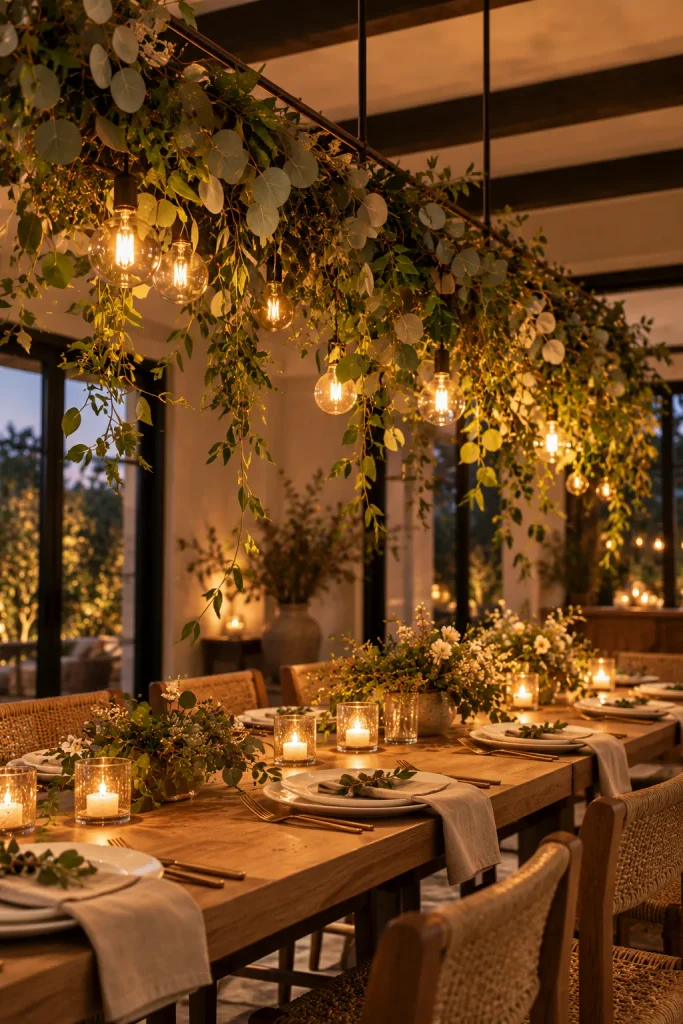
Most nature-inspired table ideas stay on the tabletop. This one looks up instead. A garland overhead frames the whole dining area and leaves plenty of room for food.
Buy two or three bunches of eucalyptus or smilax. Tie the stems together with florist wire to make one loose garland. Hang it from your pendant light, or from a slim rod suspended with clear fishing line. If the leaves sit close to bulbs, switch to cool-running LEDs. At night, the light glowing through the leaves feels like dining under a garden pergola.
Let Natural Materials Do All the Work
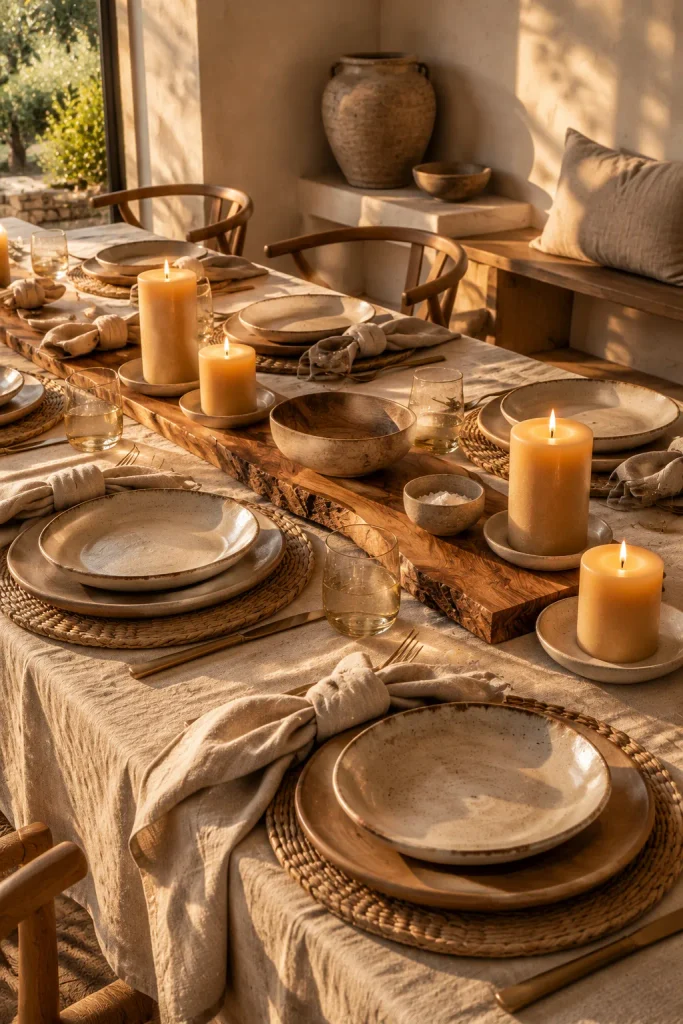
Sometimes the most striking nature-inspired table has no plants on it at all. Nature shows up through texture instead. Think rough linen, raw wood, clay, and beeswax.
Start with a washed linen tablecloth in oatmeal or clay. Add round wooden chargers and handmade stoneware with uneven rims. Place a chunky wooden board in the center with three or four beeswax pillar candles. That’s the whole recipe, and it works in every season.
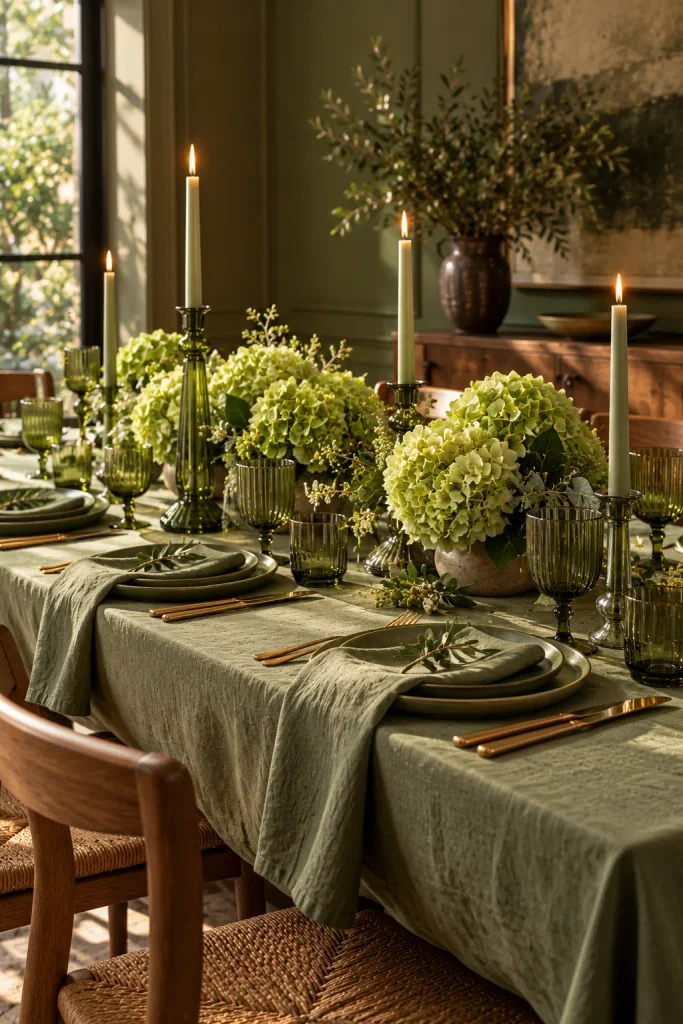
Go All In on a Tonal Green Table
Color-drenching is one of the biggest interior trends right now, and it works beautifully on a table. Instead of adding a few green plants, you make the whole table green. It’s bold, fresh, and very modern.
Pick one shade family, like sage, olive, or deep moss. Layer a green linen tablecloth, green stoneware plates, and green glass tumblers. Add tall green glass candlesticks and a low cluster of lime-green hydrangeas in the center. Keep cutlery in brushed gold or matte black so the green stays the focus.
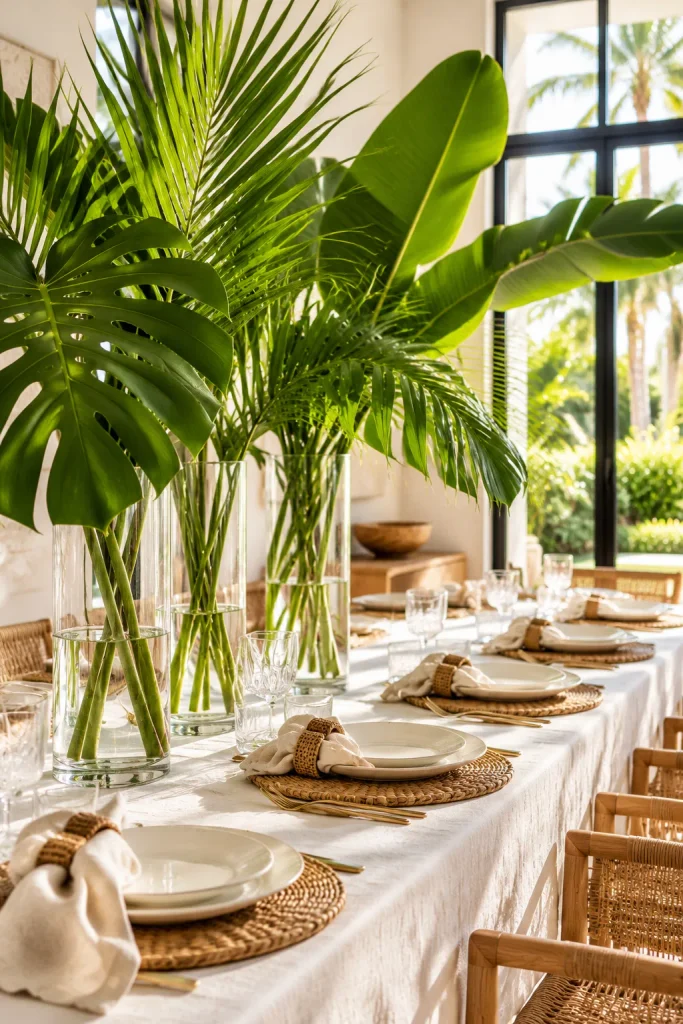
Make a Statement with Tropical Leaves
Big, glossy leaves make a dramatic centerpiece with almost no effort. Monstera, palm, and banana leaves feel lush and resort-like. Just a few stems can change the whole mood of a room.
Pick up three to five large leaves from the supermarket flower section. Place them in tall, clear glass cylinders so the stems show. Group the vases at one end of the table or on a nearby sideboard so they don’t block faces. Finish with crisp white linen and natural rattan chargers for a clean, tropical-modern look.
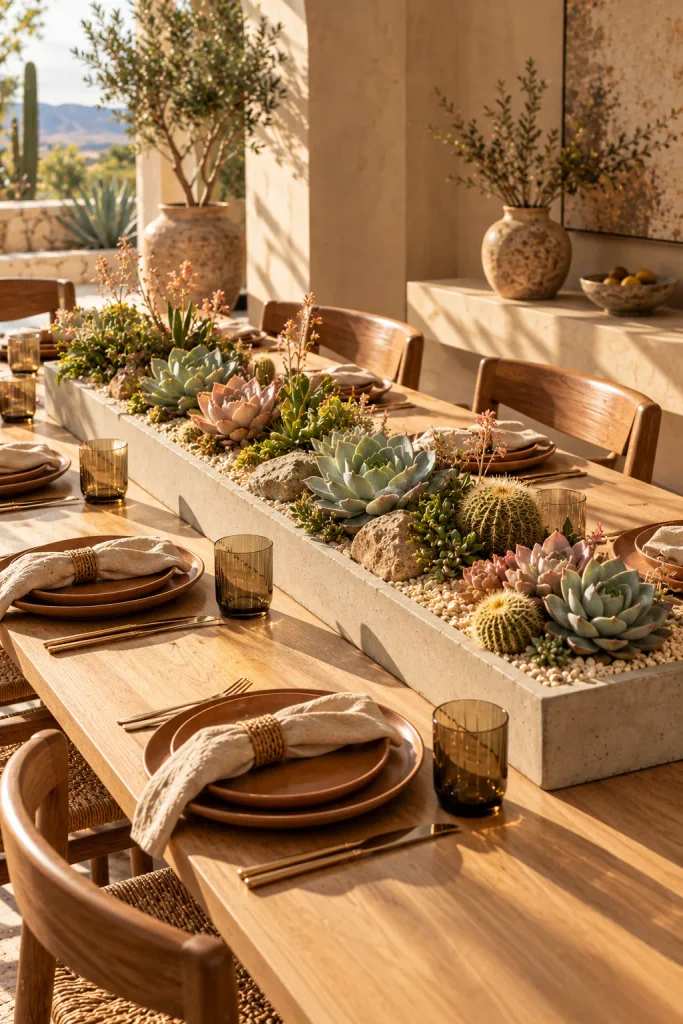
Create a Desert-Modern Succulent Runner
Succulents and small cacti give your table a sculptural, desert-modern look. They’re low, tidy, and nearly impossible to wilt. You can even set the table days ahead.
Choose a long, low concrete or stone planter, or a row of small matte pots. Mix rosette succulents like echeveria with a few small cacti for shape. Top the soil with pale sand or fine gravel for a clean finish. Pair it with terracotta plates and sand-colored linen to keep the palette warm.
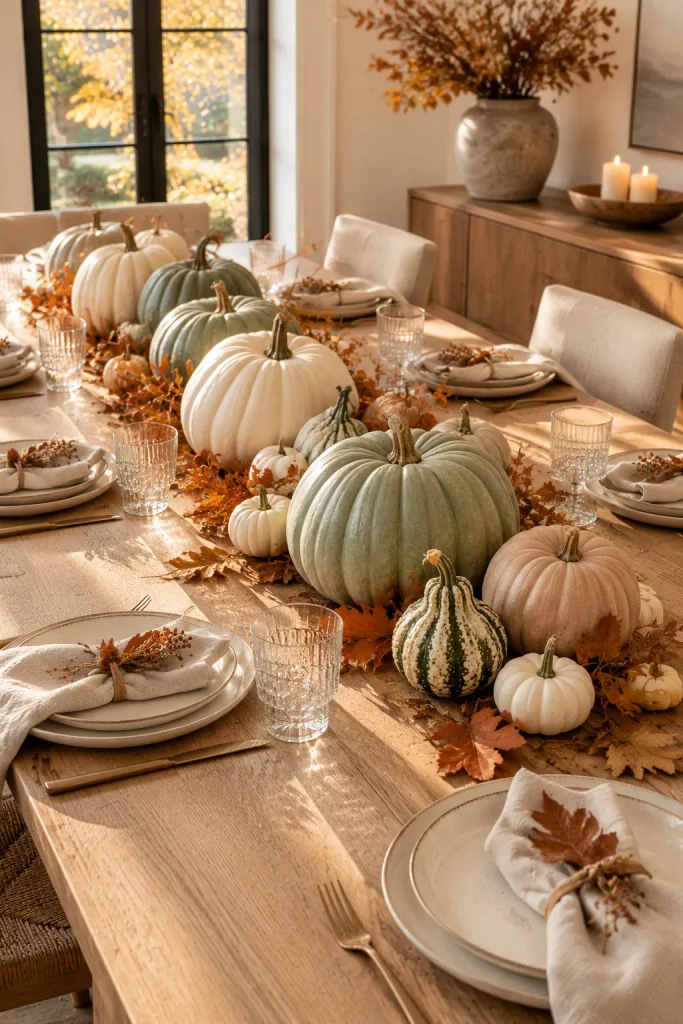
Swap Orange for Soft-Toned Heirloom Pumpkins
Forget bright orange. Heirloom pumpkins in white, sage, and dusty blue look far more modern on a table. They feel seasonal without shouting Halloween.
Pick pumpkins and gourds in three or four soft shades and a mix of sizes. Group them in a loose line down the table, with the biggest near the center. Tuck a few rust-colored autumn leaves between them. Keep everything else neutral, like cream plates and natural linen. Most pumpkins last for weeks, which makes this the easiest nature-inspired table to keep up from October to Thanksgiving.
A Few Styling Rules That Make Any Natural Table Work
Keep centerpieces below about 30 cm, or 12 inches, so guests can see each other. Anything taller belongs at the end of the table or on a sideboard. This one rule fixes most table styling mistakes.
Stick to one hero idea and one small supporting detail. A branch runner plus a sprig of rosemary on each napkin is plenty. Avoid strongly scented flowers like lilies near food, because they compete with the meal.
Finally, check that anything near the plates is safe. Wash produce, wipe branches, and keep toxic plants like foxglove or lily of the valley off the table. When in doubt, keep it in a vase rather than touching the food.
Make It Yours, Not Perfect
The best natural tables never look fussy. Choose the idea that suits your space and your season, then let it be a little imperfect. A leaning stem or a stray leaf is part of the charm.
Start small this weekend with whatever you can find nearby. Once you see how easy it is, you’ll start spotting table material on every walk. That’s when a nature-inspired table stops being a project and becomes a habit.