How to Use Heuchera in the Front Yard So It Steals the Show
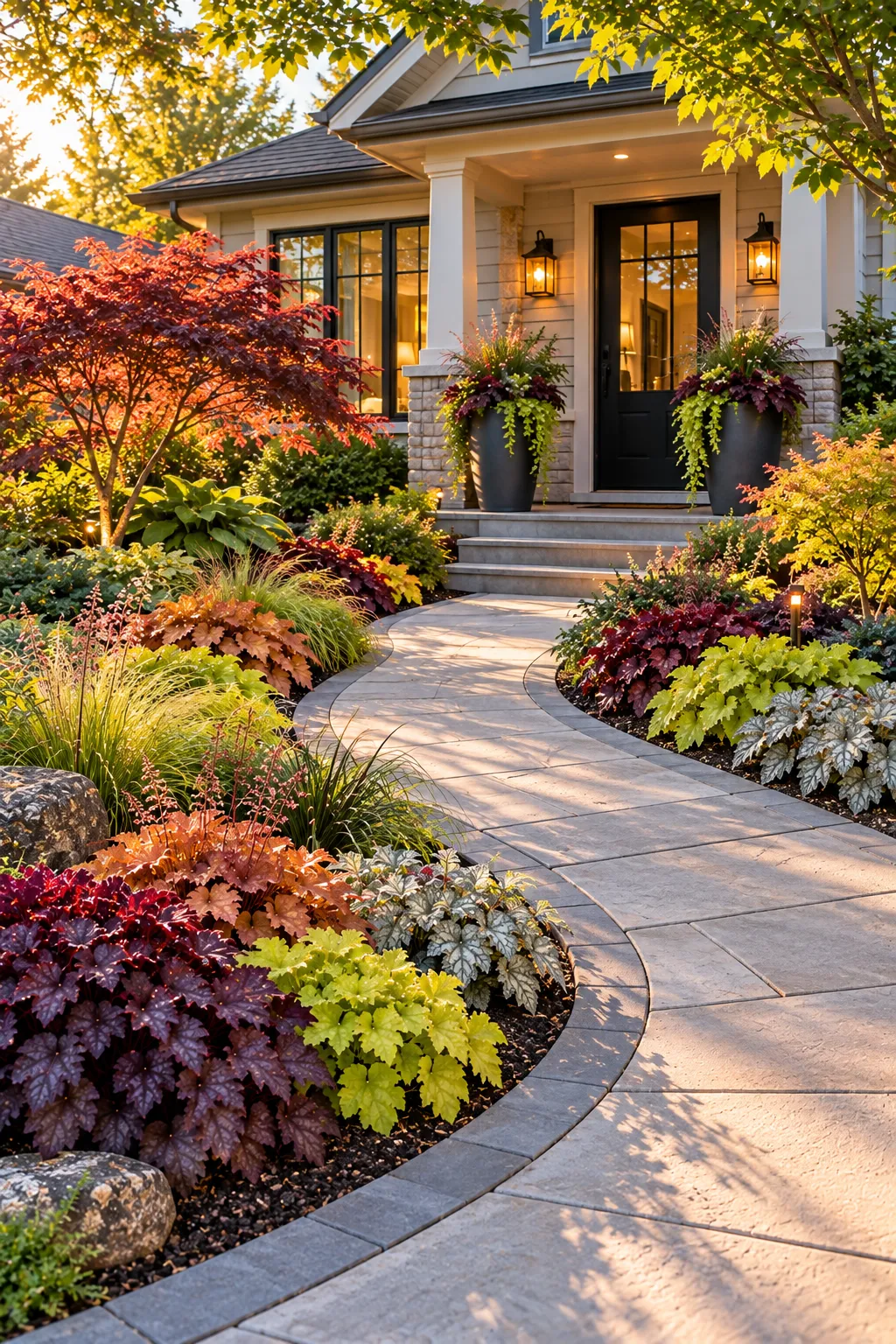

Heuchera is the plant that makes people slow down as they walk past your house. Its leaves come in lime, plum, caramel and almost black, and they stay colorful well into winter, even in shade. Here’s how to use heuchera in the front yard in bold, modern ways that actually work.
Give Your Walkway a Two-Tone Rhythm Border
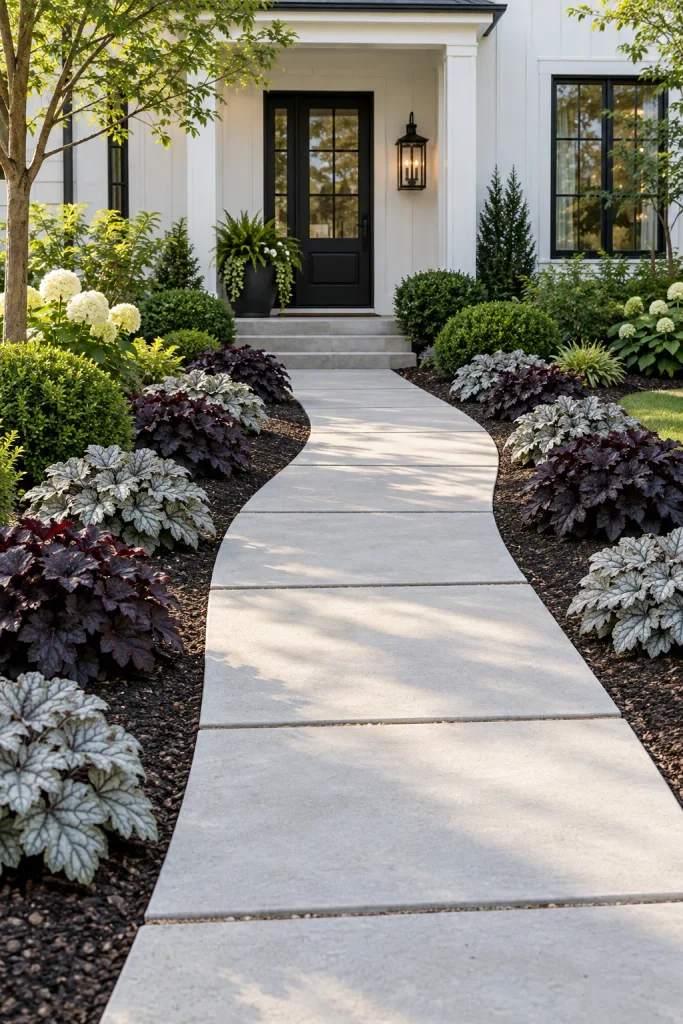
A walkway border looks designed when it repeats. Choose two heuchera colors that contrast strongly, like near-black ‘Obsidian’ and silver ‘Silver Scrolls’. Plant them in an alternating pattern along both sides of the path. Space them 15 inches apart and set them 8 inches back from the edge so they don’t get stepped on.
The repetition is what creates the modern feel. A random mix of five or six colors looks busy, but two colors look intentional. Finish with dark mulch so each mound stands out like a bead on a string. This works best on paths that get morning sun and afternoon shade.
Turn the Dead Zone Under Your Tree Into a Woodland Ring
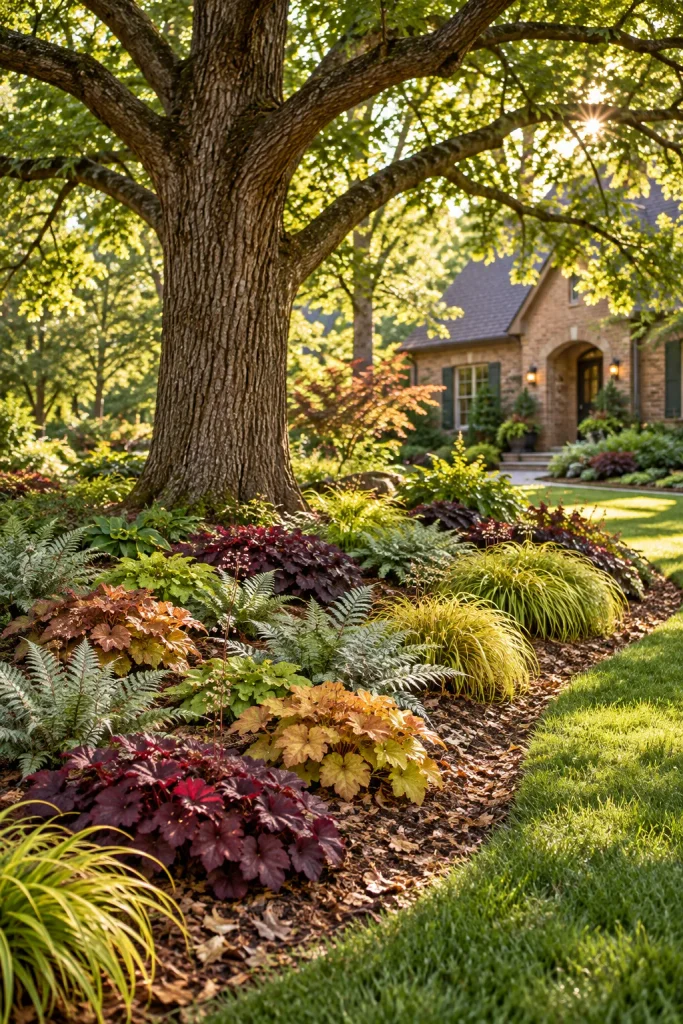
Grass rarely survives under a big shade tree. Heuchera does, because it copes with dry shade once it settles in. Plant a wide ring at least 6 feet across, using heuchera as the main color. Add Japanese painted ferns and Hakone grass for soft, flowing texture.
Never pile new soil around the trunk, as this can harm the tree. Instead, dig small pockets between the roots and use young plants that fit them. Top everything with 2 inches of shredded leaf mulch. Water once a week through the first summer, since the tree takes most of the moisture.
Want it to look natural? Plant in drifts of three, five and seven instead of one neat circular row. The result feels like a forest floor rather than a flower bed.
Make a Bold Entry With Sculptural Pots
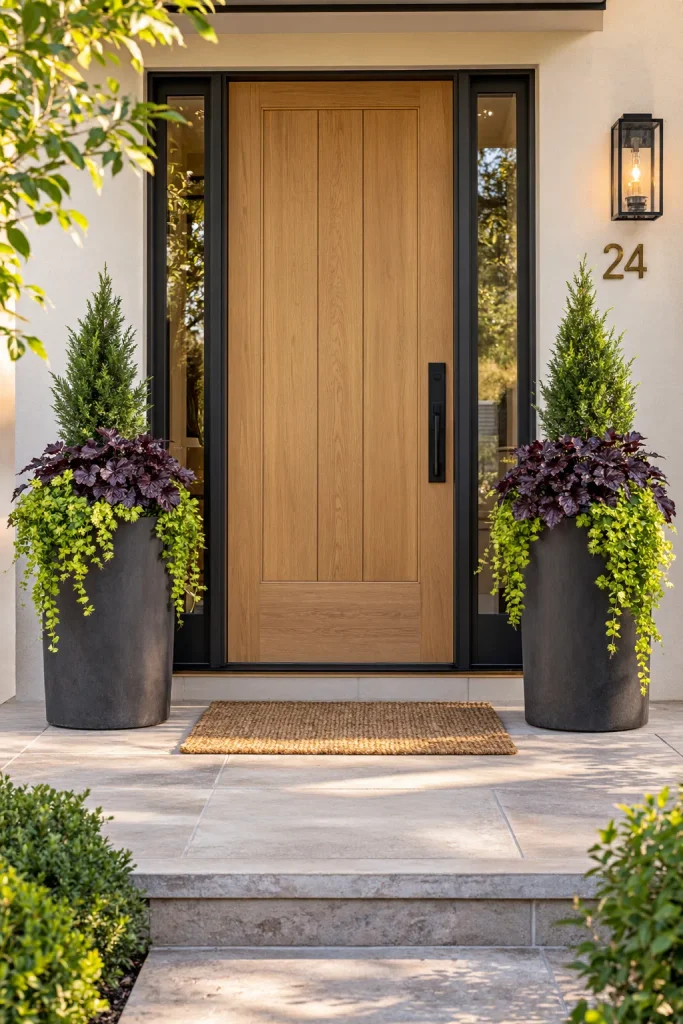
Front door pots are the fastest way to show off heuchera. Go big, with tall pots at least 20 inches wide. Modern shapes like cylinders and tapered cubes in charcoal, terracotta or cream suit today’s homes best. A matching pair on each side of the door gives a balanced, boutique-hotel look.
Plant each pot in three parts:
- A slim upright grass or dwarf conifer at the back for height
- One large heuchera, such as ‘Forever Purple’, in the center
- Creeping Jenny or silver dichondra trailing over the rim
Use fast-draining potting mix with extra bark or perlite, since heuchera rots in soggy soil. Raise the pots on small feet so water can escape. The heuchera and conifer can stay for years, so you only change the trailing plant when you want a fresh look.
Light Up a Shady Entry With a Lime Glow Garden
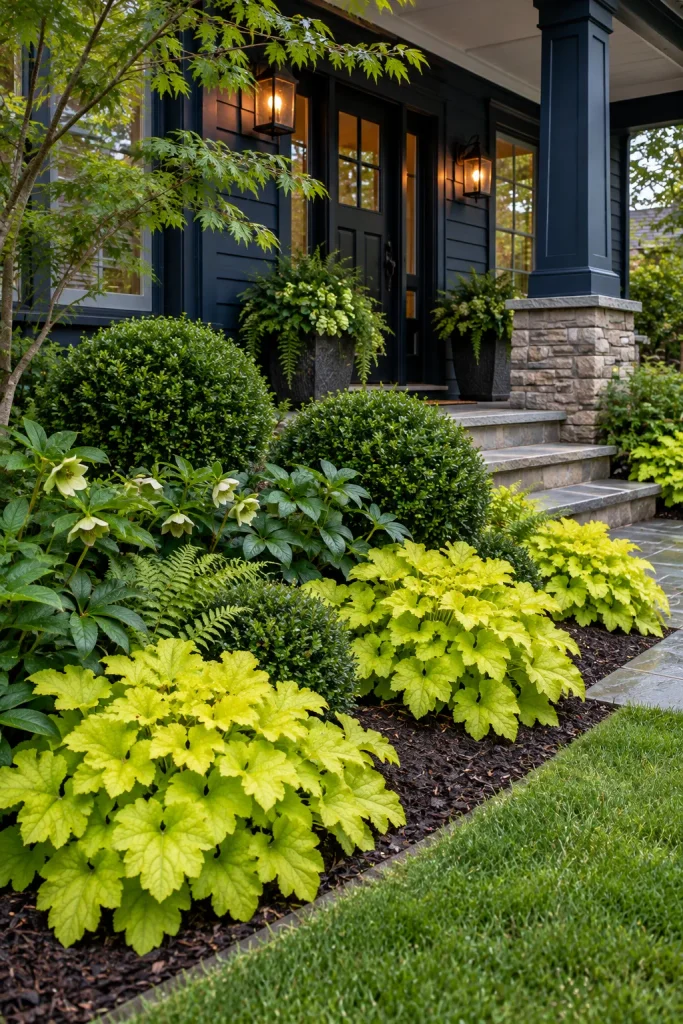
Dark, north-facing entries can feel gloomy. Chartreuse heucheras like ‘Lime Rickey’ and ‘Electric Lime’ fix that, because they reflect what little light reaches them. In deep shade, they almost seem to glow.
Plant them in groups of three or five around the steps and porch edges. Back them with dark evergreens like boxwood or hellebores so the lime color stands out. Keep them away from hot afternoon sun, because lime leaves scorch faster than dark ones.
Create a Low-Water Gravel Garden
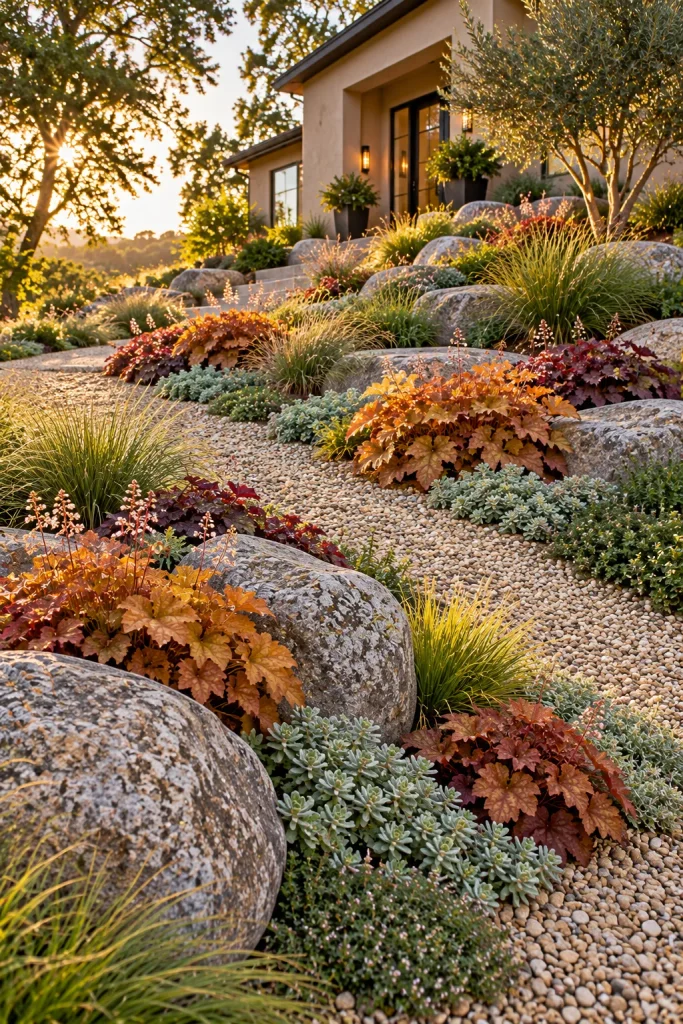
Gravel gardens are one of the biggest front yard trends, and heuchera fits right in. The key is choosing the right type. Varieties bred from Heuchera villosa, such as ‘Caramel’ and ‘Southern Comfort’, handle heat and humidity better than most. They also love the sharp drainage gravel provides.
Start with a few large boulders, half-buried so they look natural. Plant heuchera on the shady side of each rock, where the roots stay cooler. Fill the rest with sedums, creeping thyme and ornamental grasses. Finish with 2 to 3 inches of pea gravel instead of bark mulch.
This design works especially well on slopes that are hard to mow. Once established, it needs far less water than a lawn. The amber leaves against gray stone give it a warm, earthy feel.
Swap Thin, Mossy Lawn for a Heuchera Sweep
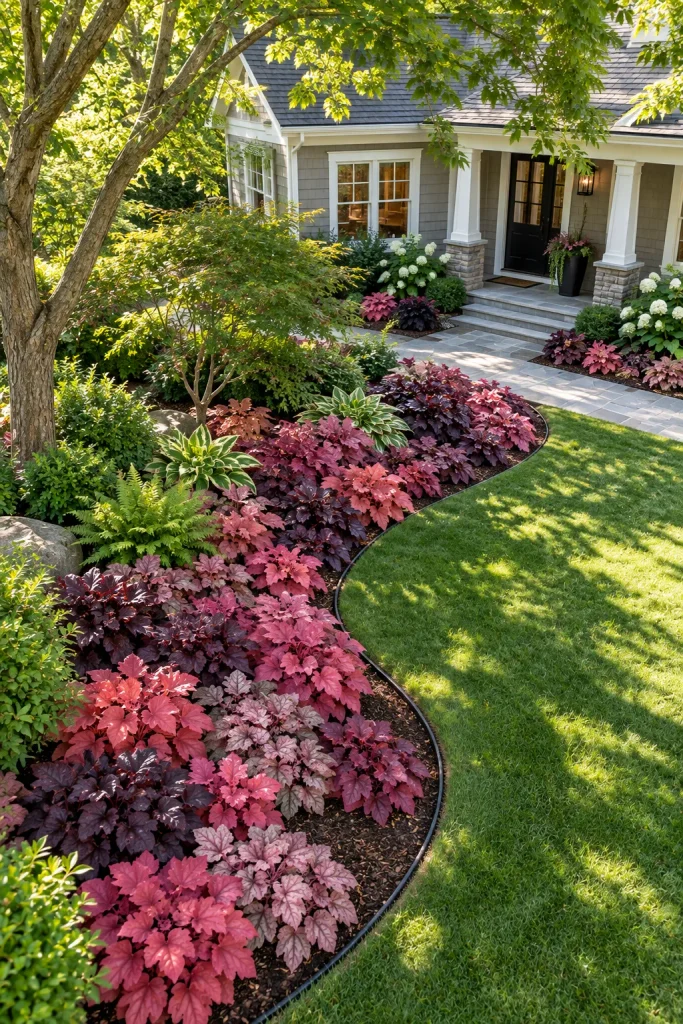
If part of your lawn struggles in shade, stop fighting it. Replace it with a broad sweep of heuchera planted as a groundcover. Using heuchera in the front yard this way means no mowing and color in every season. A single variety in bulk looks calm and expensive.
Plant 12 inches apart in staggered rows, like a checkerboard. The plants will fill in within two seasons. Rosy varieties like ‘Berry Smoothie’ look stunning in large numbers. Edge the bed with clean steel or brick so it stays crisp next to the remaining grass.
A sweep like this takes a lot of plants. To keep costs down, buy small plugs or divide mature clumps in spring. One large heuchera can often be split into three or four new plants.
Go Contemporary With a Geometric Grid
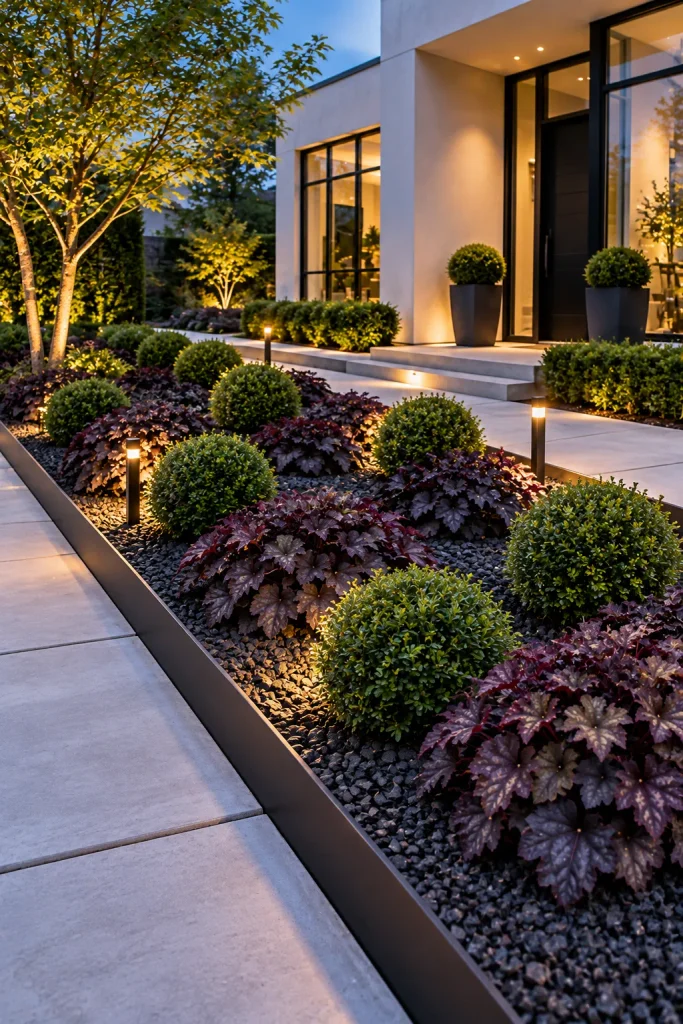
For modern homes, a loose cottage bed can feel out of place. Try planting heuchera in a strict grid inside a rectangular bed instead. The soft, round leaves look striking against straight lines. Steel edging and dark gravel complete the architectural look.
Keep the palette tight, with two colors at most. Near-black heuchera with clipped boxwood balls is a classic pairing. Place everything at an exact spacing, such as 18 inches, and mark it out with string before planting. Add low path lights so the pattern still shows at night.
Redesign Your Foundation Bed in Three Layers
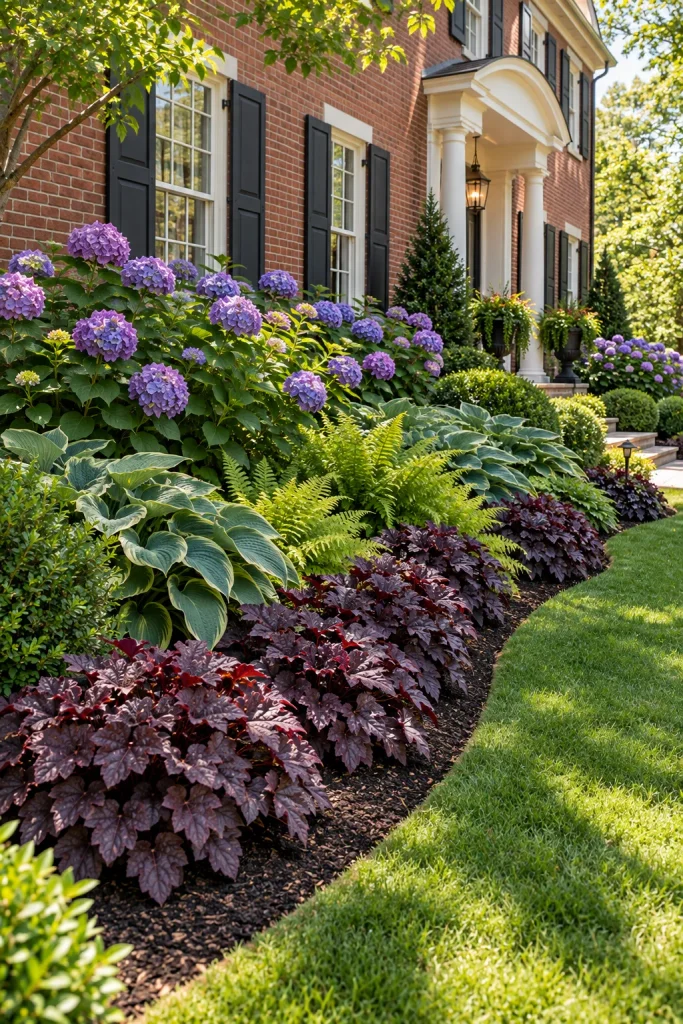
Most foundation beds are a single row of shrubs pressed against the house. They look flat and dated. A three-layer design fixes this, and heuchera makes the perfect front layer.
- Back layer: shrubs like hydrangea, rhododendron or holly against the house
- Middle layer: medium plants like hostas or ferns
- Front layer: heuchera in staggered drifts, never a straight line
Echo colors between the layers to tie the bed together. Plum heuchera in front of purple hydrangeas looks especially polished. When the shrubs finish blooming, the heuchera keeps the bed looking full.
Plant a Hummingbird-Friendly Front Garden
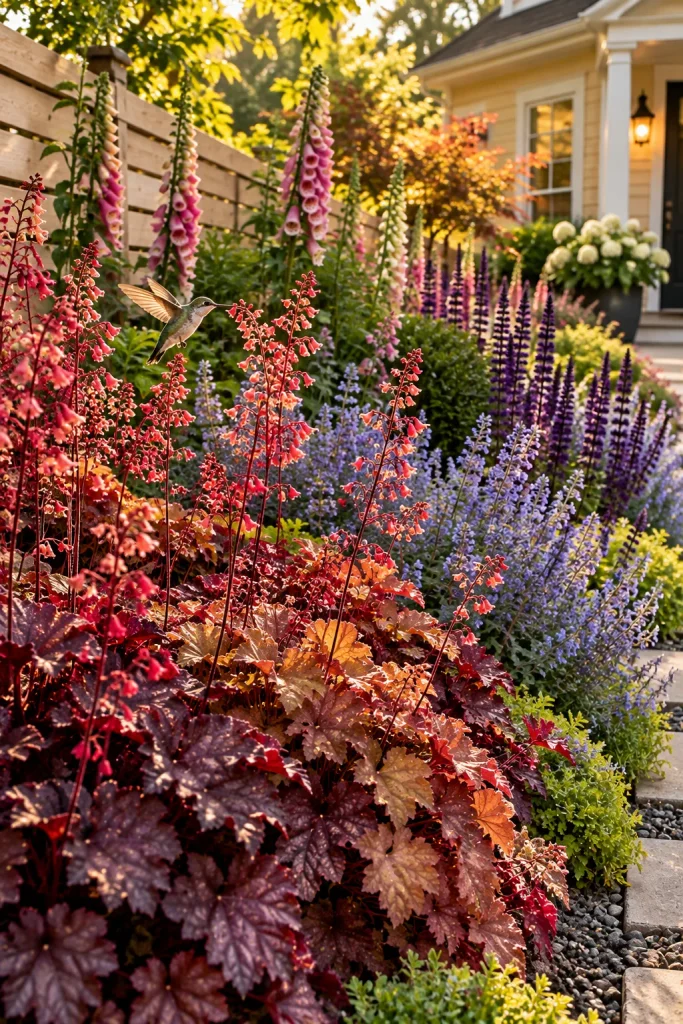
Heuchera’s common name is coral bells, and its flowers are a big part of its charm. Varieties like ‘Paris’ and ‘Ruby Bells’ send up airy spikes of rose or red blooms. Hummingbirds and bees visit them through summer. In a front yard, those floating flowers add life and gentle movement.
Plant them at the front of the bed so the flower spikes aren’t hidden. Mix in other pollinator favorites like catmint, salvia and foxglove behind them. Cut spent flower stems at the base to encourage more blooms. Skip pesticides here, so the garden stays safe for the visitors you’re attracting.
Design a Front Bed That Looks Good in Every Season
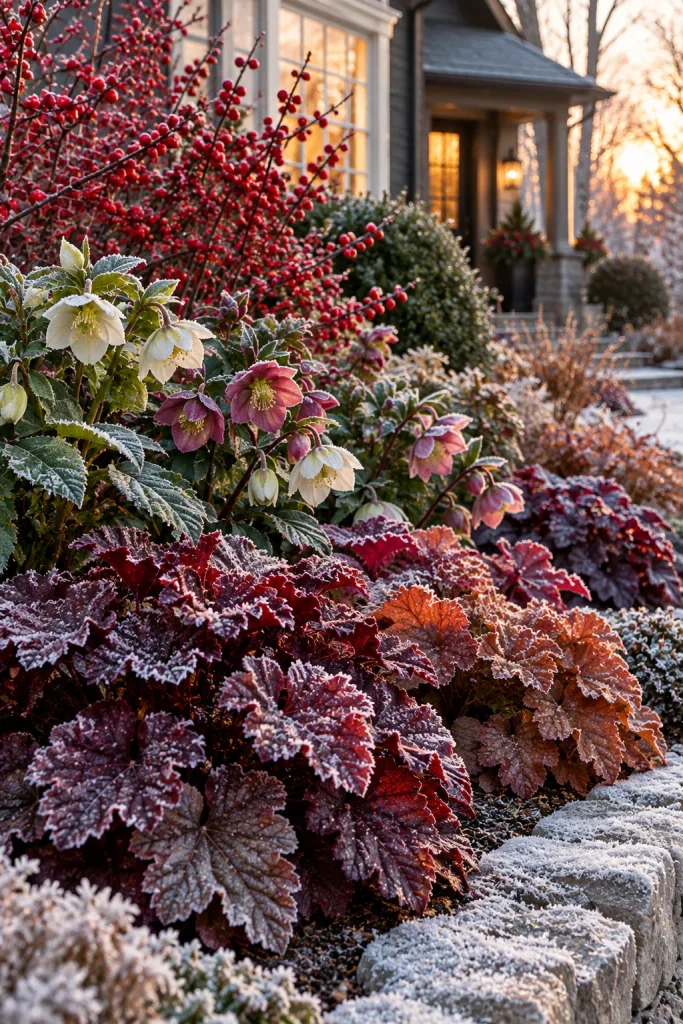
Many front yards look great in June and bare by November. Heuchera in the front yard helps solve that, because its leaves usually stay through winter in mild and moderate climates. Burgundy and bronze types tend to hold their color best in the cold.
Build the bed around them, one season at a time. Plant tulips or daffodils between clumps for spring, and the heuchera will hide the fading bulb leaves later. Add hellebores for late-winter flowers and a red-berried winterberry for color in the coldest months.
One small step makes a big difference here. Mulch in late fall to stop freeze-thaw cycles from pushing the crowns out of the soil. If any plants lift by spring, simply press them back down.
Plan Heuchera in the Front Yard Around Your House Colors
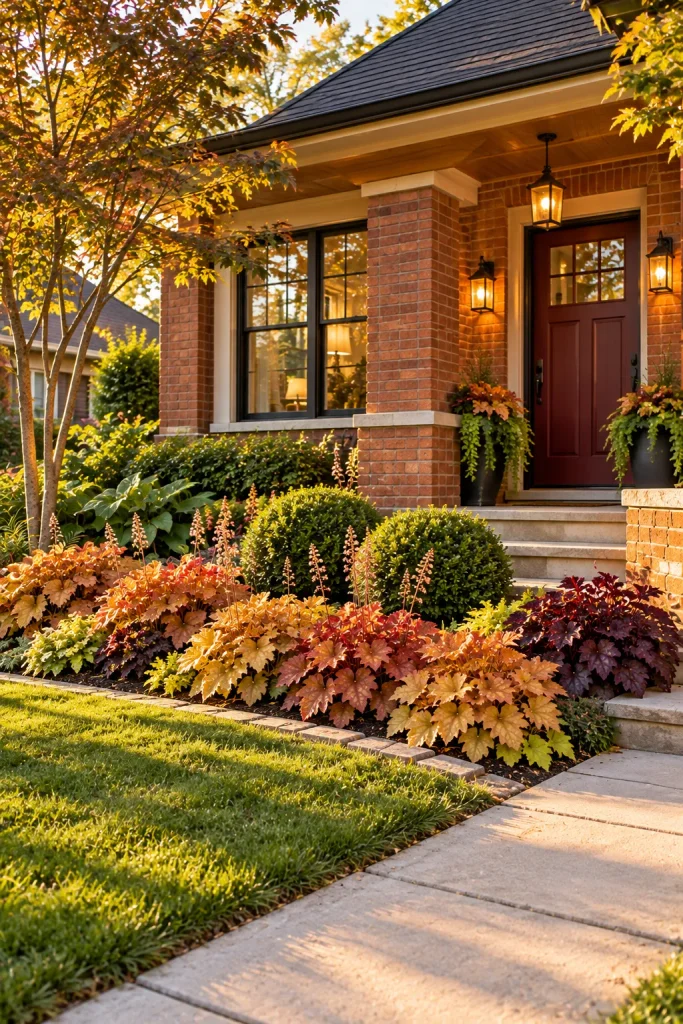
This is the step most guides skip, and it changes everything. Before buying plants, look closely at your siding, brick and front door. Then choose heuchera colors that relate to them. When plants and house feel connected, the whole yard looks planned.
- Red or orange brick: amber, peach and caramel
- Gray, blue or green siding: silver, plum and purple
- White or cream: almost anything, but near-black gives the most contrast
- Dark or black house: lime and peach to brighten it
Repeating your door color is another easy trick. A burgundy heuchera beside a burgundy door looks thoughtful and deliberate. Small echoes like this are what make a front yard feel designer-made.
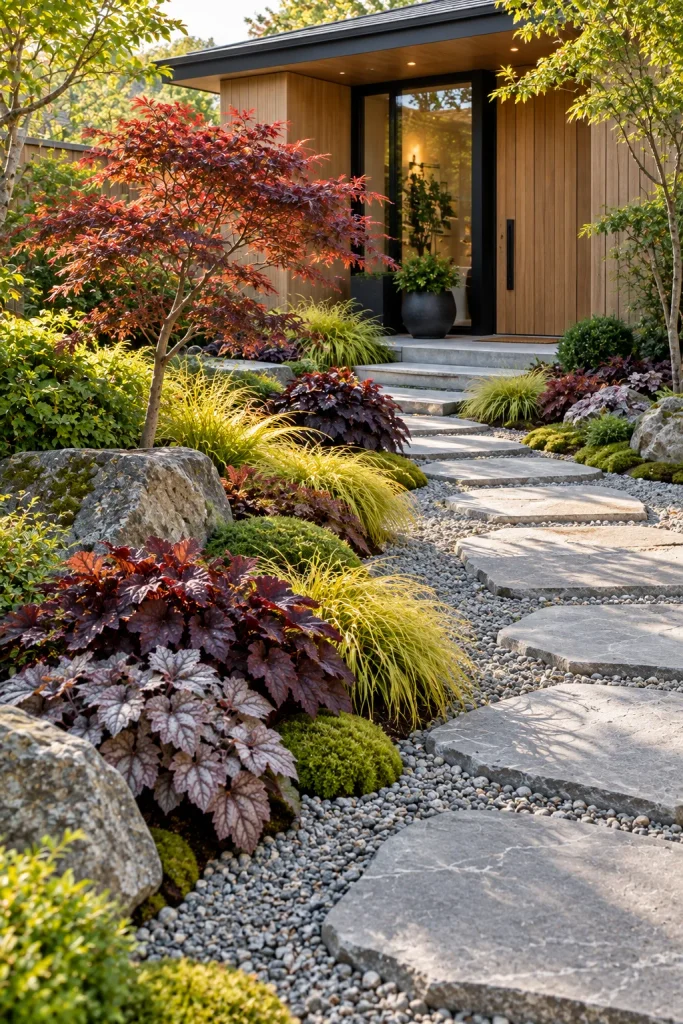
Create a Calm Japandi-Style Front Garden
Japandi blends Japanese calm with Scandinavian simplicity, and it suits modern homes well. The style uses few plants, natural stone and plenty of breathing room. Heuchera adds just enough color without breaking the peaceful feel.
Choose quiet tones like deep bronze, soft silver or green. Plant them in loose groups around a few large, flat stepping stones. Add Japanese forest grass, cushions of moss and a small Japanese maple for height. Leave open areas of raked gray gravel between plantings, since empty space is part of the look.
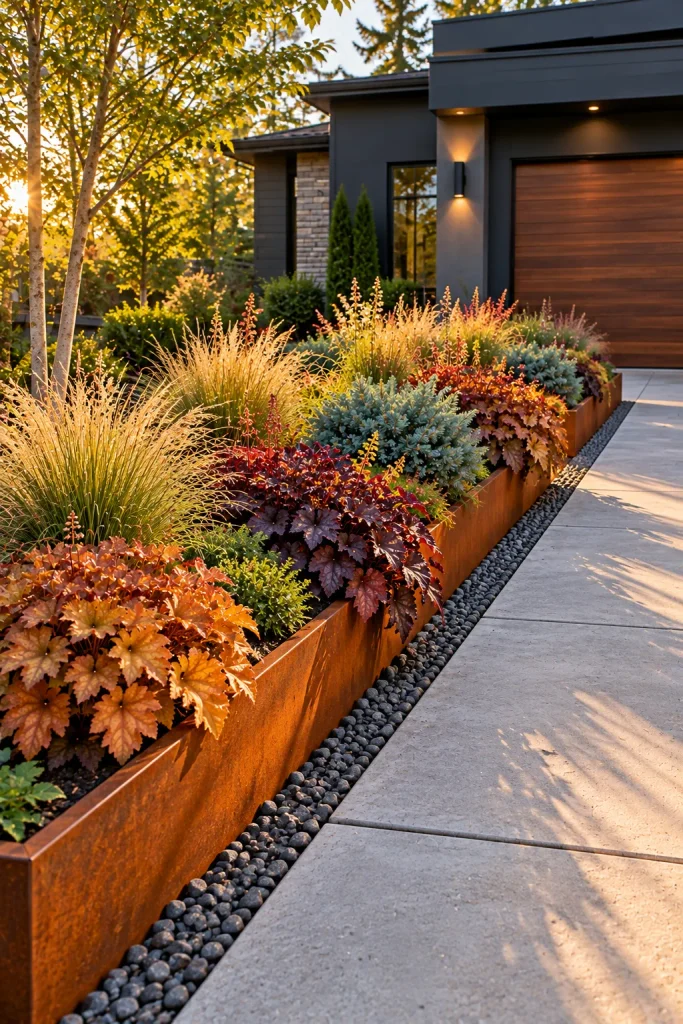
Build Raised Steel Beds Along the Driveway
The driveway edge is often wasted space. Low raised beds in corten or black powder-coated steel turn it into a sleek feature. They’re also a smart fix if your soil is heavy clay. Heuchera hates wet roots, and a raised bed gives it the drainage it needs.
Fill the beds with topsoil, compost and some grit. If the driveway gets afternoon sun, choose heat-tolerant villosa types. Pair them with ornamental grasses and dwarf conifers for contrast. Keep beds 12 to 18 inches tall so they feel sleek rather than bulky.
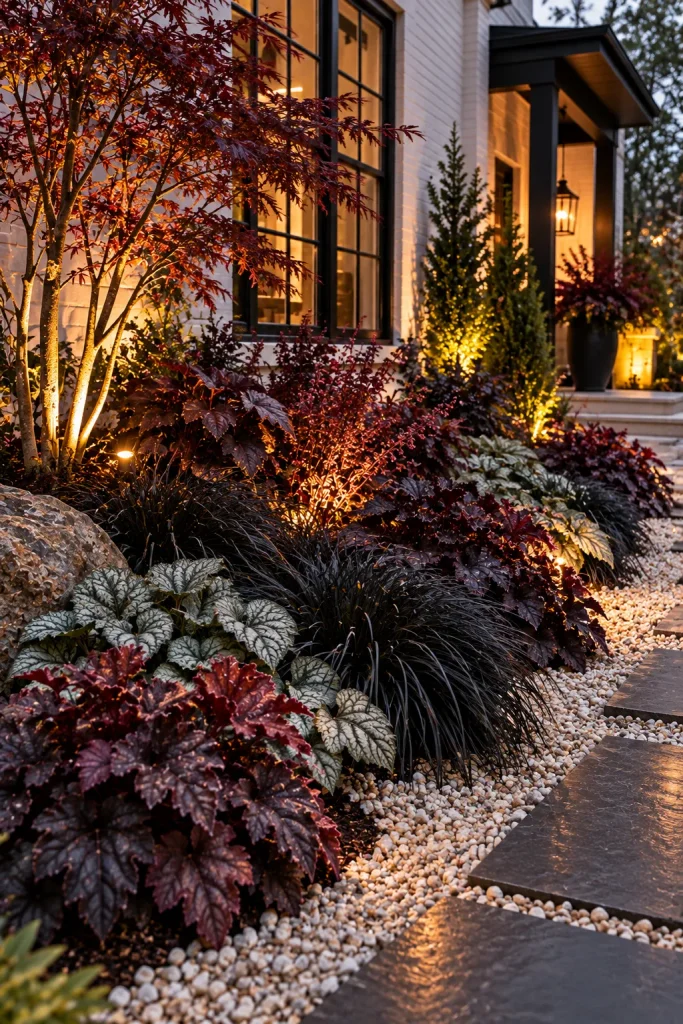
Try a Moody Dark Garden
Dark gardens are a big trend right now, and heuchera makes them easy. Near-black varieties like ‘Obsidian’ and ‘Black Pearl’ anchor the look. Add black mondo grass and deep burgundy plants for layers of shadowy color. A few silver plants stop it from feeling heavy.
This style works best against a light house in white, cream or pale gray. The contrast makes dark leaves look rich and dramatic. Use pale gravel or light stone around the plants so they don’t disappear. At night, warm uplighting makes the whole bed glow.
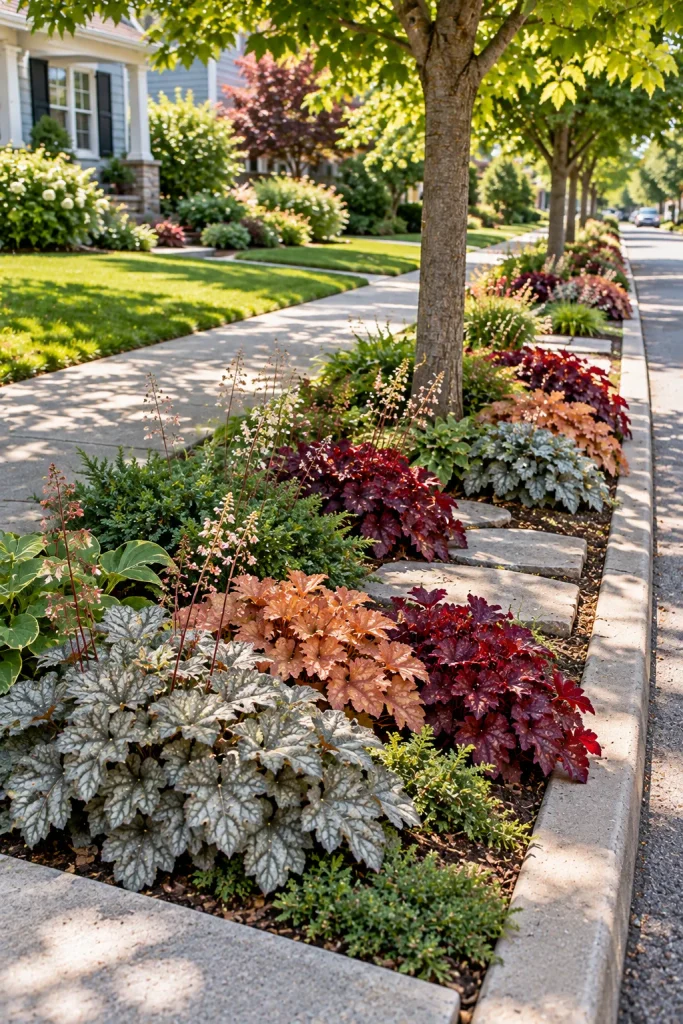
Turn the Curb Strip Into a Colorful Border
The strip between the sidewalk and street is one of the most ignored parts of a front yard. Under street trees, it’s usually patchy grass that’s awkward to mow. Planted with heuchera, it becomes a welcome mat for the whole house. It also links your garden to the street and makes the yard feel bigger.
Choose tough, compact varieties, since this spot gets foot traffic and sometimes road salt. Keep plants under 18 inches tall so drivers can still see clearly. Leave a few stepping stones so people can cross from parked cars. Check your local rules first, as some towns limit what can grow here.
Heuchera is easy to grow when you get the basics right. Give it loose, well-drained soil and some protection from hot afternoon sun. Plant the crown level with the soil, never buried, and divide clumps every three or four years when the centers turn woody. Start with the spot that bothers you most, whether it’s that bare tree base or the gloomy porch. You may find heuchera in the front yard becomes the plant every neighbor asks about.