How to Create a Moody Living Room With Rich Contrast and Warm, Glowing Light


A good Moody Living Room still lets you read, talk and find your drink. The darkness sits in the walls, fabrics and wood, while the light stays warm and low. Contrast does the hard work, so pale cushions, brass and stone read clearly against deep tones. Start with one big change, live with it for a week, then add the next layer.
Upholstered Wall Panels in Deep Plum Wool
Fabric on a wall changes the sound before it changes the look. Voices soften, music feels closer, and the wall stops throwing hard light back at you. Choose wool in deep plum, and run wide panels from skirting to ceiling behind the sofa, wrapping a short way around one side wall.
Key pieces:
- Wool panels in deep plum, cut in wide vertical sections
- A low sofa in warm cream linen
- One brass floor lamp with a wide, opaque shade
- Dark walnut side tables with a honed stone top
Fit battens first, wrap each panel in foam and fabric, then fix them tight with no gaps. Keep sockets inside fabric covered plates so the wall reads as one surface. The cream sofa matters here, because the pale seat against plum fabric stops the corner feeling flat. Angle the lamp shade down, so light pools on the seat, not the wall. Wipe fabric with a dry cloth only, because water marks show on matte wool.

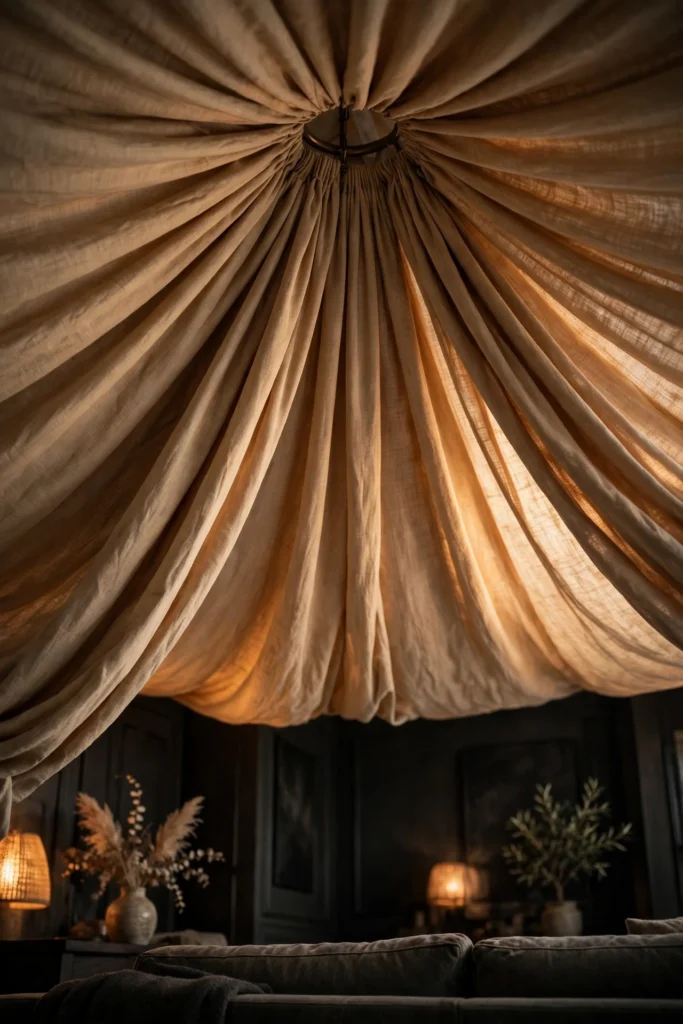
A Tented Fabric Ceiling in Warm Camel
A white ceiling can undo a dark scheme every time you look up. Fabric in soft folds lowers the visual height and turns harsh overhead light into a gentle wash. Use warm camel linen or canvas, gathered at the edges and pulled to a central ring. The folds catch lamplight in stripes of light and shade, giving a plain room the detail it was missing.
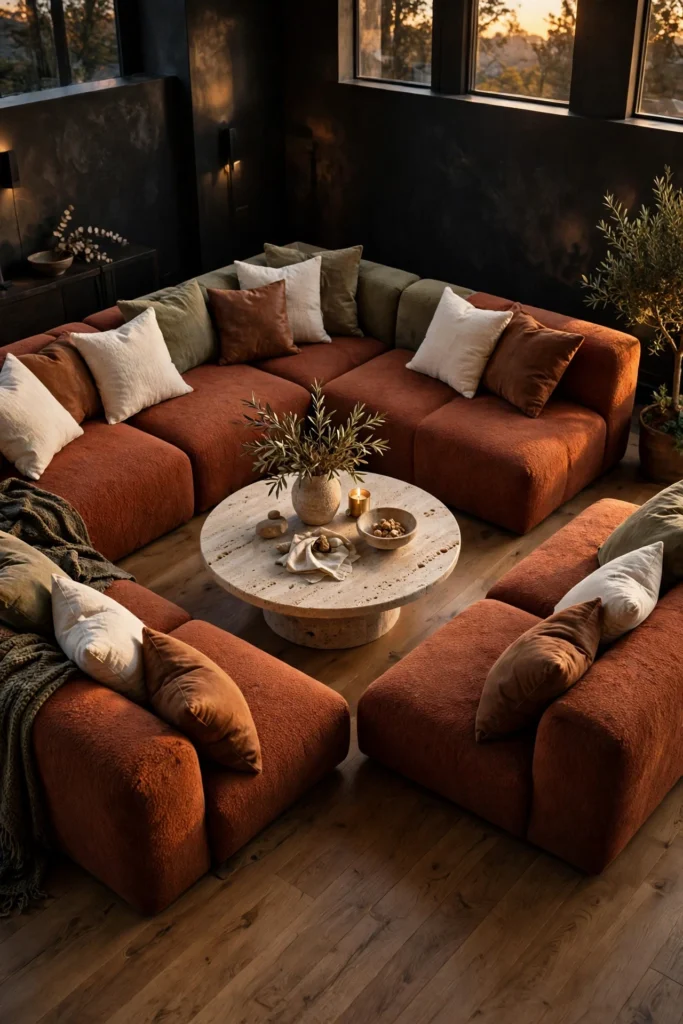
A U Shaped Sofa in Rust Mohair Around a Round Stone Table
Seating facing inward makes conversation the main event, not the television. Build a U shape from a deep modular sofa in rust mohair, set in the centre of your Moody Living Room, open side to the fire. A round travertine table sits in the middle, within reach of every seat.
Leave a hand width between modules so the shape reads as planned. Mohair earns its cost here, because its pile changes tone as light moves. Keep cushions in cream, tobacco and faded olive, never twice in a row. A low bowl on the table holds remotes, so the surface stays clear for drinks. A folded throw over one arm finishes it.
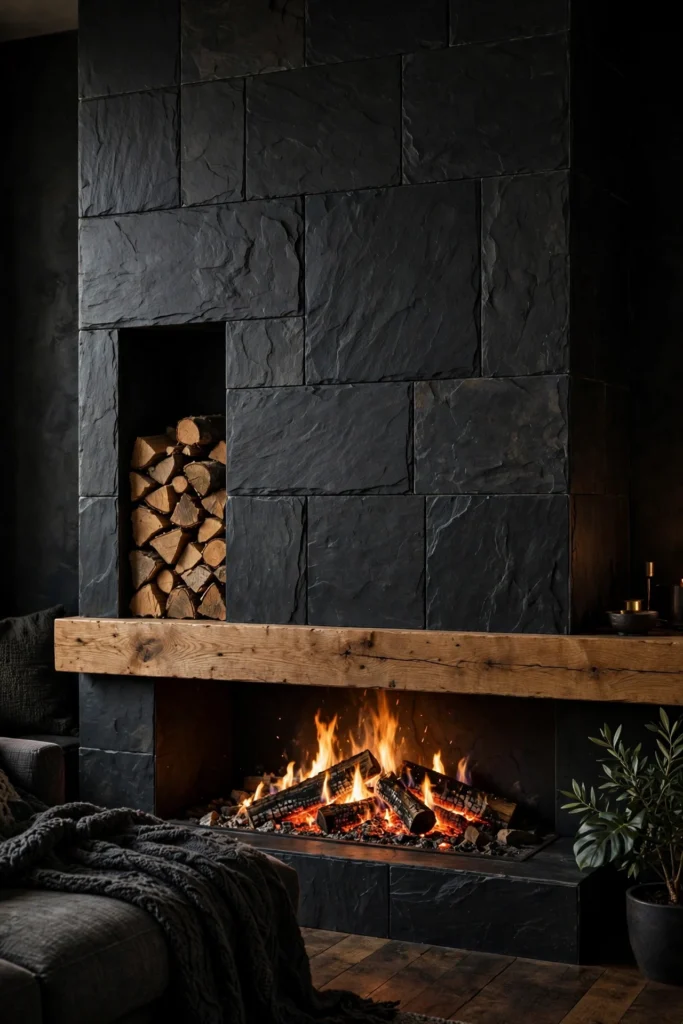
A Chimney Breast in Honed Black Slate With a Wide, Low Firebox
Slate gives darkness with texture, rather than a flat block of black paint. Clad the full breast in large honed slate slabs, with tight joints and a matte sealer. Set a wide, low firebox near the floor, so flames light faces before walls. A thick oak mantel shelf breaks the stone, and gives you one place for a clock or art books.
Order slabs after the firebox is fitted, because one wrong cut shows at once. Keep the hearth flush with the floor, and use a dark joint, because heat marks pale grout. On nights with no fire, thick cream candles in the opening keep the same low glow.
Key pieces:
- Large honed slate slabs with a matte sealer
- A wide, low firebox fitted close to the floor
- One thick oak mantel shelf, left unpolished
- A log recess built into the side of the breast
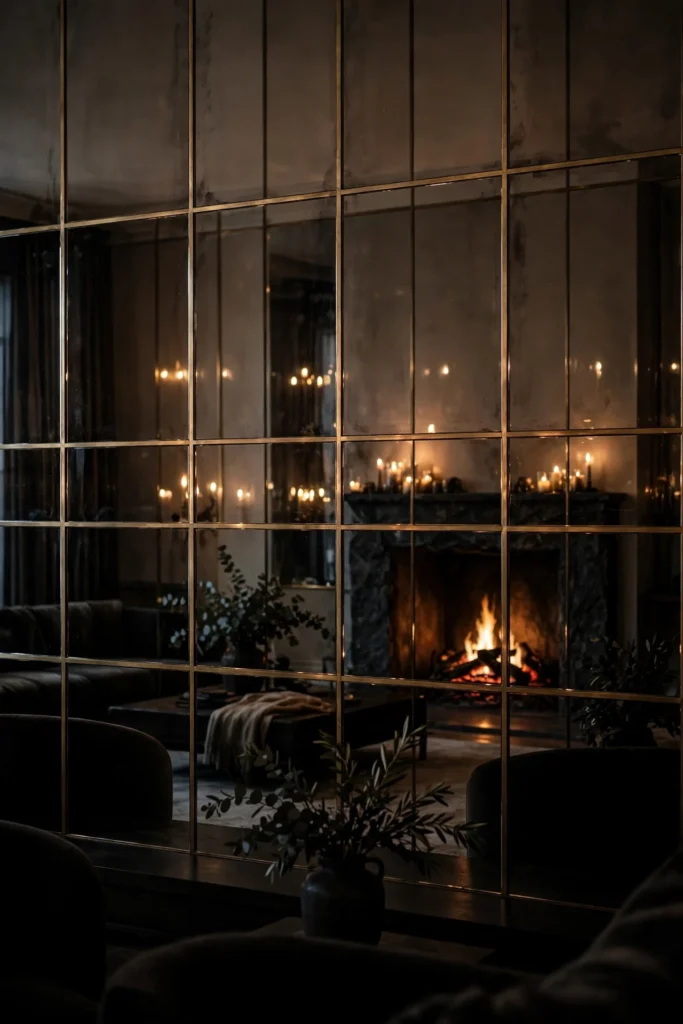
A Wall of Smoked Mirror Panels That Bounce Warm Light Back
One mirrored wall sounds bright, but smoked glass does the opposite at night. The grey brown tint deepens everything it reflects, and candle flames double without extra fittings. Panel the wall opposite the fireplace, in large sheets split by slim brass strips. Furniture in front breaks up reflections, so the effect stays soft. Clean it with a soft cloth only, because streaks show first under lamplight.
A Low Level Lighting Plan for a Moody Living Room After Dark
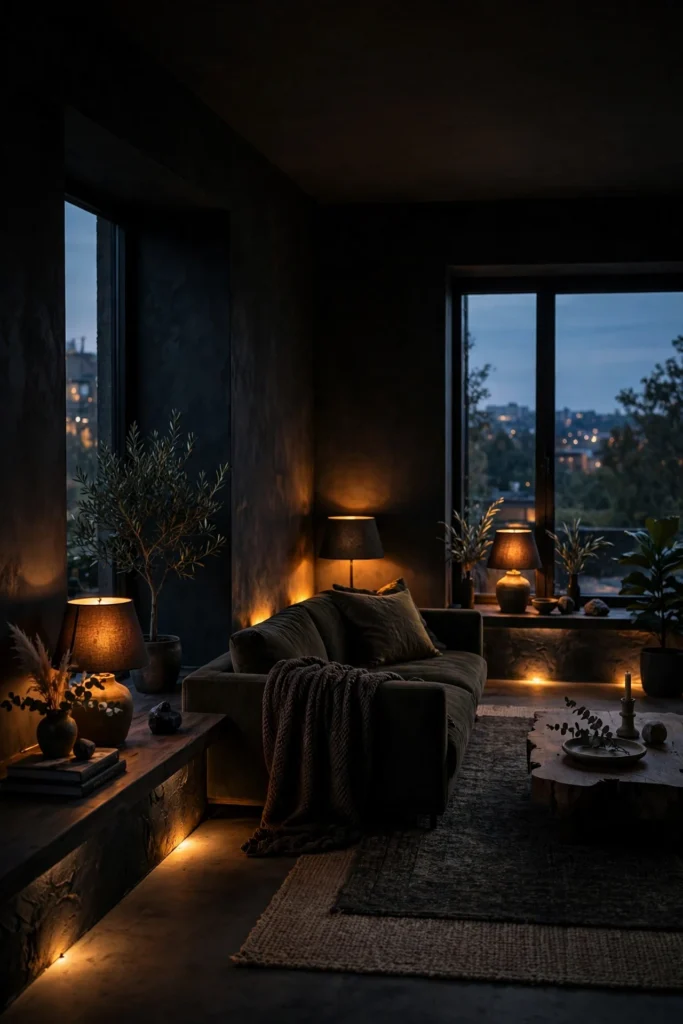
Remove the main ceiling light from your evenings and the room changes character at once. Plan three low sources: ledge lamps, a shaded lamp behind the sofa, and uplights at the wall base, all using warm bulbs. Put every source on a dimmer, so you can drop the room in stages as the evening slows.
Fit a shallow ledge behind the sofa and run the lamp flex inside it, out of sight. Place lamps so shades sit below standing eye level, keeping glare out of faces. Test the plan from the doorway, the sofa and the reading chair, because a scheme can work in one seat and fail in another. When one corner feels dead, add a small lamp there rather than raising the whole room.
Key pieces:
- Three lamp positions at low level, each on a dimmer
- Opaque shades that push light down and out
- Warm white bulbs with a low colour temperature
- A shallow rear ledge that hides every flex
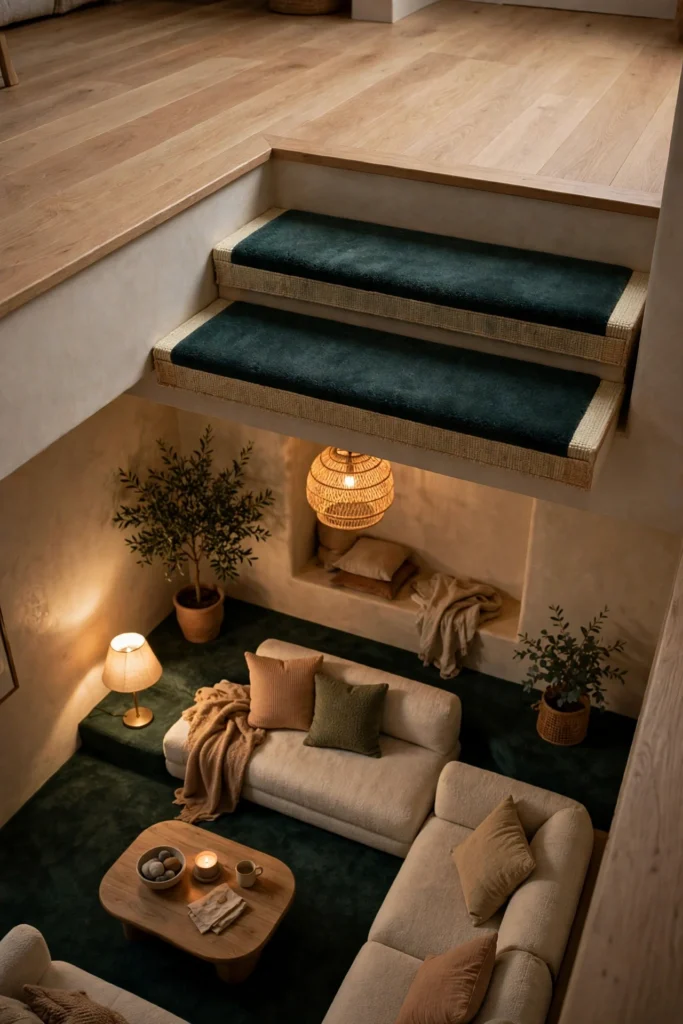
Two Shallow Steps Down Into a Carpeted Conversation Area
A small change in floor level tells people how to use a room, with no sign needed. If you are renovating, drop the seating area by two shallow steps and carpet the steps and lower floor in one deep tone. The upper level stays as the route through, with harder flooring and clearer light. Down below, voices feel closer and the ceiling feels higher, even though nothing above you has changed. Keep step edges in a paler carpet strip, so guests see the drop in low light.
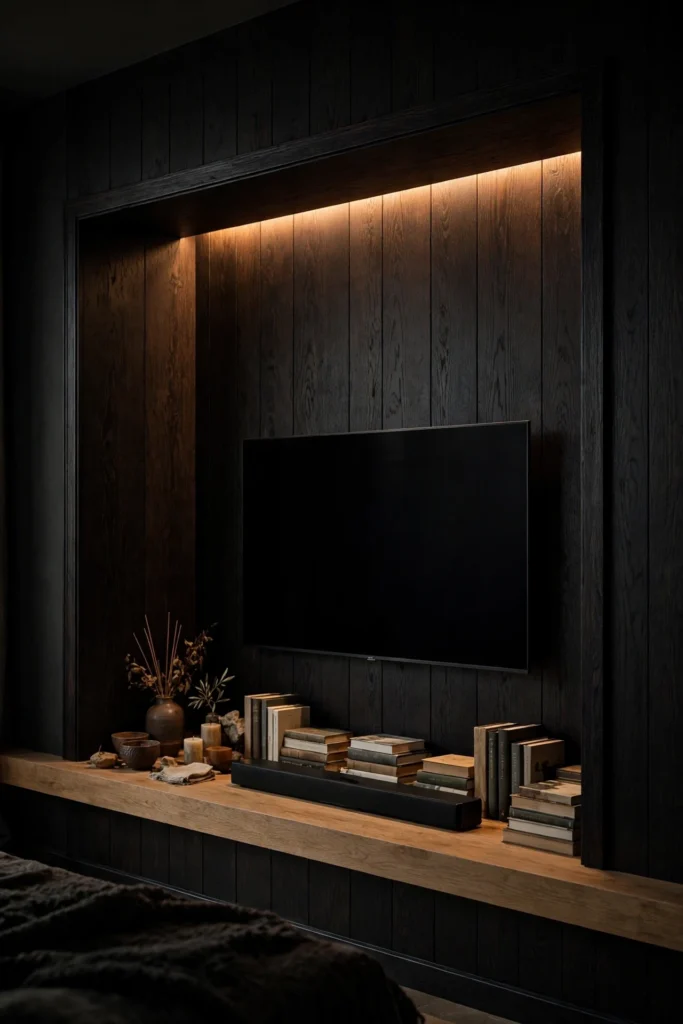
A Television Recessed Into a Deep Ebonised Oak Niche
A bright screen on a pale wall fights every dark scheme. Build a deep ebonised oak niche with a low ledge under it for boxes, books and a soundbar, and set the television well inside it. In a Moody Living Room the screen should read as one dark panel among others, not the reason seating exists.
Warm light from a concealed strip above the niche washes down the oak grain. Keep the ledge shallow, because a deep shelf collects clutter and pushes the sofa back. Route every cable inside the wall or ledge, since one white flex can spoil the effect. Leave the niche a few inches wider than the screen, which makes fitting and cleaning simpler.
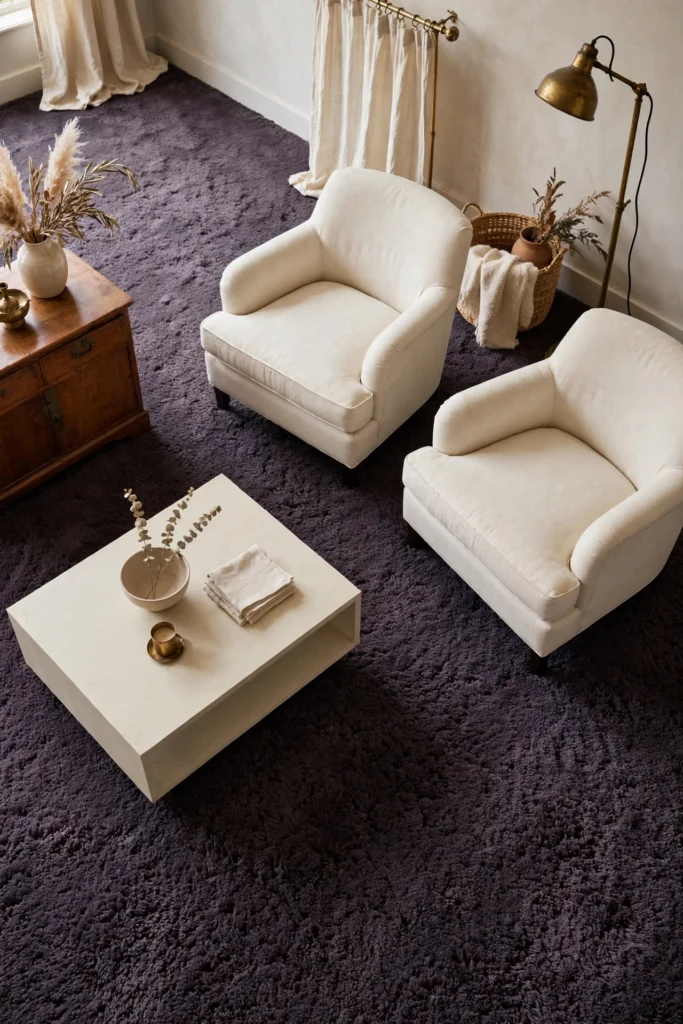
Wall to Wall Carpet in Charcoal Plum
Key pieces:
- Deep pile carpet in charcoal plum, fitted wall to wall
- A pale, low coffee table to break up the dark floor
- Cream or camel upholstery on the main seats
- Door bars in dark bronze, not bright brass
Hard floors reflect sound and light, and both make an evening room feel restless. Deep pile carpet in charcoal plum covers the whole floor, so furniture stops floating on separate rugs. The colour sits between grey and purple, and works with warm wood, rust and aged brass. Pale furniture on top gives clear shapes, while dark legs almost vanish into the pile. Vacuum with the pile, and the surface keeps its depth for years.
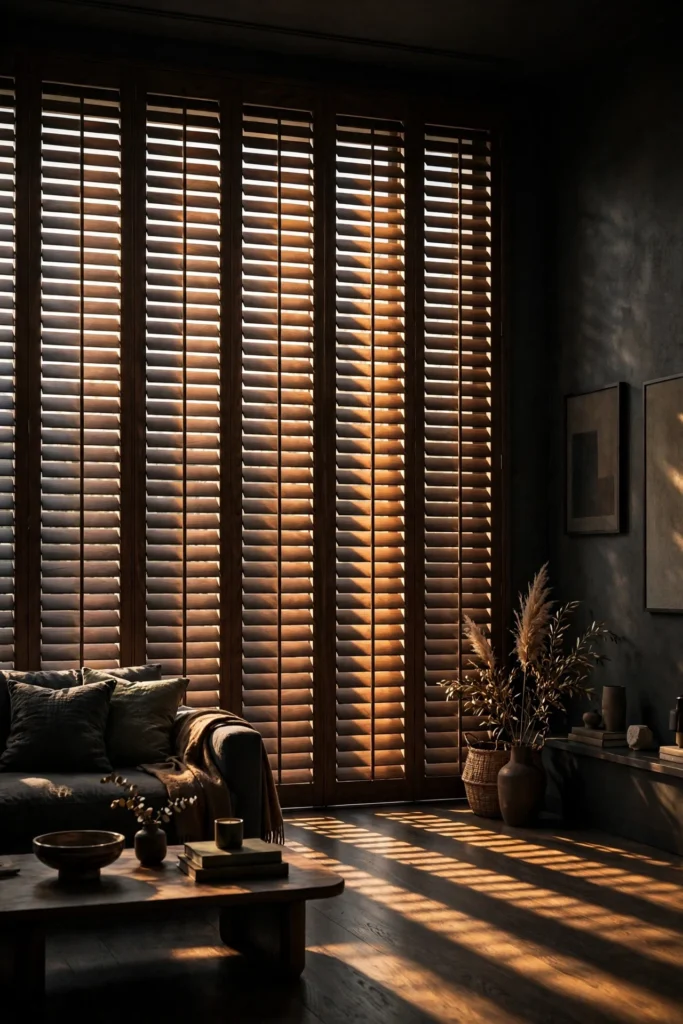
Louvred Walnut Shutters That Filter the Evening Sun
Full height shutters give control that curtains cannot match. Fit louvred walnut panels across the window wall, with blades you can tilt to pull late sun into warm bands on the floor. The closed timber wall also adds a strong vertical rhythm, suiting tall, plain rooms.
Choose wide blades, because narrow ones look busy and gather dust. Run panels on a top track if windows open inward, so shutters fold clear of the glass. Walnut darkens a little each year, and that slow change suits this room. Keep frames behind them painted the same tone, so gaps of white never break the line.
A shutter wall also helps with privacy on a street facing room, without blocking wanted light. Tilt only the lower blades on bright afternoons, leaving the top row open. That split keeps faces in shade while the ceiling still gets daylight. It is a small daily habit that soon becomes part of how the room feels. Guests notice the light first, and the privacy second.
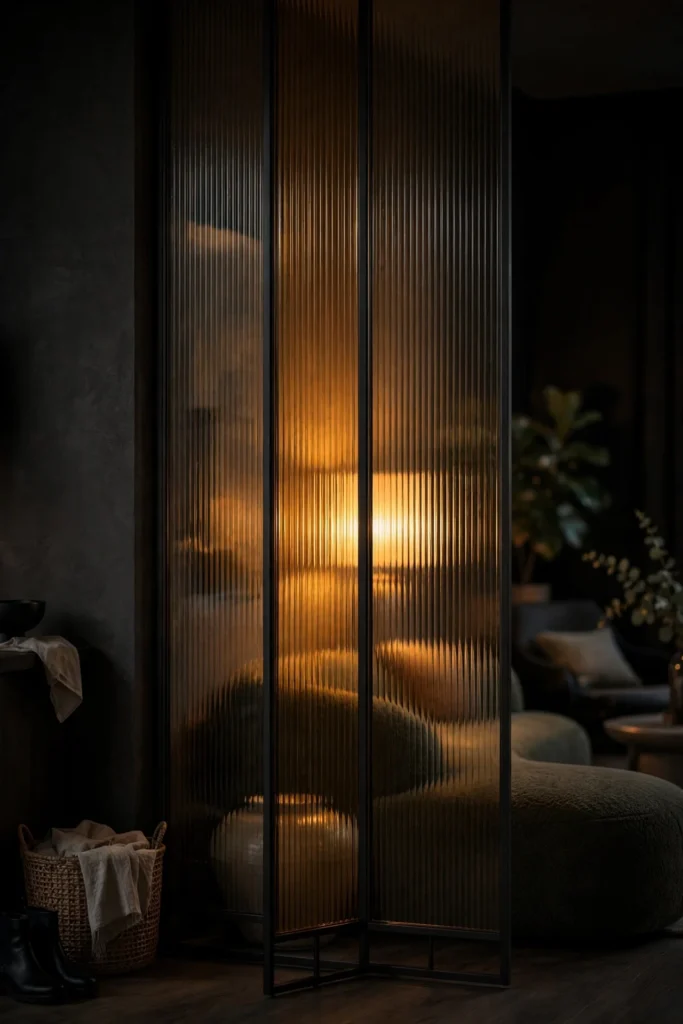
A Fluted Amber Glass Screen That Glows From Behind
Some rooms need a divide that does not behave like a wall. A screen of fluted amber glass in a black steel frame splits entry from seating, and glows when a lamp sits behind it. The flutes blur shapes beyond, so coats and post stay hidden while light passes through. In the evening this panel is the brightest warm surface in your Moody Living Room, read as art first and storage second.
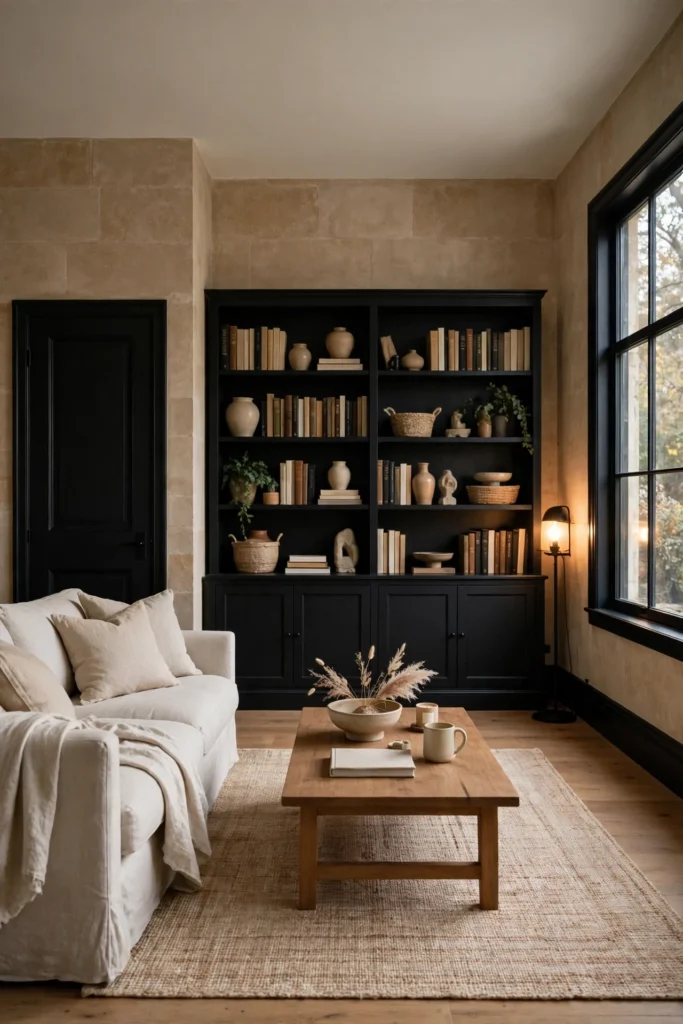
Soft Black Paint on Doors, Skirting and Window Frames
You do not need dark walls for strong contrast. Paint every door, skirting, architrave and window frame in soft black, and leave walls in a warm stone colour. The dark outline traces the shape of the room, and repeating black in one large item, such as a bookcase, keeps the trim from looking accidental.
Use eggshell on woodwork, because gloss throws sharp reflections under lamplight. Paint radiators black too, and they drop back against the wall. This route suits rented homes, since woodwork is quick to repaint if tastes change. Start with the door you see from the sofa, then commit to the rest. Photograph the room first, so you can judge the change honestly.
Keep one pale surface untouched, such as the ceiling, so the black outline has something to frame. That balance keeps a strong outline calm, not harsh. Black frames can echo the line without more painting. One brass handle left unpainted adds a point of warmth.
When lamps come on and the fire takes over from daylight, a room built this way asks little of you. Pour something, sit in the seat you planned, and let your Moody Living Room hold the evening at your pace. The room does the rest, and it does it quietly.