How to Create an Italian Tuscan Kitchen Full of Old-World Warmth
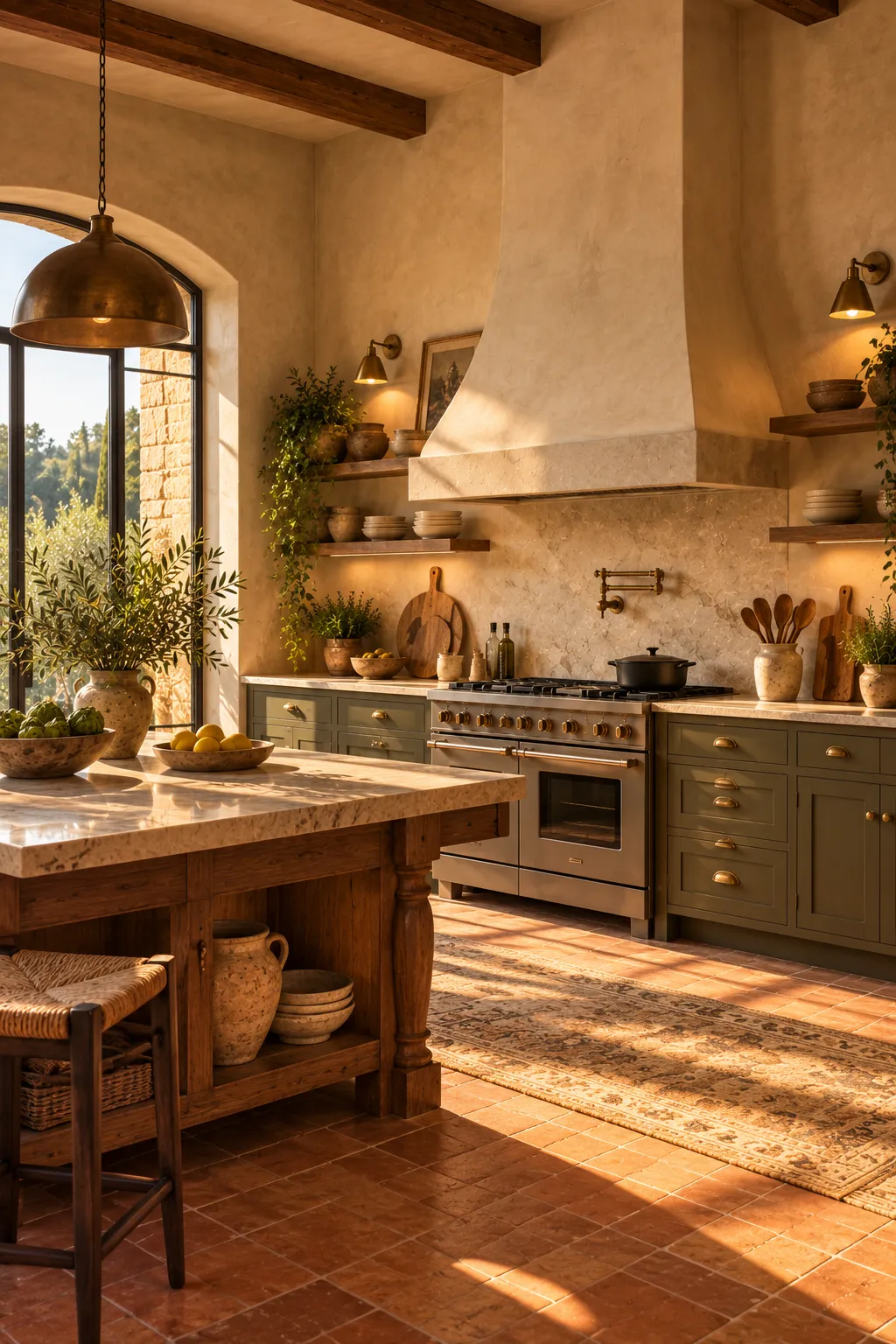

A Tuscan kitchen feels warm before you even start cooking. Think sun-washed walls, clay floors, and wood that looks better with age. The problem is that most Tuscan kitchen ideas online are stuck in the early 2000s, with heavy faux finishes and grape motifs everywhere. This guide takes the modern route. Each idea below is a big, real change, with clear steps on how to get the look in your own home.
Limewashed Walls in Warm Earth Tones
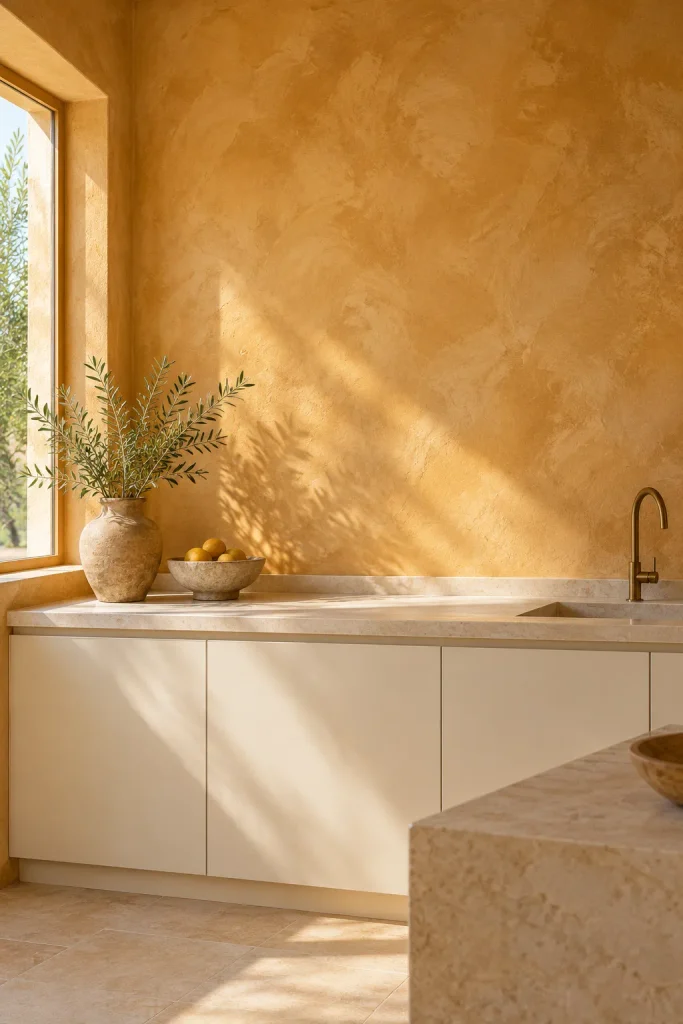
Walls set the mood for the whole room, so start here. Limewash and clay plaster have a soft, cloudy movement that flat paint can’t copy. In daylight they look chalky and calm. At night they glow.
To get the look, pick an earthy shade like ochre, sienna or warm parchment. Apply limewash in two or three thin coats with a wide brush, using loose crisscross strokes. Keep the cabinets and counters simple so the wall texture stands out. Renters can use a limewash-effect paint for a similar result.
A Beamed Ceiling With Terracotta Brick
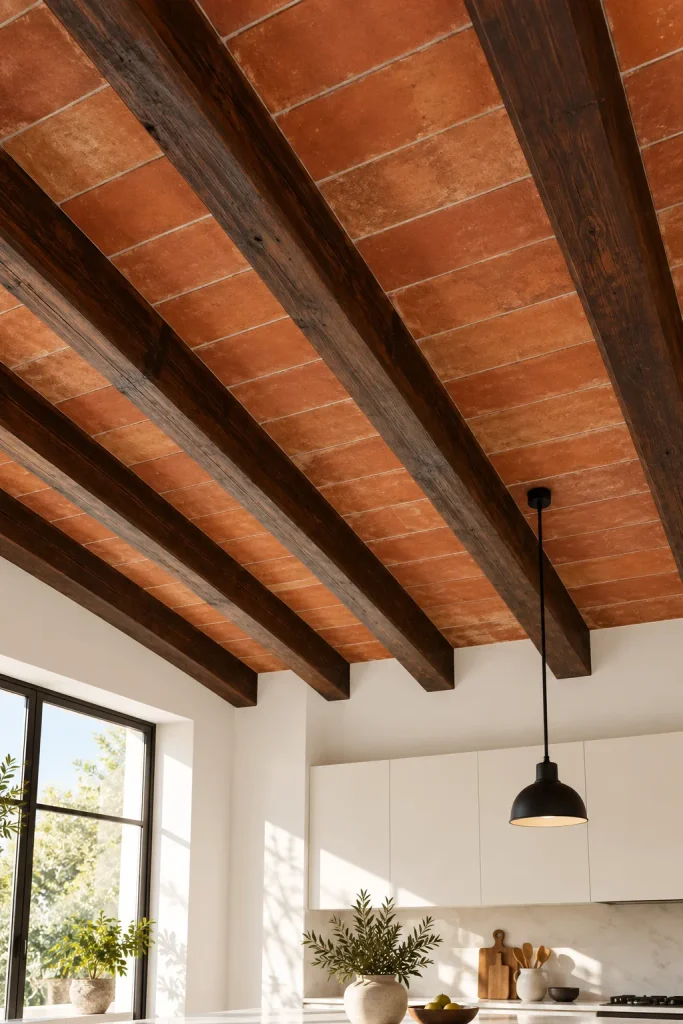
Old Tuscan houses have a beautiful detail overhead. Dark wooden beams cross the ceiling, with flat terracotta bricks laid between them. Italians call it travi e pianelle, and it makes any kitchen feel instantly rooted.
You don’t need real structural beams. Lightweight faux beams and thin brick slips can be fixed to an existing flat ceiling. For a modern finish, keep the walls white or pale cream and the light fittings simple. The ceiling then becomes the one bold feature, not part of a busy theme.
Terracotta Floors With a Modern Layout
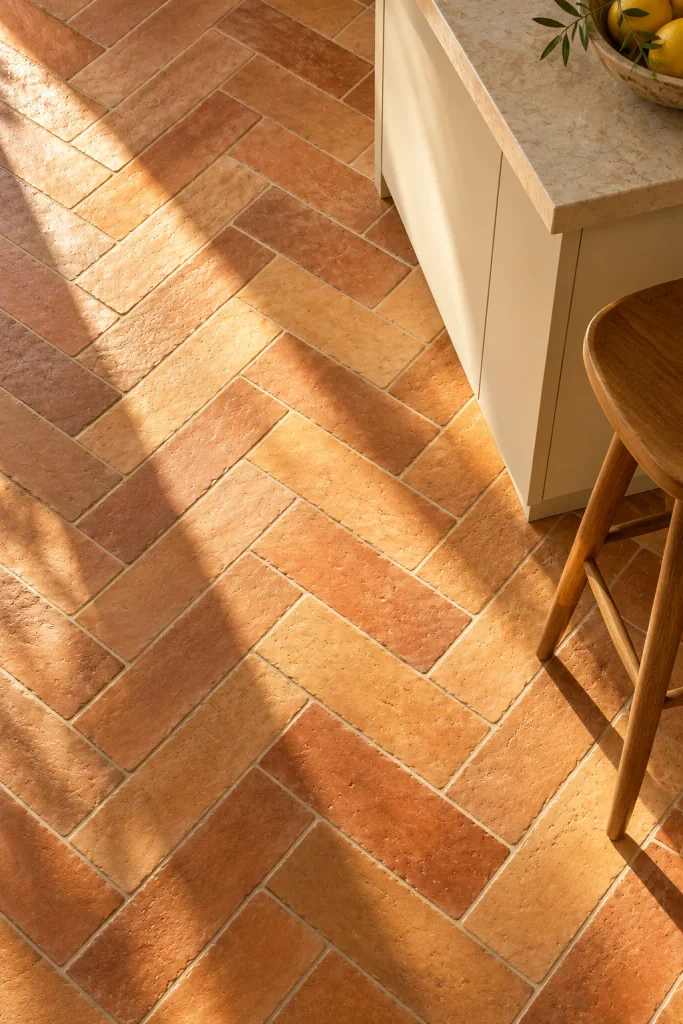
Clay floors are the soul of a Tuscan home. Of all the Tuscan kitchen ideas here, this one has the biggest impact underfoot. Handmade terracotta, called cotto, has small color shifts from tile to tile that look natural and lived-in.
The modern twist is in the layout and finish. Choose a matte, waxed seal instead of a shiny glaze. Try long rectangular tiles in herringbone, or large squares with thin grout lines. Both look fresher than the small, glossy tiles of older Tuscan kitchens.
One quick tip: always seal terracotta before you use the kitchen. Unsealed clay soaks up oil and wine stains fast. Ask your supplier for a penetrating sealer made for handmade tiles.
A Sculptural Plaster Range Hood
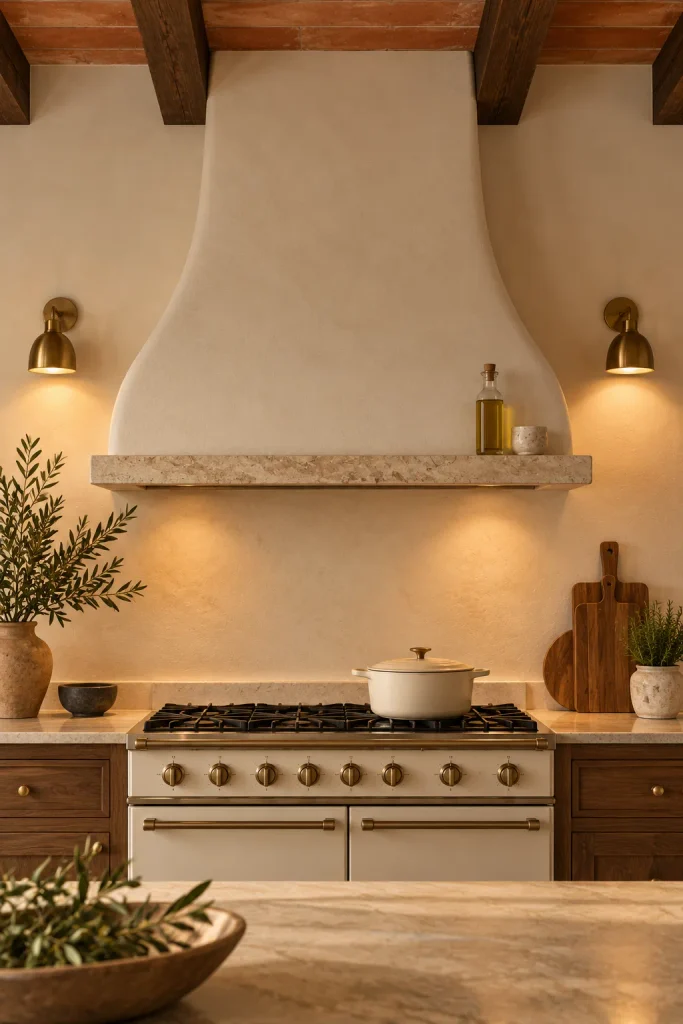
If you make one bold move, make it this one. A smooth plaster hood over the stove turns your cooking zone into the focal point of the room. It mirrors the big open hearths that old Tuscan kitchens were built around. Today’s versions are cleaner, with soft curves and no fussy trim.
Here’s how to get it. Ask a builder to frame the hood, then finish it in the same plaster as your walls. A curved or tapered shape looks the most modern. Add a slim stone ledge at the base for olive oil and salt, and place a small brass sconce on each side.
Olive Green Cabinets, the Easiest of All Tuscan Kitchen Ideas
White cabinets can feel cold next to clay and plaster. Deep olive, sage or moss green feels much more at home. These shades come straight from the olive groves and cypress trees of the Tuscan hills.
Key pieces for this look:
- Shaker or flat-panel cabinet doors in olive or sage
- Aged brass knobs and cup pulls
- Limestone or butcher block countertops
This is a great choice if you want Tuscan warmth without a fully rustic kitchen. It also works well in smaller spaces, where a whole room of natural wood can feel heavy. If you’re unsure about the color, paint only the lower cabinets first.

An Exposed Stone Feature Wall
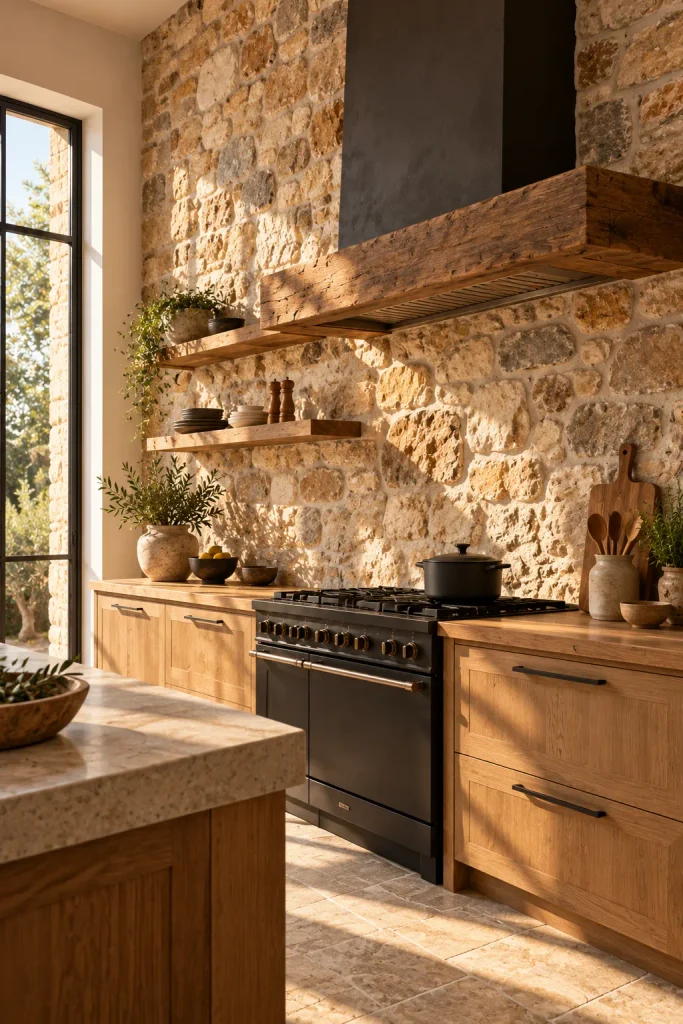
Nothing feels more like a Tuscan farmhouse than raw stone. One stone wall, left uncovered, adds instant age and texture to a new kitchen. It works best behind open shelving, a dining area or the range.
Real stone is heavy and pricey, so many people use thin stone veneer instead. Pick a mix of honey, cream and soft gray stones in irregular shapes. Use a pale lime mortar, set slightly back from the stone faces. That deep, shadowed joint is what makes the wall look old rather than new.
A Chunky Travertine Island
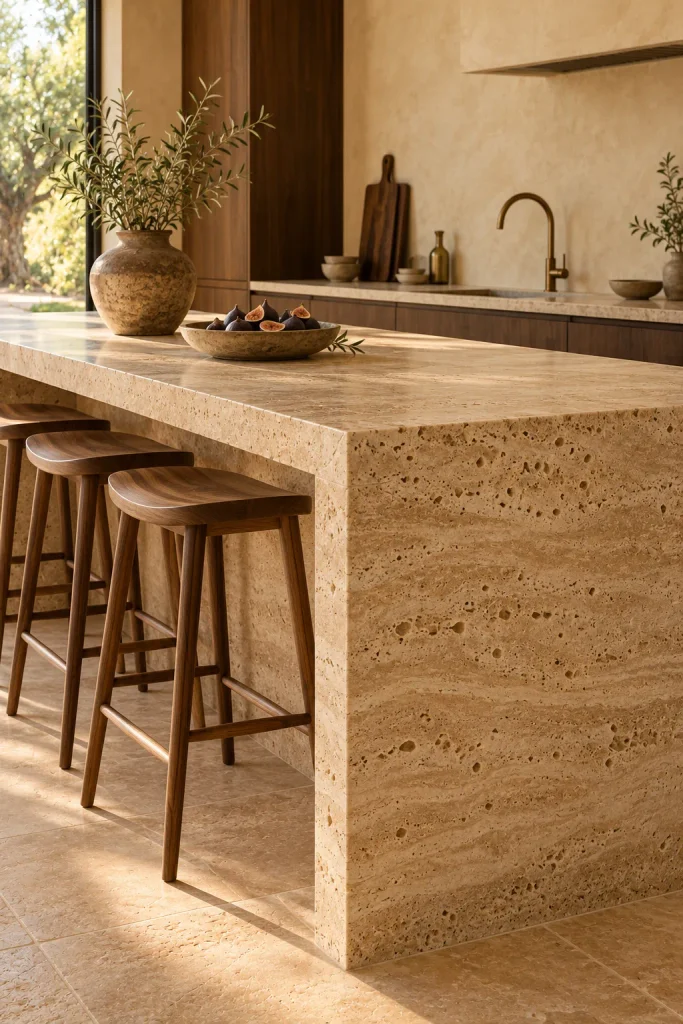
Travertine is having a big moment, and it fits a Tuscan kitchen perfectly. This warm, porous stone has been used in Italy since Roman times. As a solid, chunky island, it looks both ancient and very current.
Go for a honed or brushed finish, not polished. A simple block shape with thick edges looks most modern. Filled travertine is easier to clean, while unfilled travertine shows more natural pits and character. Pair it with olive, cream or walnut cabinets so the stone stays the star.
An Unfitted Kitchen With Vintage Pieces
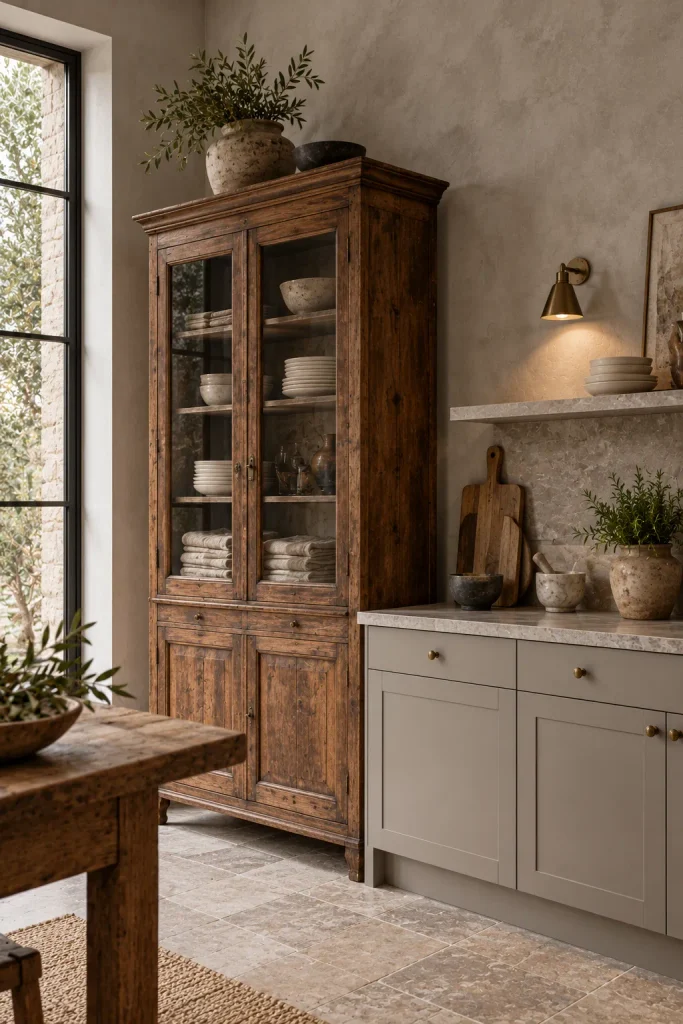
Old Italian kitchens were never one perfect run of matching cabinets. They grew over time, piece by piece. A modern unfitted kitchen copies that feel by mixing built-in units with freestanding furniture.
Start with simple lower cabinets for the hardworking zones, like the sink and stove. Then replace some wall cabinets with a tall antique cupboard, such as an Italian madia or an old painted dresser. Use it for plates, linens and pantry jars. One or two vintage pieces are enough to make the room look collected instead of catalogue-bought.
An Arched Banquette Breakfast Nook
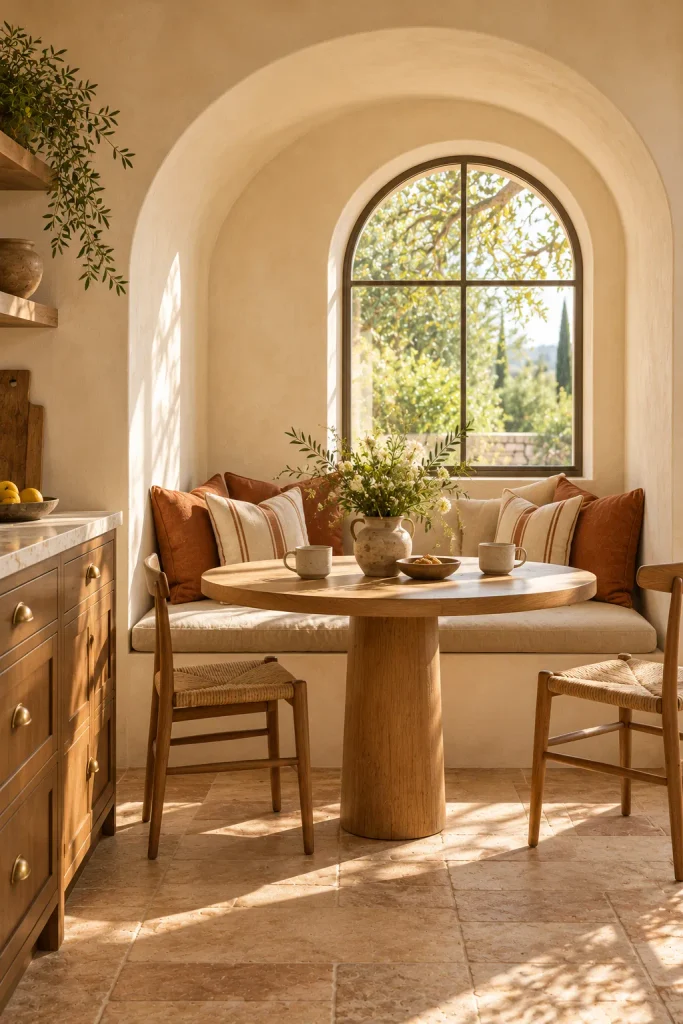
Give your kitchen a cozy corner with a built-in bench set into a plastered arch or under an arched window. Arches are everywhere in Tuscan buildings, and they soften all the straight lines of a kitchen. Add a round or oval wooden table so everyone can slide in easily. Top the bench with linen cushions in rust, cream or a simple stripe. It quickly becomes the spot for morning coffee, homework and long chats.
A Walk-In Pantry Behind an Arch
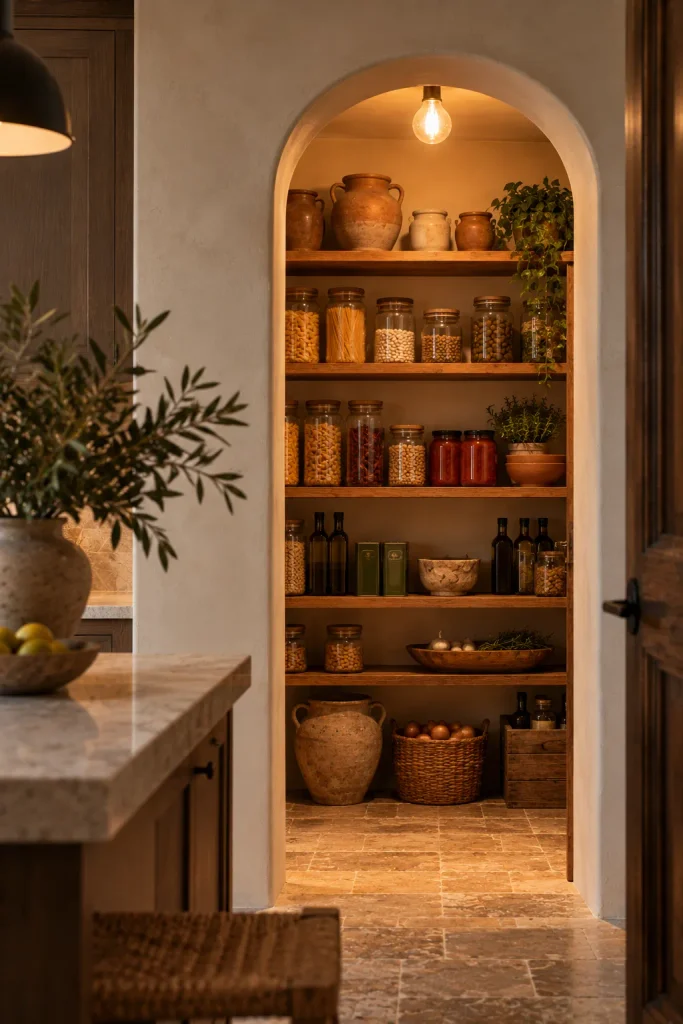
Most old Italian homes have a dispensa, a cool pantry close to the kitchen. It holds olive oil, wine, preserves and dried pasta. A modern version keeps clutter off your counters and looks beautiful with the door open.
You don’t need a big room. A deep closet or the end of a kitchen wall works fine. Frame the opening with a plaster arch, then fit simple wooden shelves inside. Store food in glass jars, clay crocks and tins so everything looks tidy and inviting.
A Wood-Fired Oven Hearth
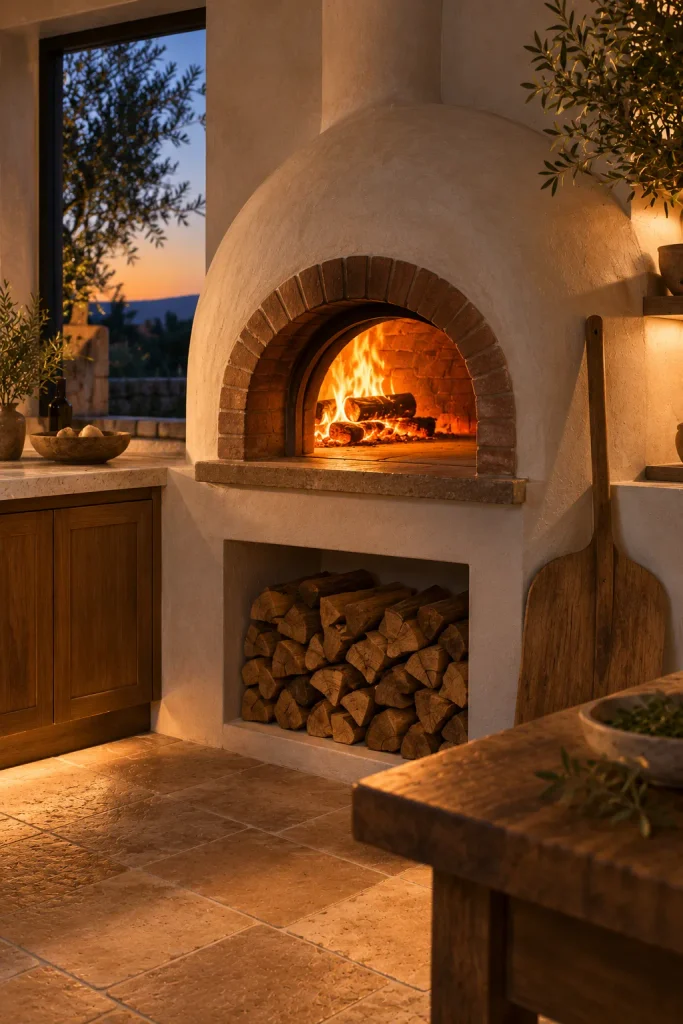
This is the big-budget dream, but it’s worth knowing about if you’re renovating. A domed wood-fired oven built into the wall is the most authentic feature a Tuscan kitchen can have. It bakes crusty bread, blistered pizza and roasted vegetables with real smoky flavor.
Frame the oven opening in brick, with a recessed niche below for firewood. Plan the ventilation and chimney early, because that’s where most of the cost lies. If a real oven isn’t possible, build a brick arch around a standard wall oven. You get the hearth look for a fraction of the price.
A Built-In Wine Wall
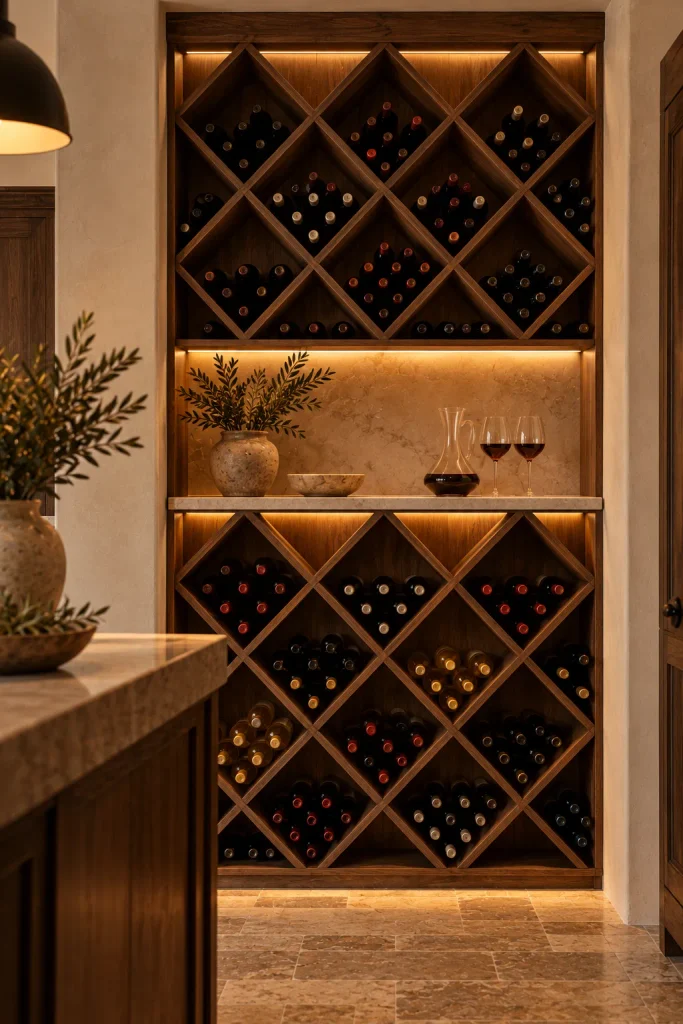
Tuscany is wine country, so a wine wall feels right at home here. It’s practical too, keeping bottles organized and close to the dining table. Done well, it looks like a feature, not storage.
For a modern Tuscan look, build open wooden cubbies or a slim floor-to-ceiling rack in oak or walnut. Set it into a plastered recess or beside the pantry. Add a small stone shelf for opening bottles and holding glasses. If you collect a lot of wine, a glass-fronted cooler can sit inside the same unit.
Open Shelves Filled With Handmade Ceramics
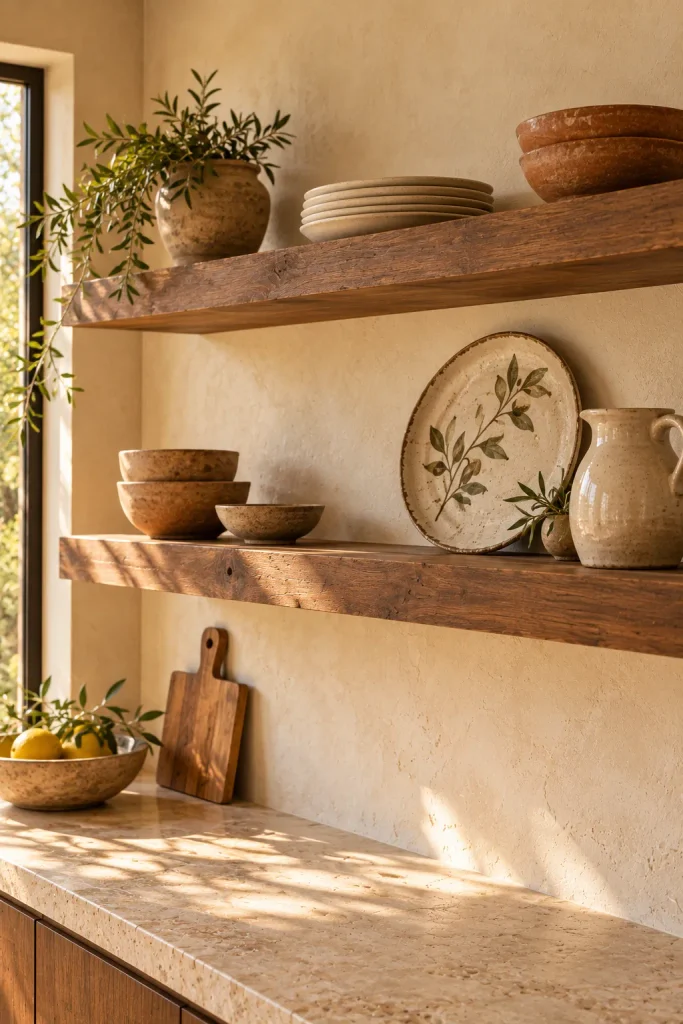
Swapping upper cabinets for open shelves makes a kitchen feel lighter and more personal. In a Tuscan kitchen, those shelves become a display for handmade pottery. Think cream stoneware, rustic terracotta bowls and a few hand-painted serving plates.
Use thick oak or chestnut shelves with hidden brackets for a clean, modern finish. Keep the palette tight, with two or three colors at most. Mix plates, bowls and pitchers, and leave some empty space between them. That breathing room keeps the look calm instead of cluttered.
Layered Lighting in Iron and Terracotta
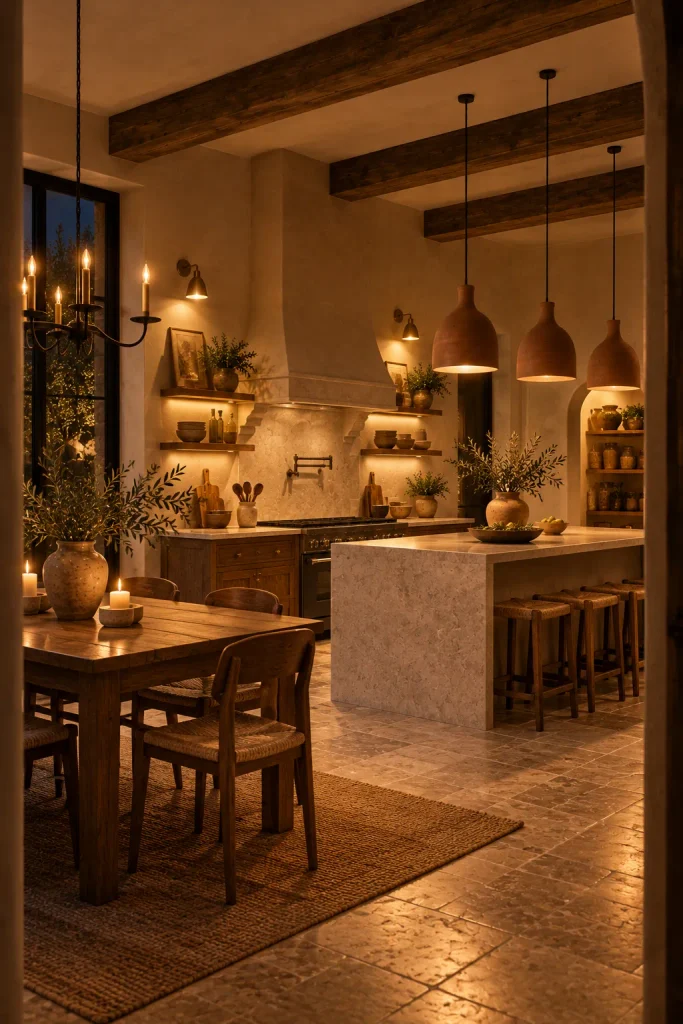
Lighting is where many Tuscan kitchen ideas go wrong. Heavy faux-antique fixtures can make a room look dated fast. Simpler, handmade pieces work much better.
Use a slim wrought-iron chandelier over the table and a row of terracotta or ceramic pendants above the island. Add wall sconces near the hood or shelves for an evening glow. Choose warm bulbs around 2700K for that golden tone. Light at different heights is what makes the room feel cozy after dark.
Open the Kitchen to an Outdoor Loggia
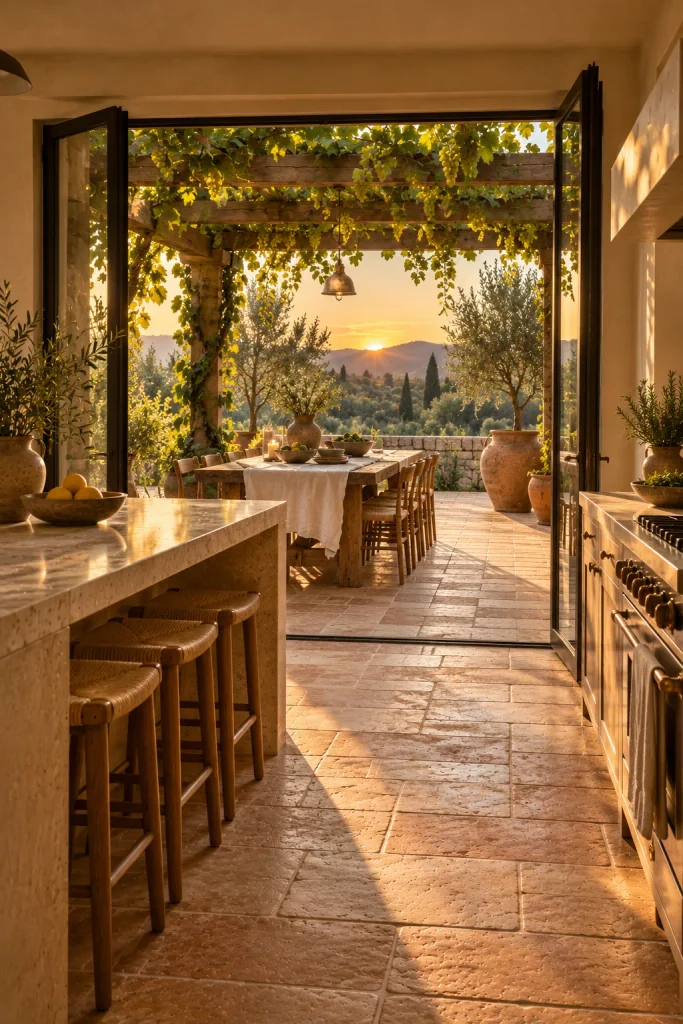
In Tuscany, cooking and eating spill outside. A loggia is a covered terrace, often shaded by a pergola and vines. Linking your kitchen to one is the ultimate way to live the Tuscan style.
Install wide glass or French doors that open fully to the outside. Carry the same terracotta floor through if you can, so both spaces feel like one room. Outside, keep it simple with a long wooden table, a linen cloth and olive trees in large terracotta pots. Even a small patio can work with a pergola and climbing vines.
You don’t have to do it all at once. Choose one anchor, like a plaster hood or a terracotta floor, and build slowly around it. The best Tuscan kitchen ideas get better with every scratch, stain and year of use. Let your kitchen be lived in, and it will start to feel like Italy.