How to Create a Modern Cottage Kitchen With Storybook Charm
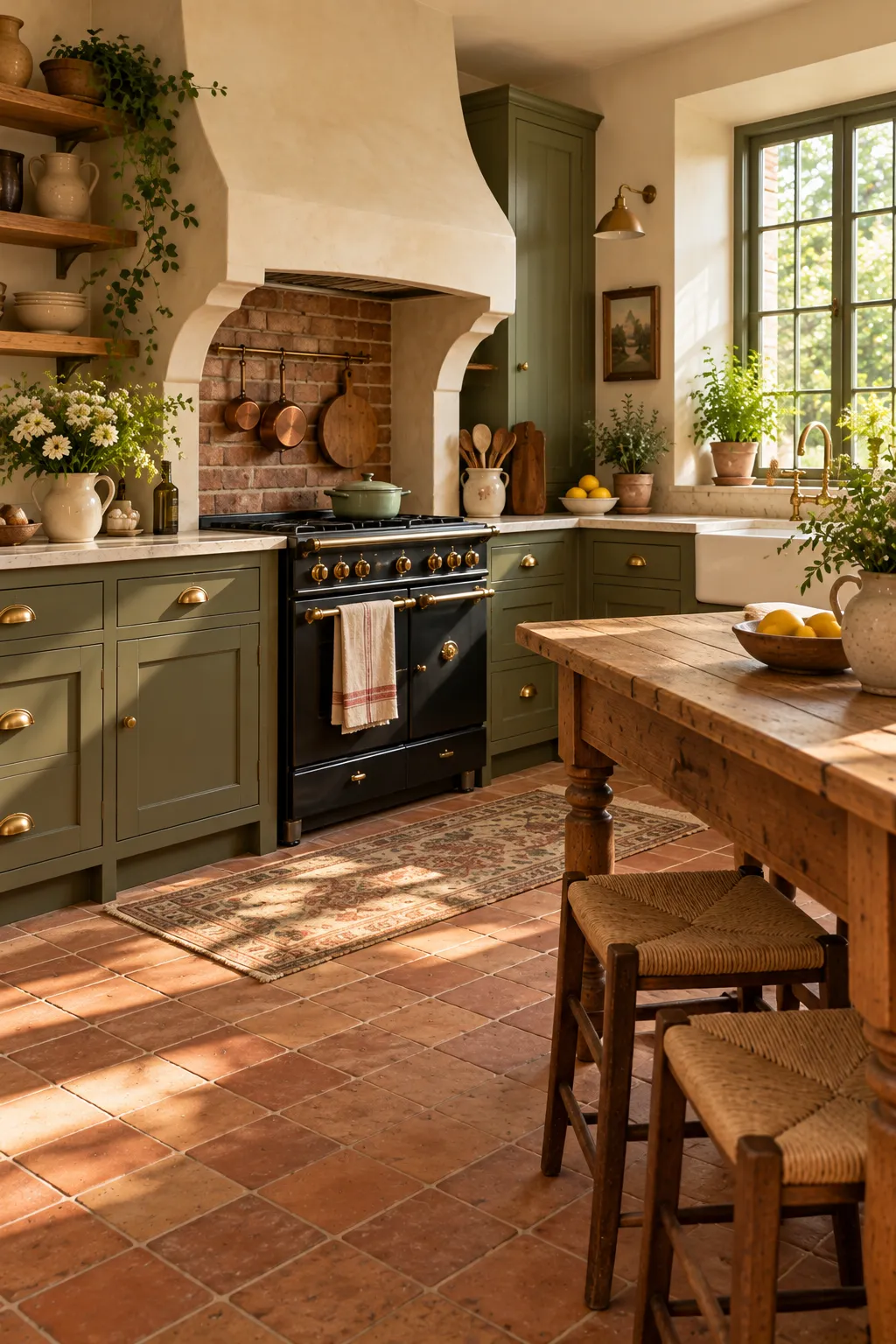

A cottage kitchen should feel like it has always been there. Think worn wood, warm light, and a kettle that never quite goes cold. The challenge today is keeping that storybook feeling without the room looking like a dusty museum. These cottage kitchen ideas focus on big, lasting choices like color, layout, floors, and light, with clear steps so you know exactly how to pull each one off.
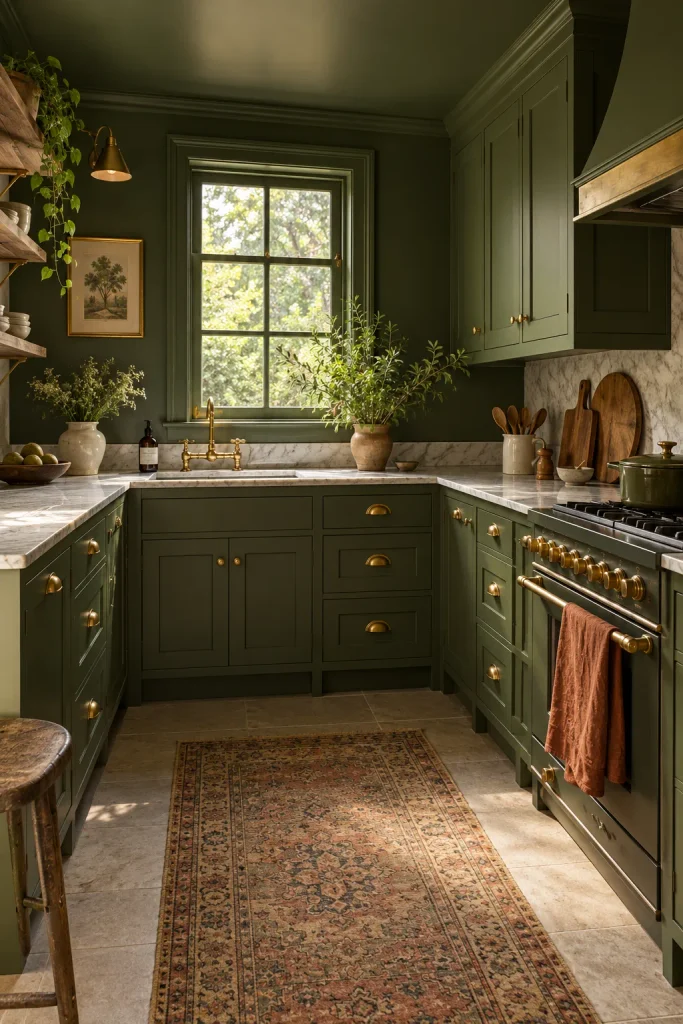
Drench the Whole Kitchen in Moody Olive
Color drenching means painting the cabinets, walls, trim, and ceiling all in one shade. In a cottage kitchen, a deep olive or moss green makes the room feel cozy and tucked away. It also hides awkward corners, because there are no contrasting edges for your eye to catch.
To get it right:
- Use one color everywhere, but change the finish: eggshell for walls, satin for cabinets.
- Go a shade lighter on the ceiling if your kitchen is small or dark.
- Keep worktops pale, like honed marble or light oak, so the green has room to breathe.
Finish with unlacquered brass knobs and pulls. They darken slowly with use, which gives you that lived-in look. One rust or ochre accent, like a linen tea towel, is all the extra color you need.
Build an Unfitted Kitchen With Freestanding Pieces
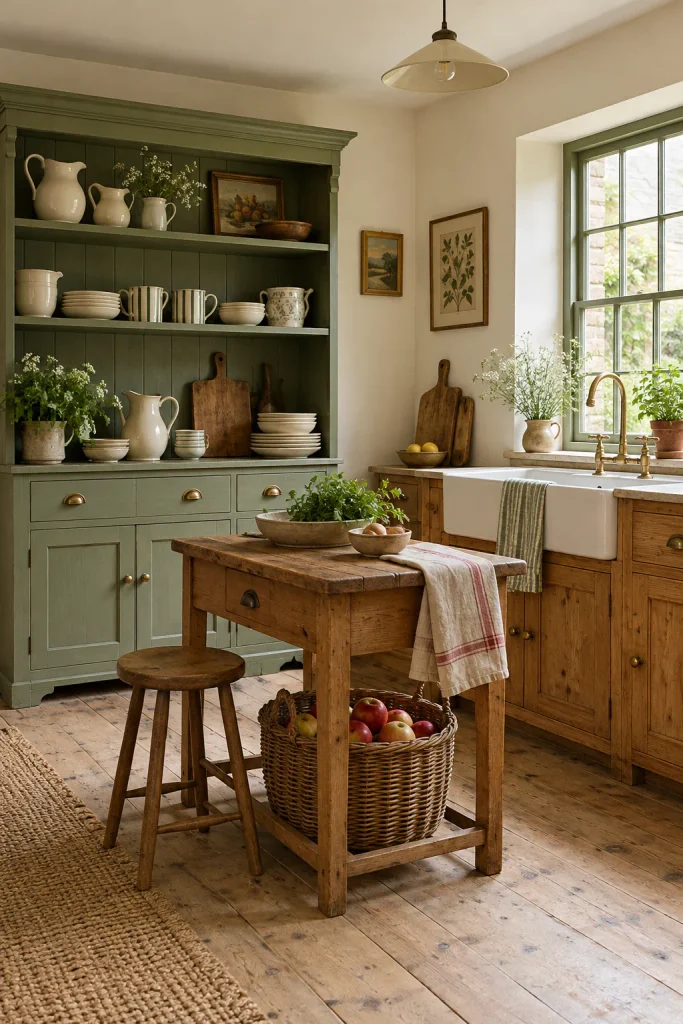
Old cottage kitchens were never one long run of matching cabinets. They grew over the years, one piece at a time. An unfitted kitchen copies that idea, and it’s one of the strongest kitchen trends right now.
Start with a tall dresser or larder cupboard as your main storage. Add a freestanding sink unit or a vintage table where a fitted run would normally go. Keep only the essentials built in, like the cooker and dishwasher. Mix finishes a little, such as painted sage next to oiled pine, so each piece reads as furniture.
Secondhand pieces work beautifully here, so check auctions and Marketplace before buying new. Measure your doorways first, because old dressers are often taller than you expect. Of all the cottage kitchen ideas here, this one does the most to make a new kitchen feel genuinely old.
Frame the Cooker in a Hearth-Style Alcove
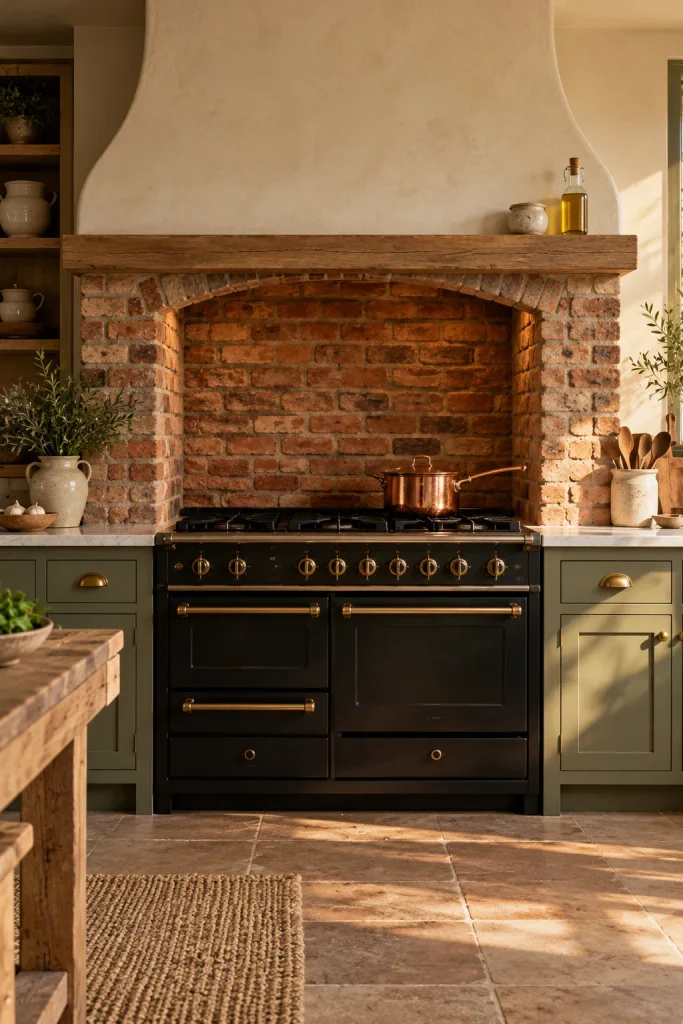
Nothing feels more storybook than a cooker tucked into its own little hearth. You can fake an old chimney breast by building a shallow stud-wall alcove around the range. Line it with reclaimed brick slips, then top it with a curved plaster hood that hides the extractor.
Finish the hood in lime plaster or a plaster-effect paint for soft, uneven texture. Add a narrow oak ledge along its bottom edge for olive oil, salt, and a small framed print. If a full alcove is too much work, the plaster hood on its own still gives you most of the look.
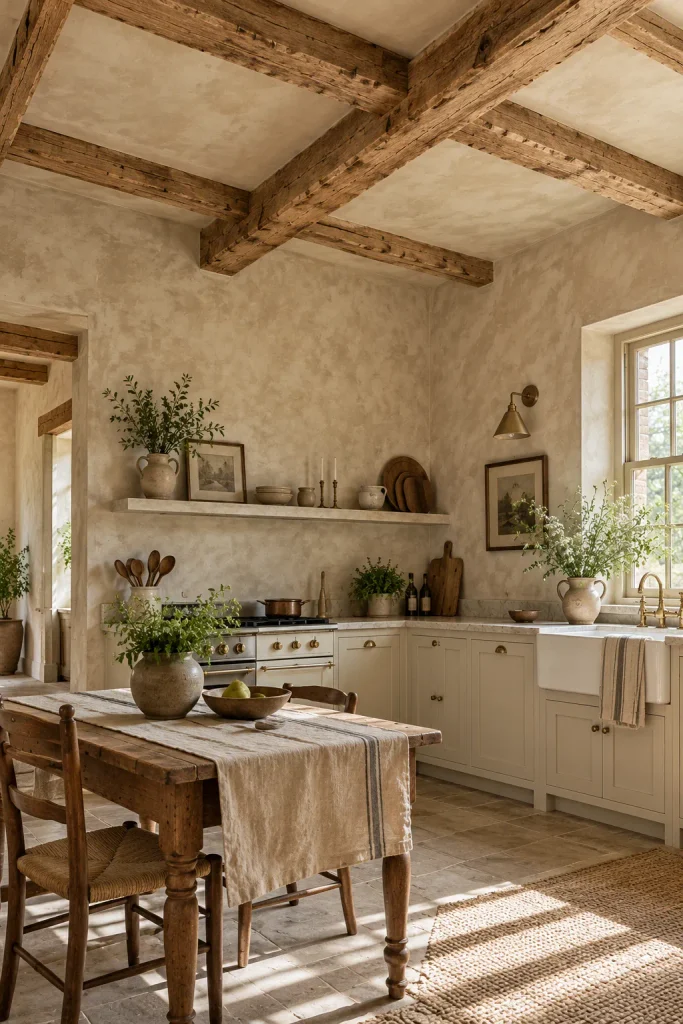
Pair Limewashed Walls With Exposed Beams
Flat white paint can make a kitchen look like a rental. Limewash gives walls a chalky, cloudy finish that shifts as the light moves through the day. Warm whites, oat, and soft clay tones suit a cottage best.
Limewash needs a breathable surface, so use a mineral primer first on painted drywall. Brush it on in loose crisscross strokes, because the uneven finish is the whole point. For the ceiling, boxed beams made from reclaimed boards are lighter and cheaper than solid timber. In a low room, choose pale or whitewashed beams so the ceiling doesn’t feel heavy.
Lay a Terracotta Floor
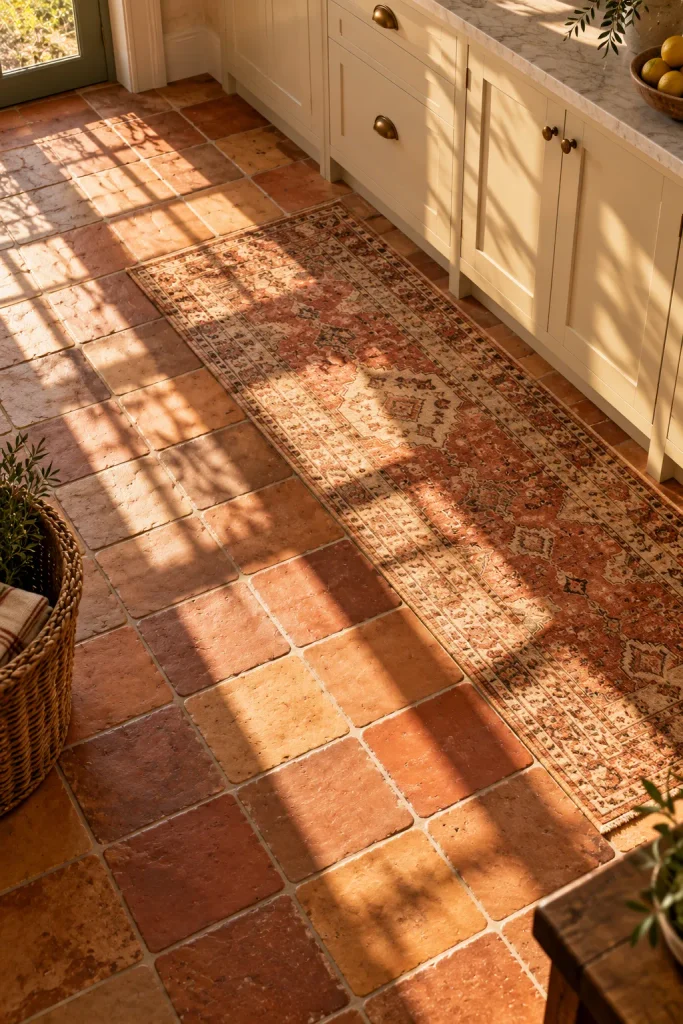
Terracotta warms a kitchen from the ground up. Its orange-pink tones suit almost any cabinet color, from olive to cream. Handmade tiles vary slightly in shade, and they look better the more they’re walked on.
Real clay is porous, so seal it after laying and reseal every year or two. If you’d rather skip the upkeep, terracotta-look porcelain is very convincing now. Choose square tiles for a classic English feel, or hexagons for a softer French look.
Use a Vintage Worktable as Your Island
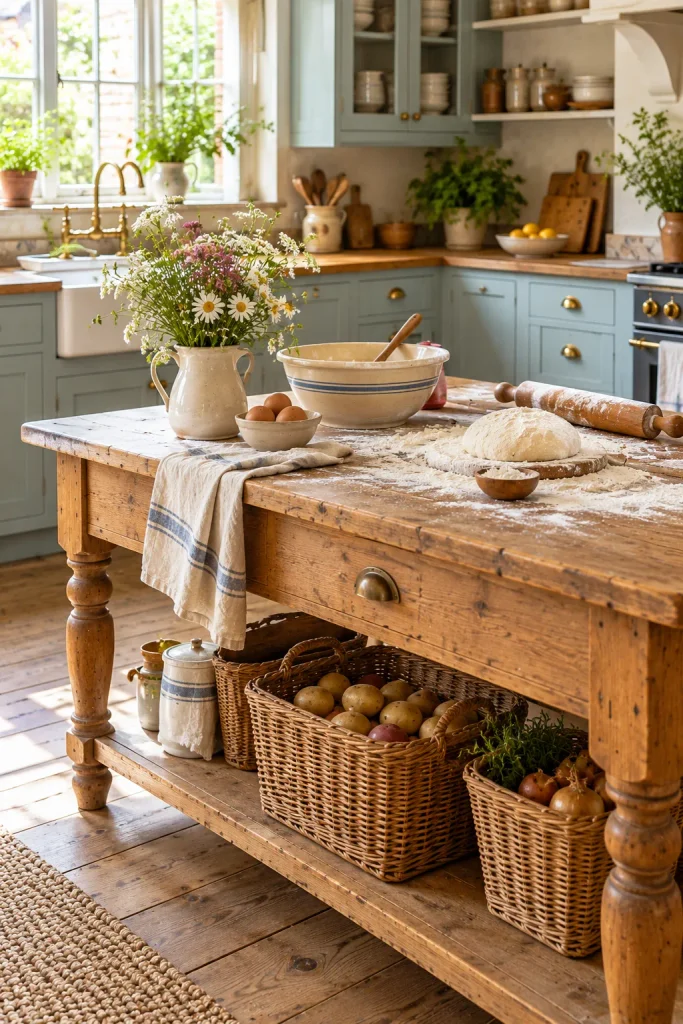
A chunky built-in island can feel too modern for a cottage. A scrubbed pine or oak worktable gives you the same prep space with a lighter, airier look. Light passes underneath it, so the whole room feels bigger.
Check the height before you buy. Kitchen counters sit around 36 inches, while most dining tables are closer to 30. Old baker’s or butcher’s tables are usually the right height, or a carpenter can raise a dining table with blocks. A lower shelf is a bonus for baskets and mixing bowls.
Hide a Walk-In Larder Behind a Cabinet Door
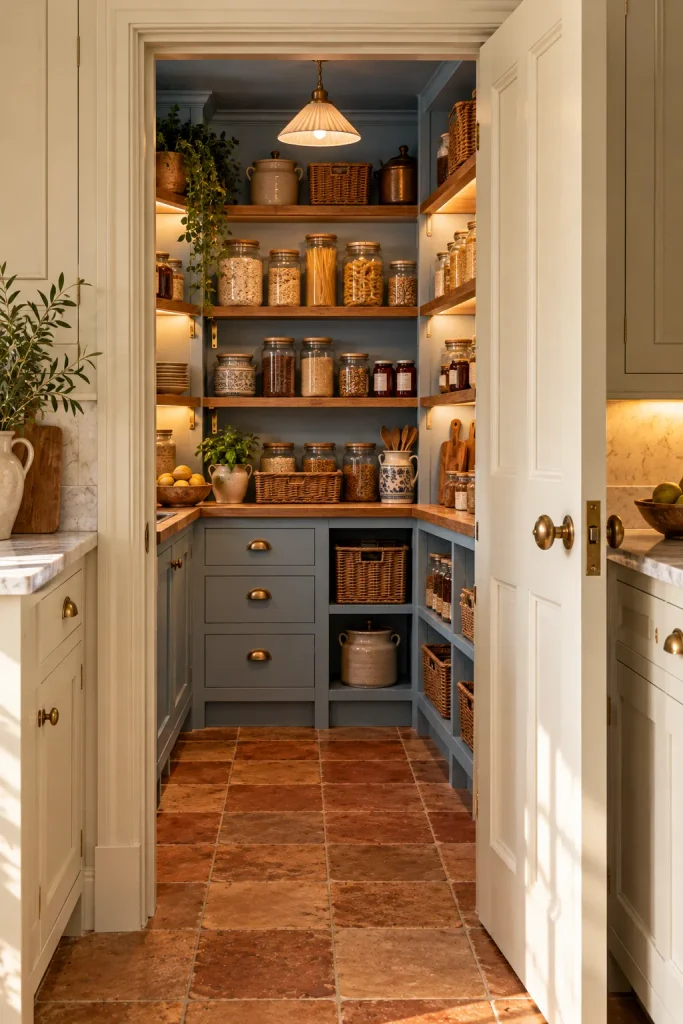
A larder is the dream for anyone who loves old-fashioned kitchens. The modern twist is hiding it. Make the door look like a tall cabinet, so guests have no idea a whole little room sits behind it.
You don’t need much space. A deep cupboard, an awkward corner, or an old coat closet can all work. Fit deep timber shelves, then fill them with glass jars, stoneware crocks, and baskets. Paint the inside a surprise color like powder blue, and add motion-sensor lights so you’re never fumbling in the dark.
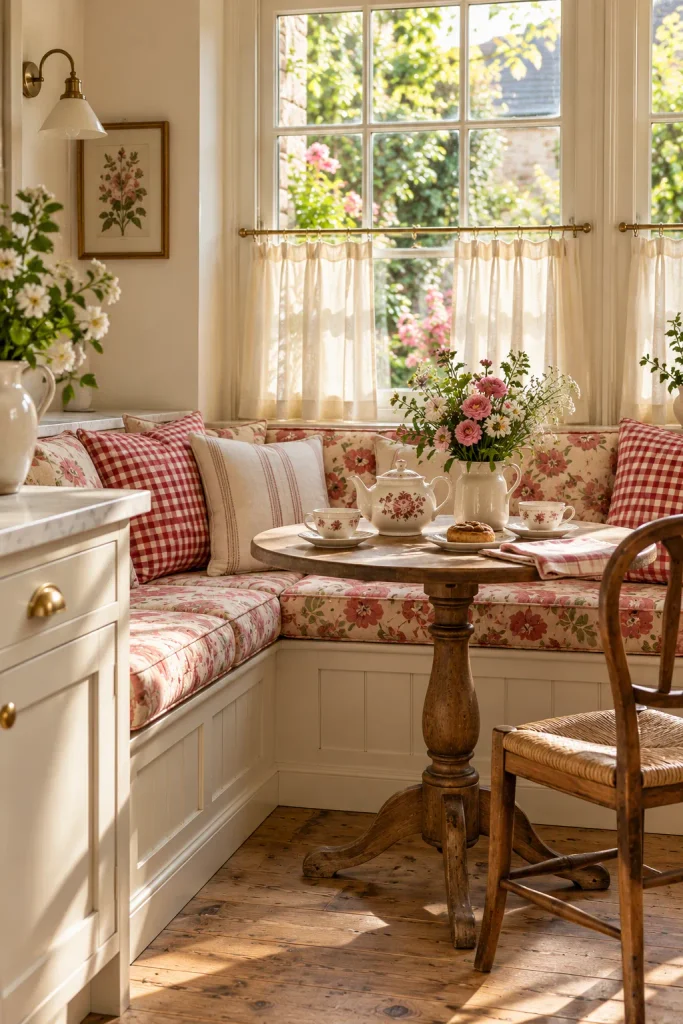
Build a Window Seat Breakfast Nook
A built-in bench under a window gives you the coziest spot for breakfast and afternoon tea. Pair it with a small round pedestal table, which is easier to slide in and out of than a four-legged one. Lift-up lids on the bench turn it into storage for linens and picnic blankets.
Measurements that make it comfortable:
- Seat height: about 18 inches, including the cushion
- Seat depth: 18 to 20 inches
- Cushion: 3 to 4 inches of high-density foam
Mix two or three patterns on the pillows, like floral, check, and stripe. They’ll look cheerful, not chaotic, as long as they share one color. Short café curtains on the lower half of the window give privacy while light still pours in.
Make a Colorful Range Cooker the Star
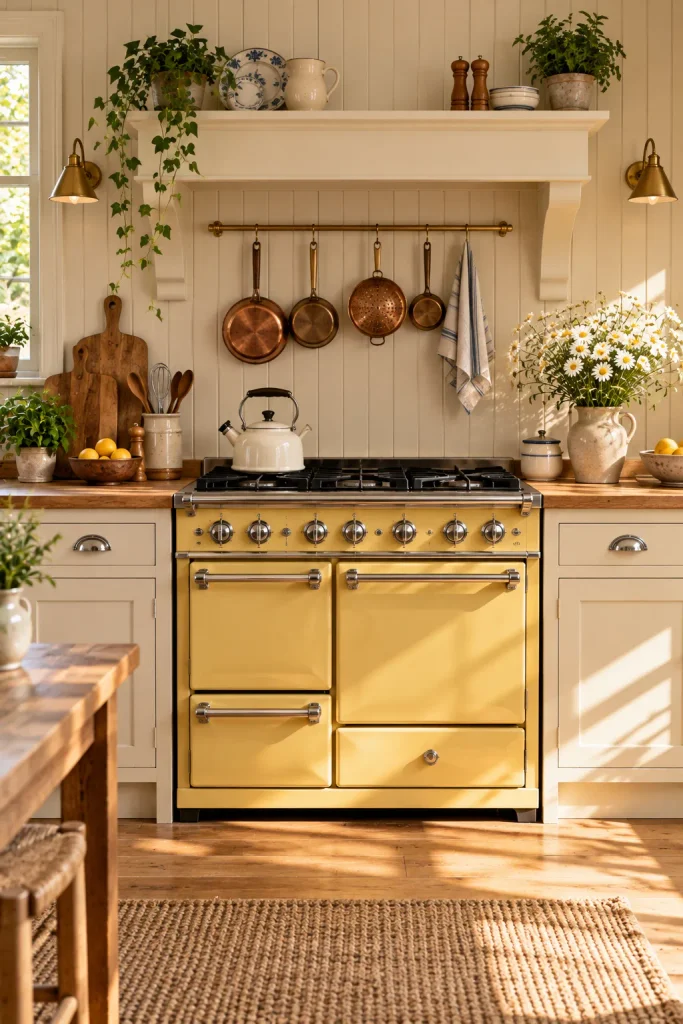
One bold appliance can set the tone for the whole room. A butter-yellow, cornflower-blue, or cream enamel range has the chunky, curvy shape of something that has fed a family for generations. Many retro-style ranges now come with induction or dual-fuel cooking, so you don’t give up performance for looks. Keep everything around it quiet, with plain cabinets and a simple wall, so the range gets all the attention.
Choose Warm Oak Cabinets Instead of Paint
Painted shaker cabinets are everywhere, so natural wood feels instantly fresh. Oiled or limed oak has a soft honey tone that suits a cottage perfectly. It also hides scuffs better than paint, which matters in a busy family kitchen.
Keep the door style simple, like plain shaker or a beaded frame. Pair the oak with a creamy stone worktop such as limestone, quartzite, or honed marble. Pick a matte oil finish over glossy lacquer, so the wood still feels like wood when you touch it.

Tile a Whole Wall in Handmade Tiles
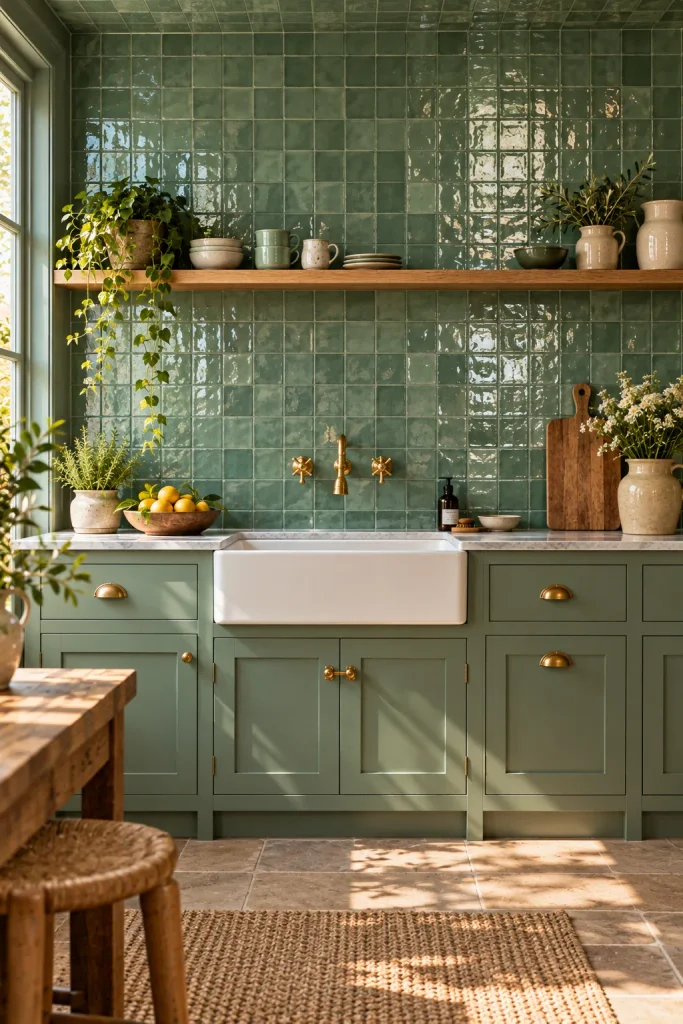
A short backsplash strip can feel like an afterthought. Taking handmade tiles all the way to the ceiling turns one wall into the room’s focal point. Glossy, slightly wobbly tiles catch the light and add movement that flat tiles never can.
Choose a soft shade like buttermilk, sea green, or chalky pink. Use grout close to the tile color so the wall reads as one surface. A simple stacked or brick pattern is best, since the tiles already carry plenty of interest. This works especially well behind a sink with a single open shelf.
Swap Cabinet Doors for Fabric Skirts
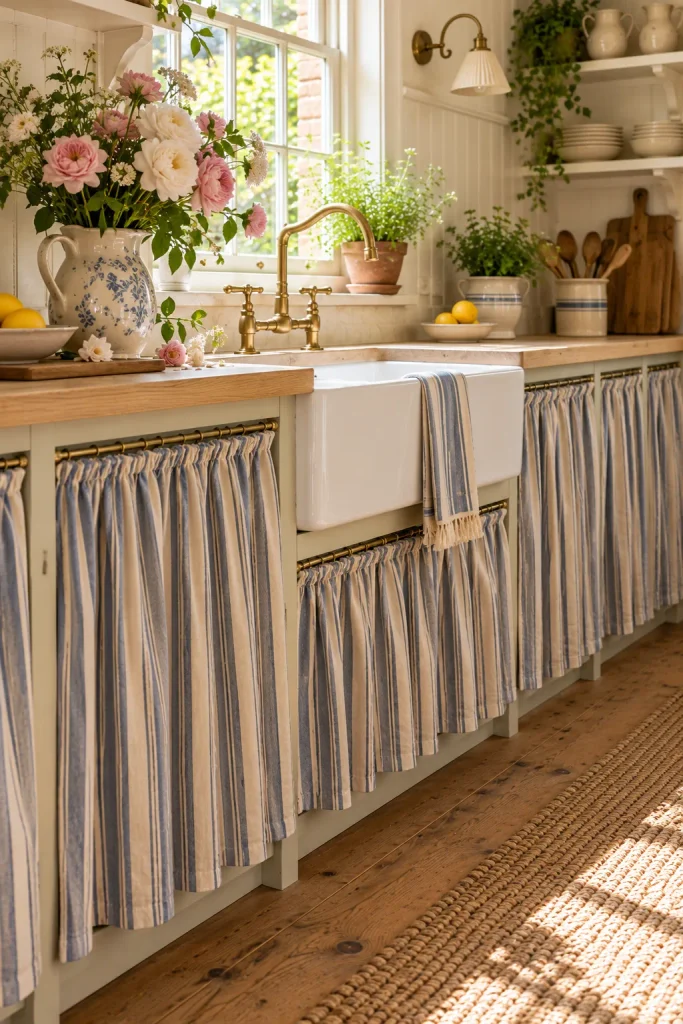
Fabric-fronted cabinets are one of the sweetest modern cottage trends. Instead of doors, the lower cabinets get gathered curtains on a slim rod or curtain wire. It softens the room, adds pattern, and costs far less than new doors.
How to make it work:
- Use washable cotton or linen, about 1.5 times the width of the opening.
- Mount the rod just under the worktop so the fabric hangs straight down.
- Keep it to one area, like the sink run, so it looks intentional.
Ticking stripes and small checks feel crisp and modern. Tiny florals lean more romantic. Either way, you can wash or swap them whenever you want a change.
Open the Kitchen to the Garden
Cottages have always been tied to their gardens. Glazed French doors or a stable door opening straight onto a patio brings that connection back. Natural light floods in, and fresh herbs are only a few steps away.
Slim steel-look frames feel modern, while painted timber feels more traditional. Paint timber doors a soft contrasting color like duck-egg blue or sage. Outside, line the step with terracotta pots of basil, mint, and chives.

Plan Lighting in Warm, Low Layers
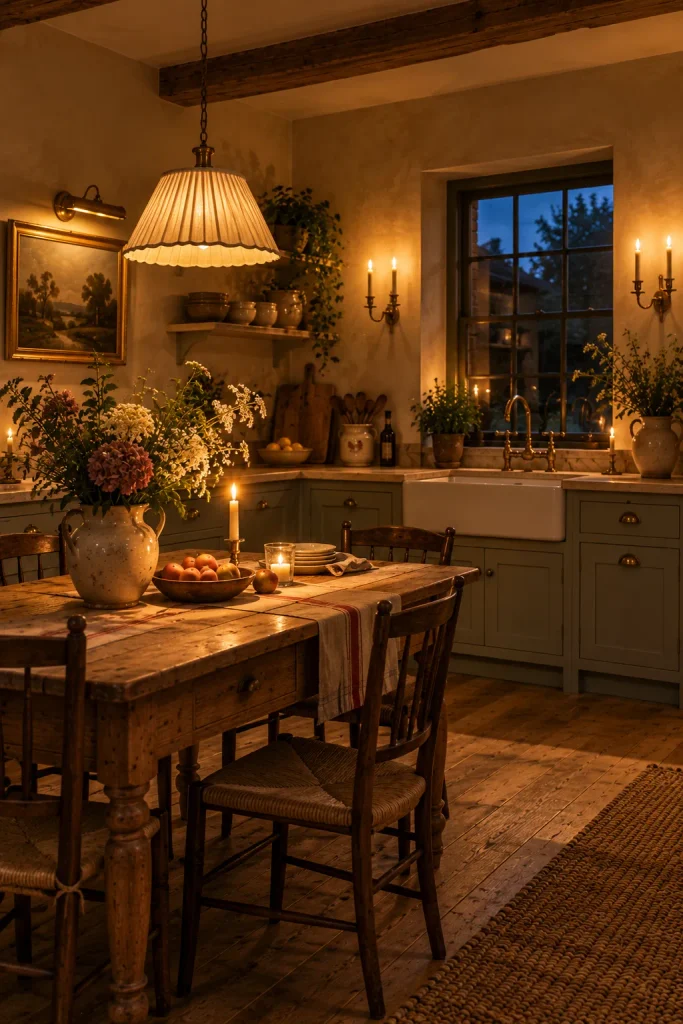
Many cottage kitchen ideas forget about lighting, yet it changes everything. Rows of bright downlights flatten all the texture you’ve worked hard on. Light the room like a living room instead, with several small pools of warm light.
- A pleated fabric pendant over the table or island
- Brass picture lights over a dresser or painting
- Wall sconces beside the window or range
- Under-cabinet strips for practical task lighting
Use bulbs around 2700K and put everything on dimmers. In the evening, the room will glow like a lantern. Plug-in sconces let you add layers without any rewiring.
Make Room for an Armchair by the Stove
The oldest cottage kitchens were the heart of the home, where people cooked, ate, and warmed up by the fire. If you have space, bring that back with a small wood-burning or electric stove and one comfy armchair. Suddenly the kitchen becomes a place to linger, not just a place to cook.
A compact stove on a stone hearth fits into surprisingly small corners. Always have it fitted by a certified installer and check local rules first. Add a reading lamp, a little side table, and a basket of logs, and you’ve made the best seat in the house.

You don’t need a thatched roof or a village green to get this look. Most of the magic comes from pieces with a bit of history, warm light, and materials that age well instead of staying perfect. Start with the one idea you keep coming back to, live with it for a while, and let the rest follow. The best cottage kitchen ideas are the ones that make you want to put the kettle on and stay a little longer.