How to Style a Retro Kitchen With Pinterest-Perfect Vintage Charm

Retro kitchens are all over Pinterest right now, and it’s easy to see why. They feel warm, cheerful and full of character, which is exactly what an all-white kitchen lacks. The tricky part is getting that vintage charm without the room looking like a stage set. These big, modern ideas show you how to style a retro kitchen, with the key pieces and simple steps that make each look work.
Make a Colored Range the Star of the Room
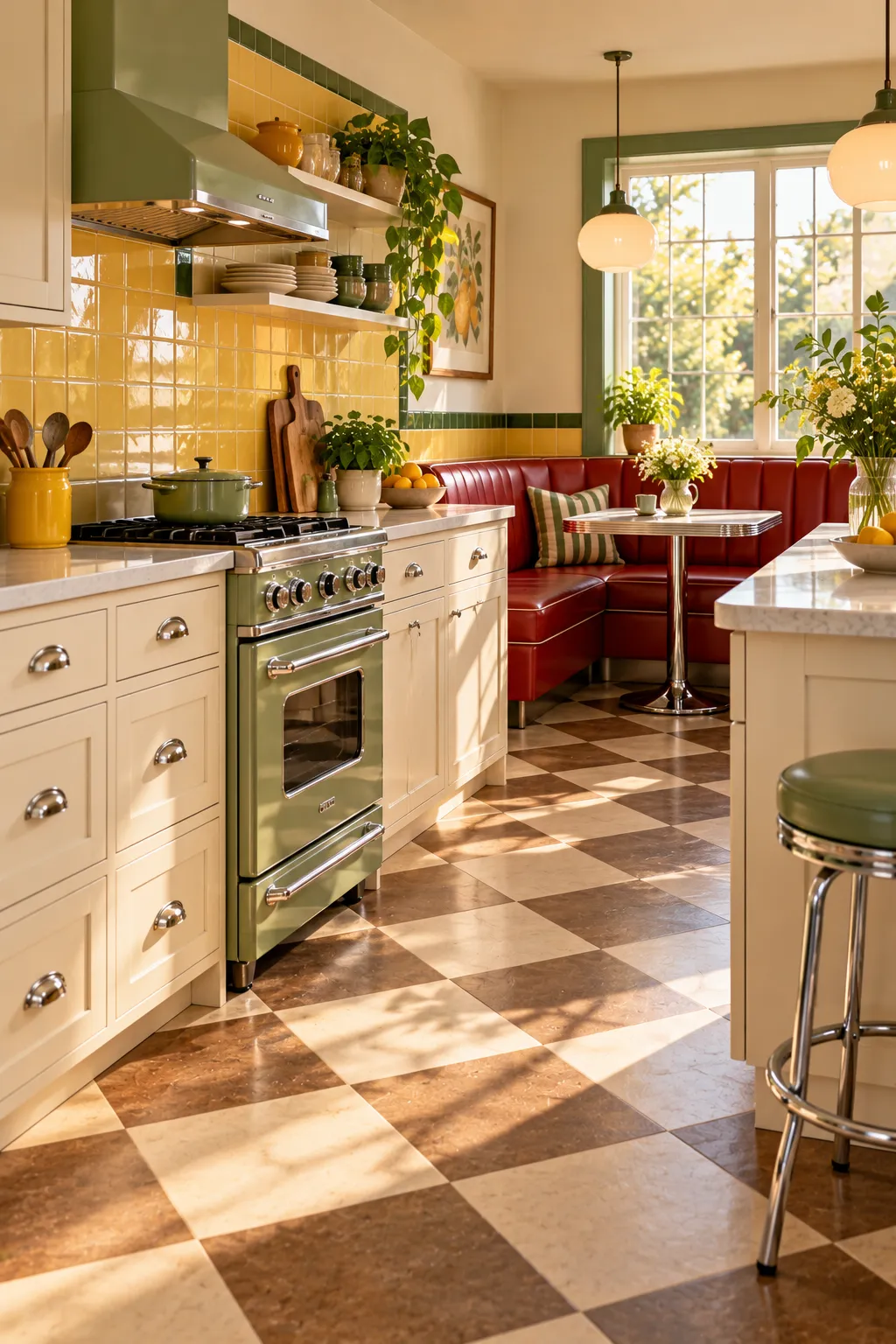
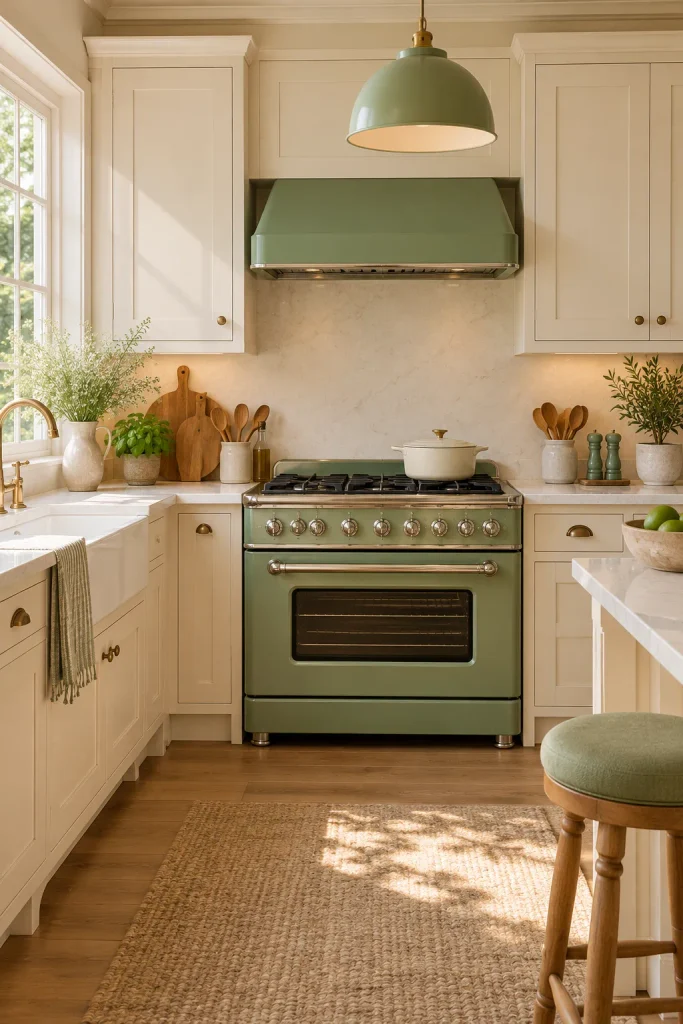
A range in a real color is the quickest way to give a kitchen vintage soul. Think sage green, butter yellow, powder blue or deep cherry red. Look for rounded edges, chrome knobs and a chunky, solid shape. New retro-style ranges give you that look with modern burners and reliable ovens inside.
Keep everything around it calm so the range can shine. Warm cream or soft greige cabinets work best. Then repeat the range color just once or twice, in a pendant shade or a stool seat. That small echo makes the room feel planned, not busy.
Turn the Checkerboard Floor on Its Side
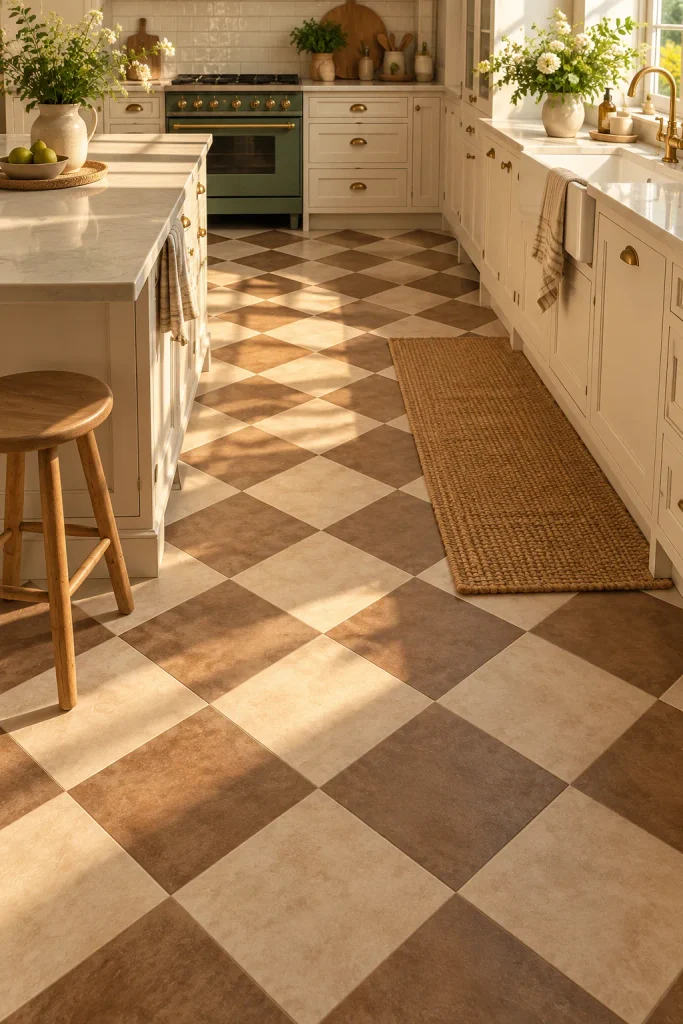
Black-and-white checkerboard floors are everywhere, so give yours a modern twist. Lay the tiles on the diagonal and choose softer colors, like oat and tobacco brown or cream and olive. The angled lines make a small kitchen look wider. The muted shades feel calm and current rather than loud. Use matte vinyl or real linoleum for comfort underfoot, or cement tile for more texture.
Tile a Whole Wall in Glossy 1950s Squares
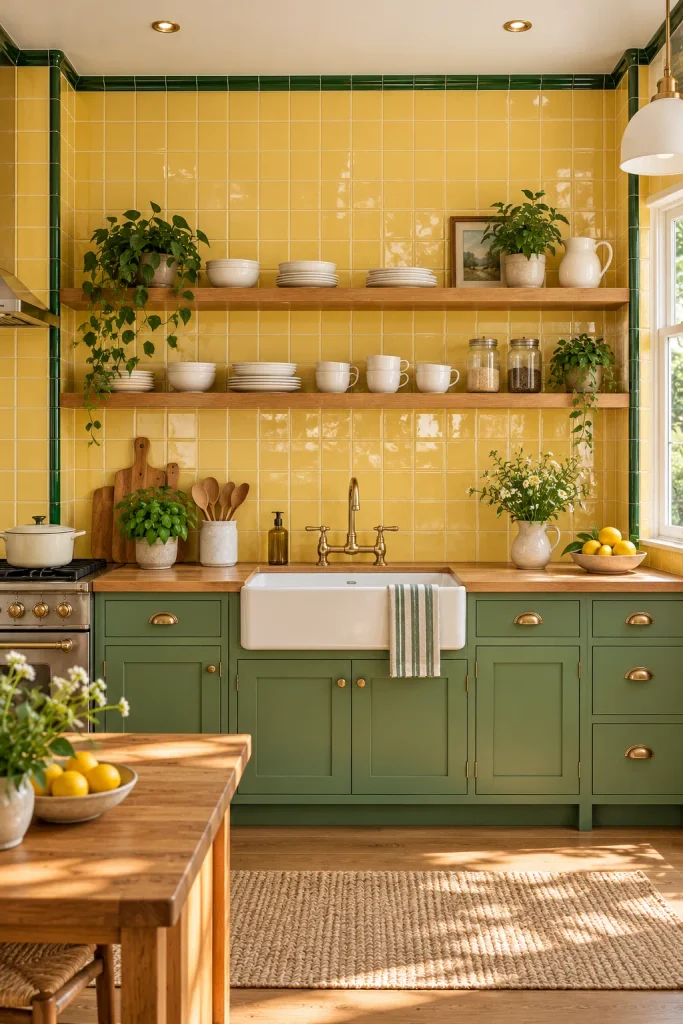
Instead of a small backsplash, take square tile all the way to the ceiling. Glossy four-inch squares in butter yellow, mint or blush pink were classic in 1950s homes. On a full wall, they look bold and surprisingly modern. They are also easy to wipe clean behind a busy cooking zone.
How to get the look:
- Pick one soft pastel tile with a high-gloss finish.
- Edge the tiled area with bullnose trim in a deeper shade, like forest green or black.
- Use white grout so the grid looks crisp.
- Keep the counter plain, such as butcher block or white quartz.
Build a Diner Booth Into a Corner
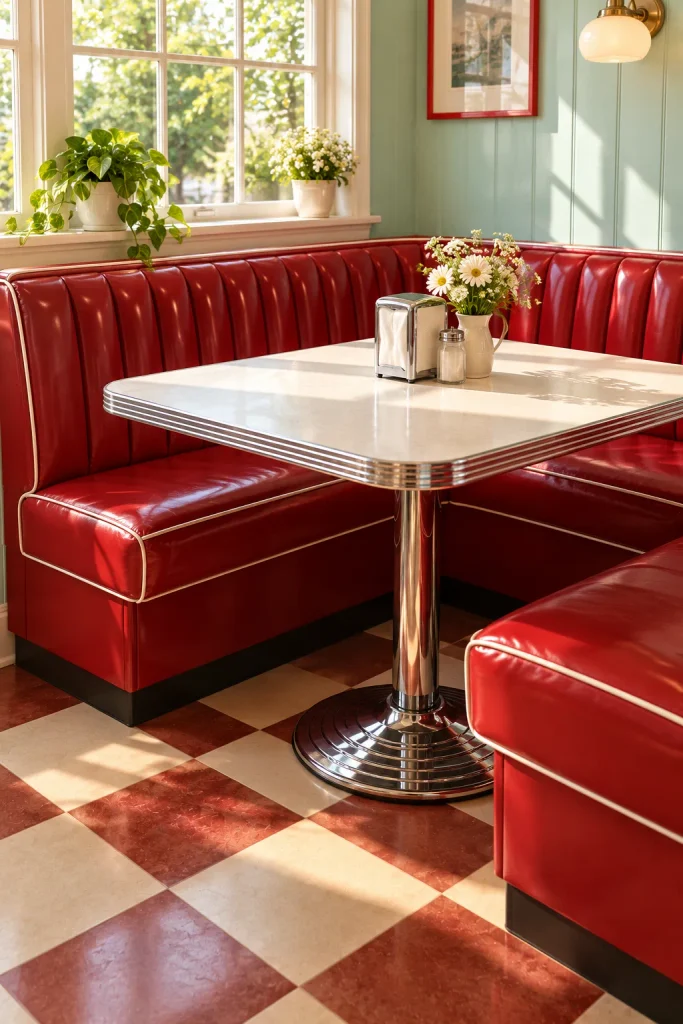
A built-in booth gives you seating, storage and a cozy breakfast spot all at once. It fits neatly into a corner or under a window. It also uses awkward space that a regular table would waste. This one move can make a retro kitchen feel like your favorite neighborhood diner.
Choose wipeable vinyl or performance fabric for the seats. Cherry red, teal and mustard all look great, especially with channel tufting or white piping. For the table, pick a laminate top with a ribbed chrome edge on a single pedestal leg. The pedestal makes sliding in and out much easier.
No space for a full built-in? Set two upholstered benches at a right angle instead. Keep the backs high so it still reads as a booth.
Choose Two-Tone Cabinets in a Classic 1950s Pairing
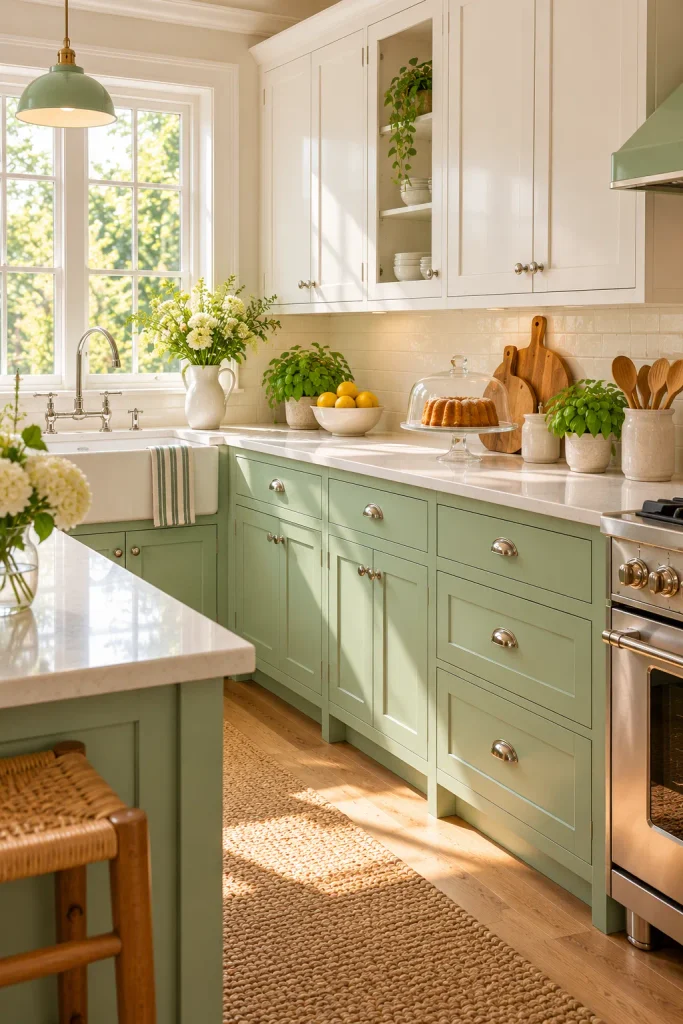
Two-tone cabinets were a big part of mid-century kitchens, and they feel fresh again today. The trick is a soft color on the bottom and a light neutral on top. Mint lowers with white uppers is the classic pairing. Powder blue with cream, or pale pink with warm white, works just as well.
Putting the color on the lower cabinets keeps the room from feeling top-heavy. Add chrome bin pulls or polished nickel knobs to sharpen the look. A satin or gloss paint finish feels more authentic than flat paint. It also handles splashes and fingerprints much better.
Bring Back Patterned Laminate Counters
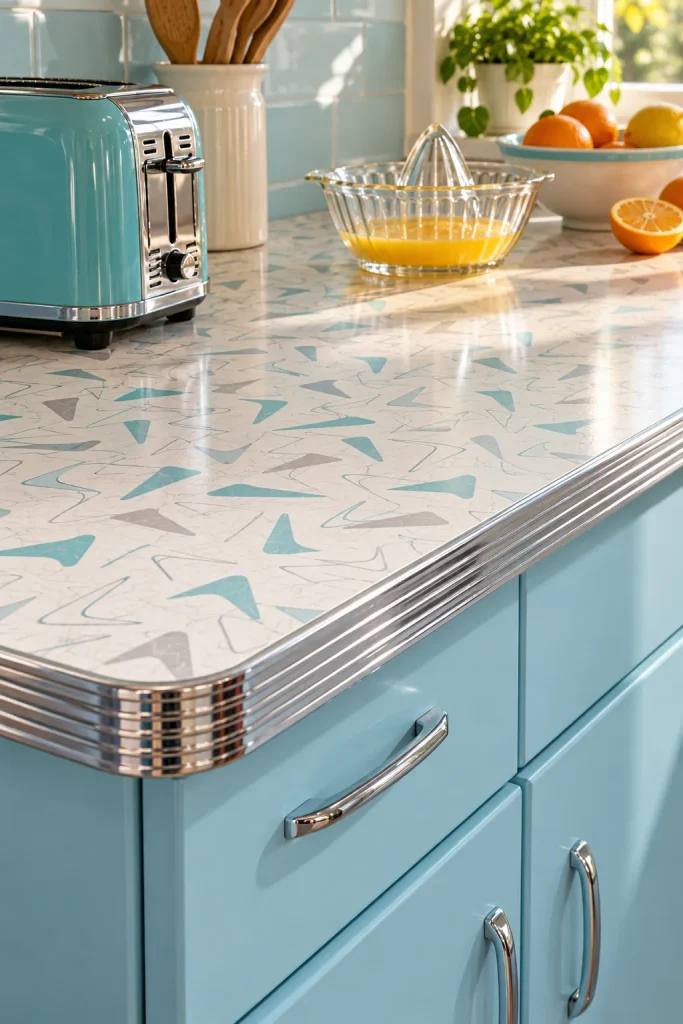
Laminate counters are making a real comeback, and vintage prints are the reason. Boomerang, speckle and cracked-ice patterns now come in faithful modern reproductions. They cost far less than stone and suit a retro kitchen perfectly. Finish the edge with a ribbed aluminum strip for that true 1950s detail.
Keep your cabinets plain when the counter has a pattern. Two patterns side by side get messy fast. Boomerang laminate with powder blue doors, for example, looks sharp and period-correct. It’s also a smart choice if you want a big change on a modest budget.
Add Terrazzo for a Mid-Century Modern Edge
Terrazzo was a mid-century favorite, and it’s one of the most modern ways to bring that era home. The speckled mix of stone chips adds color and texture without any extra decor. Use it on the countertops, the island or even the floor. A creamy base with chips in rust, sage and charcoal feels warm and current. Pair it with flat pale sage cabinets and slim brass handles to keep the look clean.

Go Full 1970s With Walnut and Burnt Orange
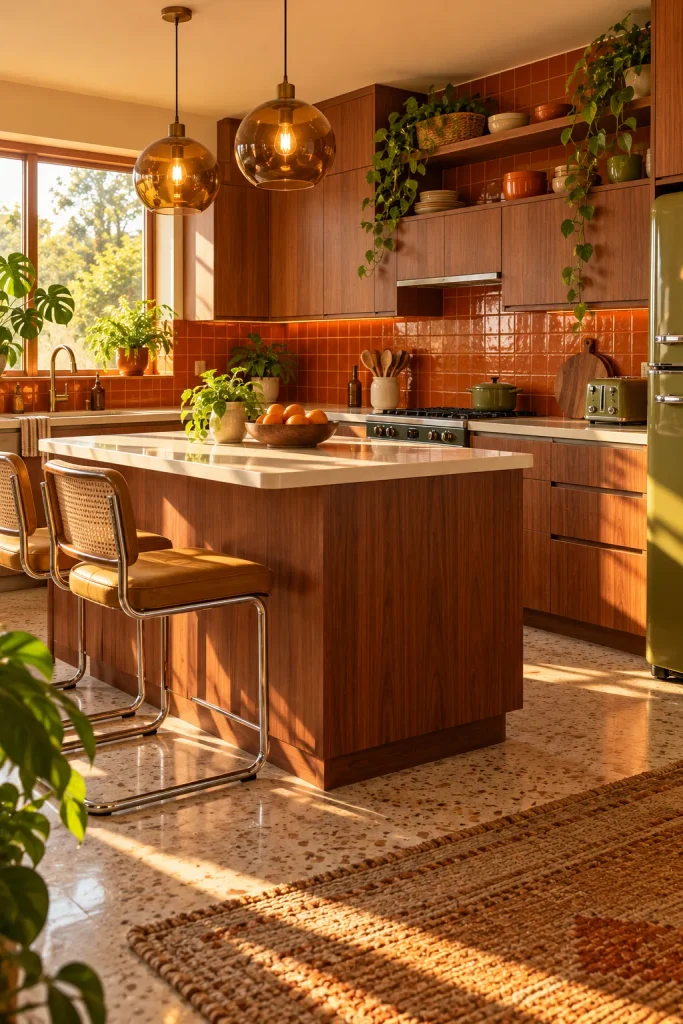
Not every vintage kitchen has to be pastel. The 1970s brought rich wood cabinets and earthy colors like burnt orange, rust and harvest gold. That palette is popular again because it feels warm and cozy. It works especially well in kitchens that get little natural light.
Start with flat-front walnut or teak cabinets, or reface your existing doors in wood veneer. Add a glossy burnt orange tile backsplash behind the counters. Hang smoked amber glass pendants and set a few trailing plants on an open shelf. Keep handles slim, or use finger pulls, so the wood grain stays the focus.
Soften Everything With Space-Age Curves
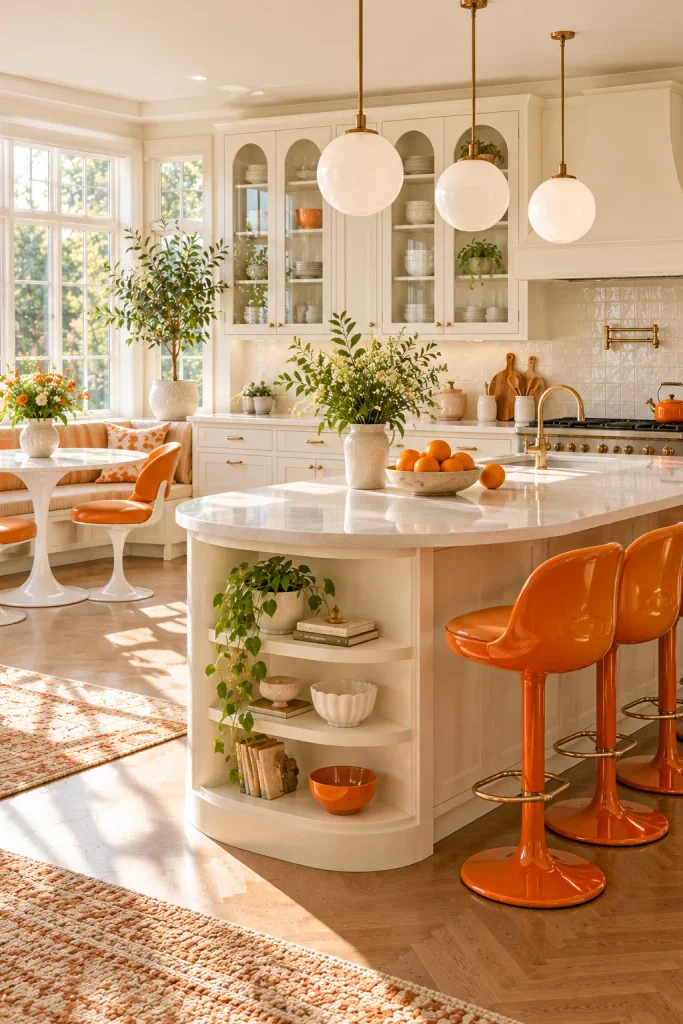
The 1960s loved the space age, and rounded shapes were everywhere. Curves are also a big modern trend, so this look feels current. Think of a rounded island end, open shelves with curved corners and arched glass cabinet doors. Globe pendants and a white tulip-style table finish the look.
Keep the palette clean, with crisp white, warm cream and one pop of tangerine or teal. Glossy surfaces help because they catch the light like the shiny kitchens of that era. Avoid too many sharp lines in the same room. The softness is what makes the space feel playful and modern.
Try an Unfitted Kitchen With a Vintage Dresser
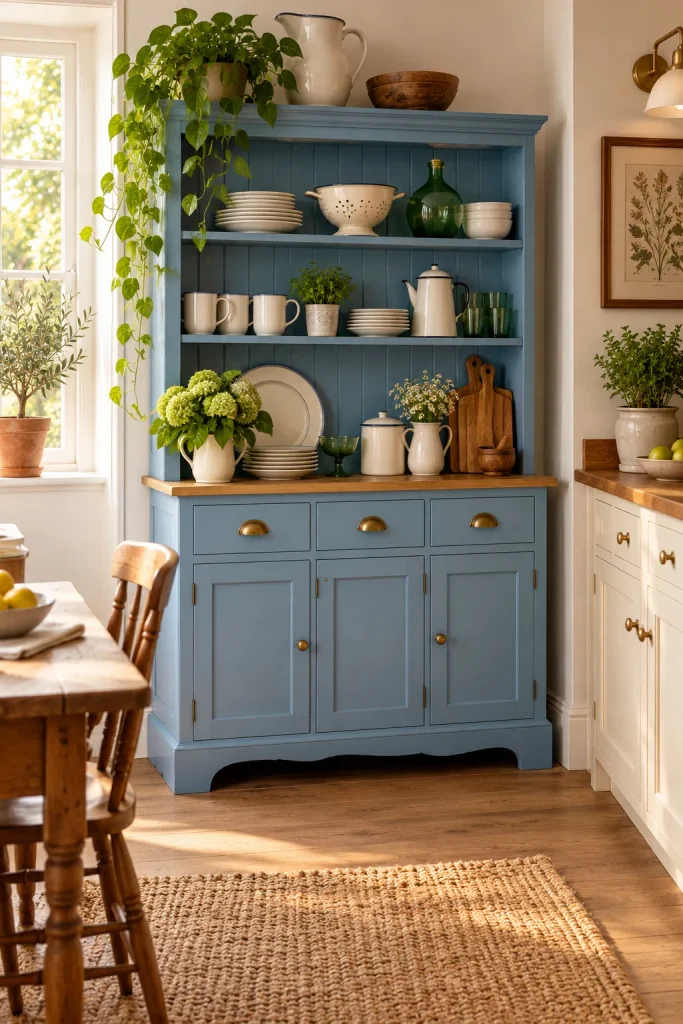
Unfitted kitchens are one of the biggest trends right now, and they suit vintage style beautifully. Instead of a full wall of matching upper cabinets, you bring in one freestanding piece. A painted kitchen dresser, an old larder cupboard or a glass-front hutch all work. It makes the room feel collected over time instead of bought in one go.
Place the dresser on a wall where it can stand alone, ideally with a little space on each side. Fill the open shelves with everyday plates, enamelware and a few colored glass pieces. Keep the rest of the cabinets simple so the dresser feels special. If you buy secondhand, check the depth first, because older pieces can be deeper than modern units.
Install a Drainboard Sink as the Centerpiece
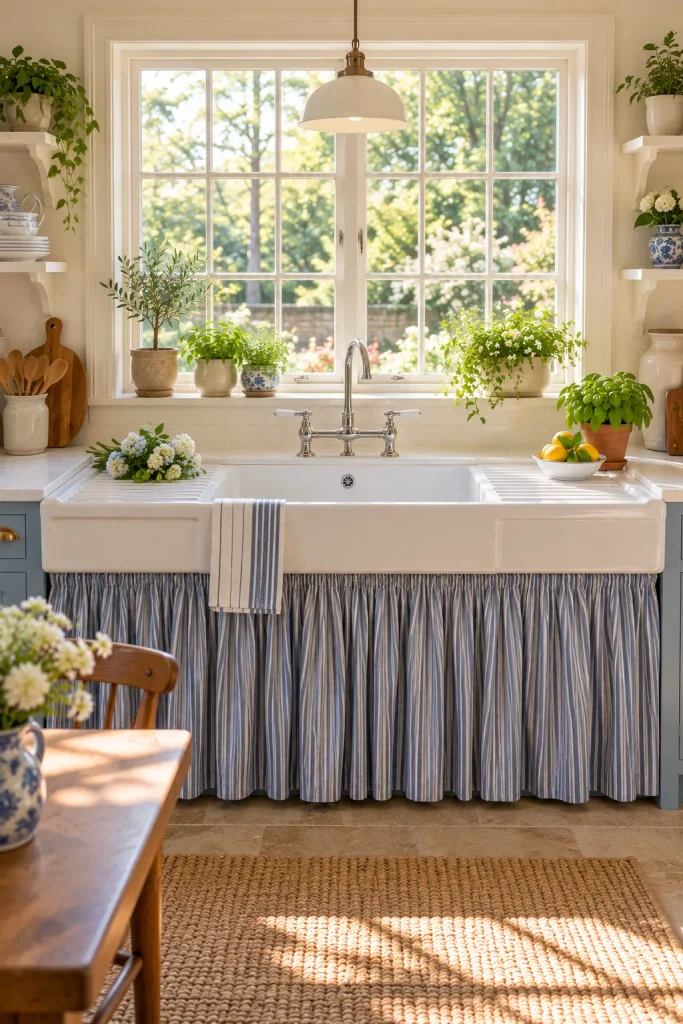
An old-style drainboard sink is one of the most striking vintage pieces you can add to a kitchen. These long white sinks have a built-in grooved drying board on one or both sides. You can find restored cast iron originals or new reproductions. Set it under a window with a simple bridge faucet in chrome or brass. Below it, open shelving or a gathered fabric skirt keeps the look light and authentic.
Use Glass Blocks to Bring In Light
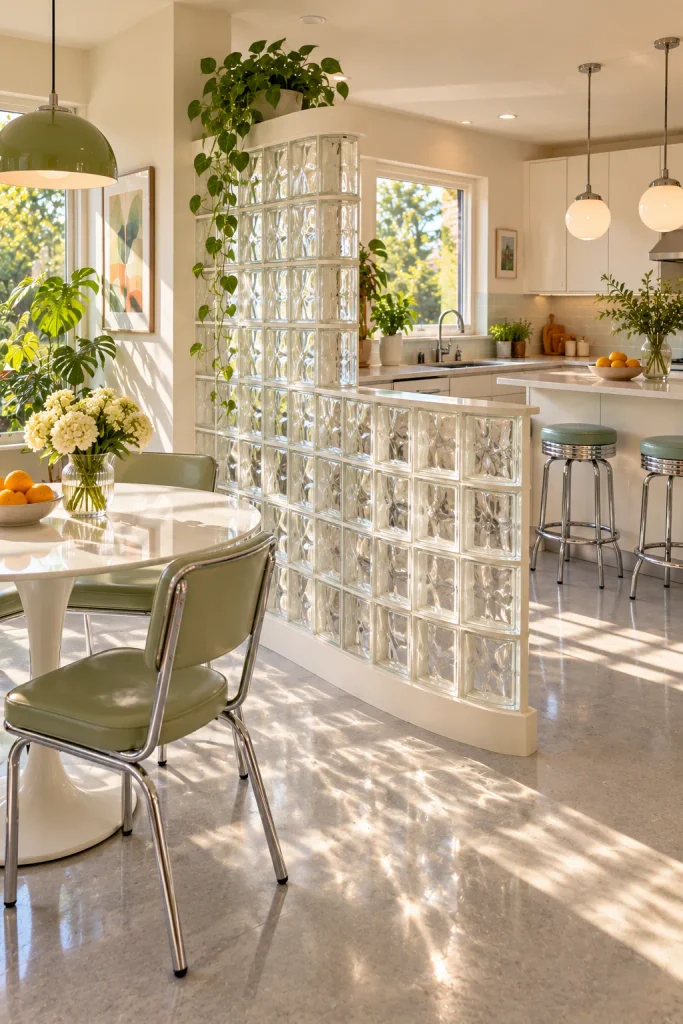
Glass blocks are back, and they bring a fun, retro feel with a modern edge. They let light pass through while still giving you privacy. In a kitchen, they work well as a short partition wall, a window above the sink or a divider beside the dining nook.
Clear wavy blocks look bright and lively, while frosted ones feel softer. Pair them with chrome details and plain white counters for a clean finish. If a full wall feels like too much, a glass block window above the sink gives you the effect with far less work.
Color-Drench the Whole Kitchen in One Bold Shade
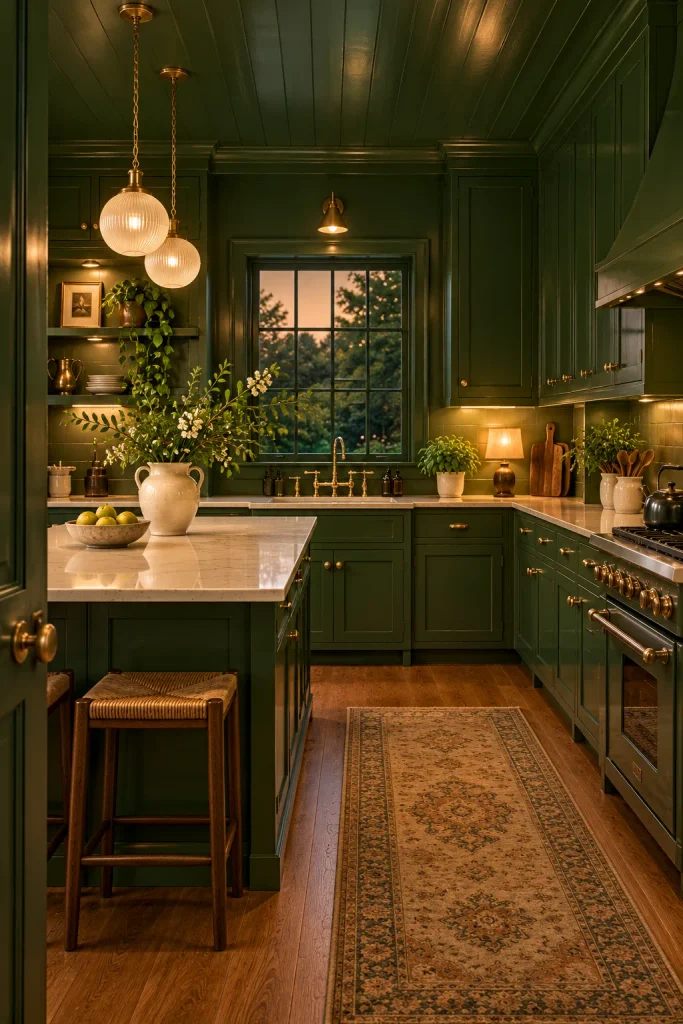
Color drenching means painting the walls, cabinets, trim and even the ceiling in the same shade. It’s a very modern idea, and with the right color it feels instantly vintage. Tomato red, bottle green and deep cherry pink all have that strong mid-century punch. Because everything matches, the room feels bold but surprisingly calm.
How to get the look:
- Pick one color for the cabinets, walls, trim and ceiling.
- Use different sheens, like satin on walls and gloss on cabinets.
- Add chrome or brass hardware to break up the color.
- Keep the counters white or cream so the room doesn’t feel heavy.
Wrap the Walls in a Vintage Print Wallpaper
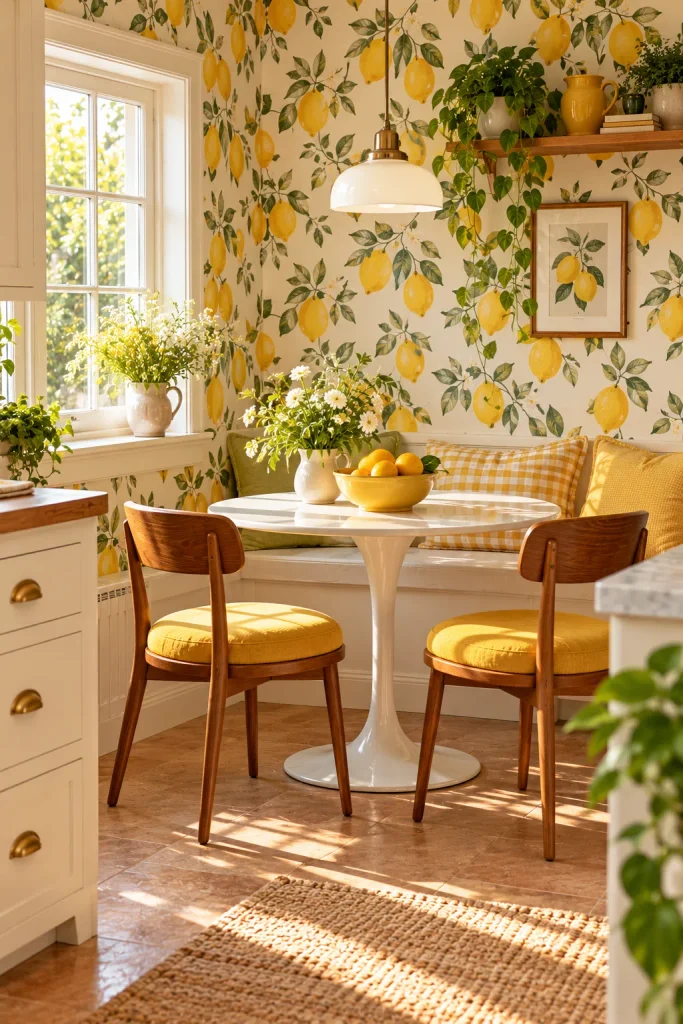
Wallpaper gives a kitchen instant personality, and vintage-inspired prints are easier to find than ever. Cherries, lemons, small florals and tile-look patterns all suit a retro kitchen. Use it on the open walls above the counters, around the dining nook or even across the ceiling.
Choose a scrubbable vinyl or a wallpaper made for kitchens, so cooking splashes wipe right off. A light background keeps a small room from feeling closed in. Then repeat one color from the print in a bowl, a cushion or a lampshade. That simple link ties the walls to the rest of the room.
Mix Modern Appliances Into a Retro Kitchen the Smart Way
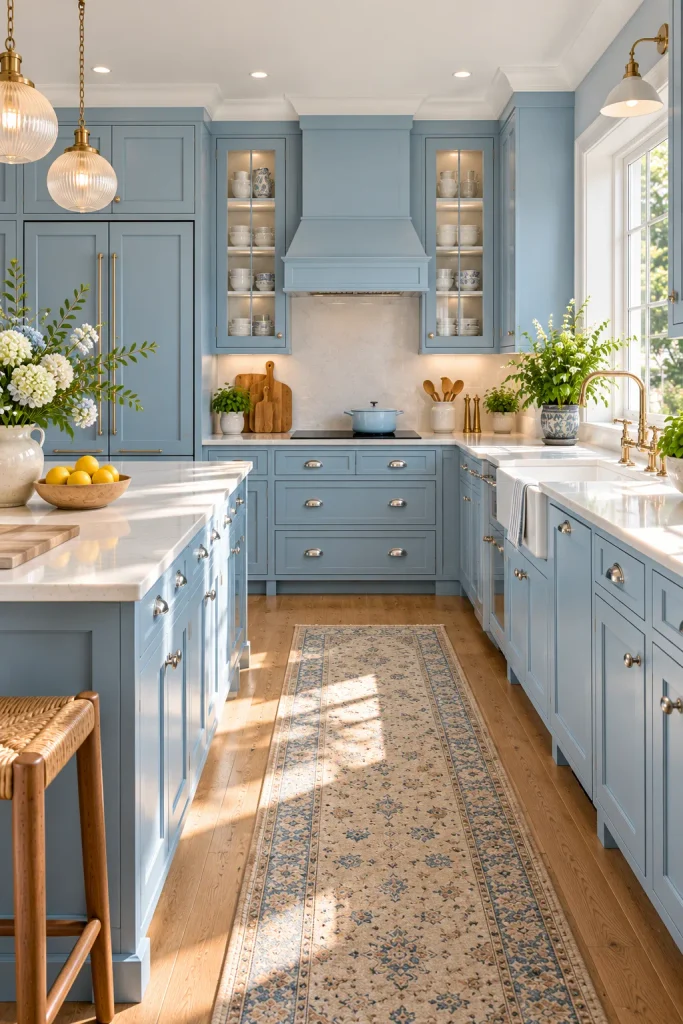
You don’t have to give up a dishwasher, a big fridge or an induction cooktop to get the vintage look. The secret is to let the appliances fade into the background. Panel-ready fridges and dishwashers can wear the same doors as your cabinets. That way, they simply look like cupboards.
Then let a few vintage details do the talking. Chrome bin pulls, a bridge faucet and glossy painted cabinets are enough to set the era. Everything else can stay clean and simple, from the counters to the range hood.
This balance is what makes the style easy to live with every day. You get charm in the parts you see and touch. You get modern comfort in the parts that do the hard work.
The best vintage kitchens don’t come together in one weekend. They grow slowly, one big piece at a time, until the room feels like it has a story. Start with the idea that made you stop scrolling, and let it guide your next choice. Give it time, and your retro kitchen will feel collected, personal and completely yours.