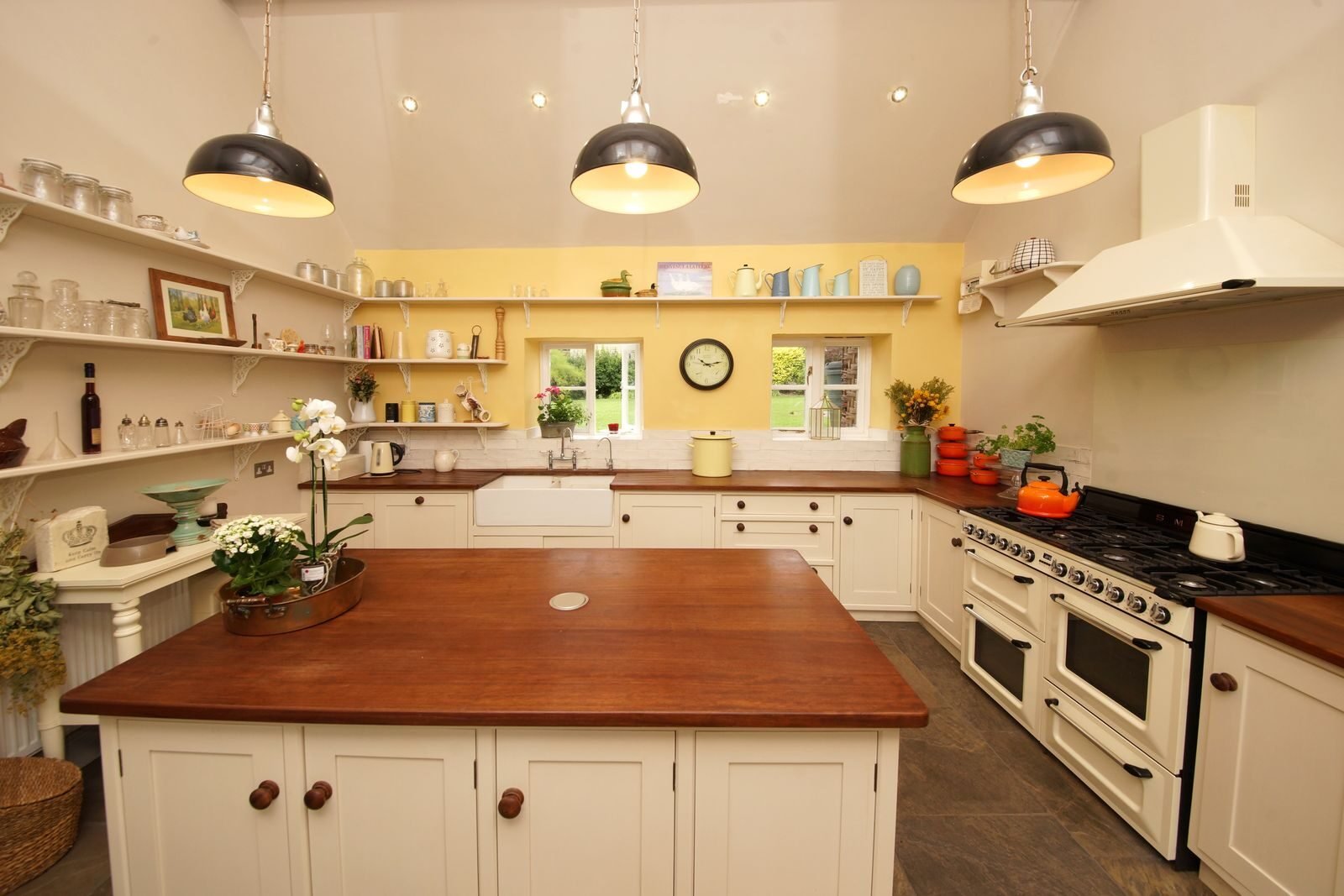
Open Shelving Only Works If You Own the Right Bowls
Open shelving is the most photographed and least survivable decision in modern kitchen design. It looks superb in the picture that made you want it, and then you live with it, and within a month there is a box of cereal on the middle shelf and the whole idea has quietly collapsed.
The failure is almost never the shelving. It is that open shelving removes the door that was hiding a collection of mismatched objects you bought over fifteen years for entirely practical reasons. A cupboard is a place to put things. A shelf is a display. Those are different jobs, and only one of them cares what your bowls look like.
What open shelving actually asks of you
Three things, and they are not negotiable. First, that the everyday items you reach for most are also the items you would be happy looking at. Second, that you own enough of them in a consistent enough register that the shelf reads as a set rather than a shelf of leftovers. Third, that you are the kind of person who puts a mug back in the same place.
If all three are true, open shelving is genuinely better than a wall cupboard: it is faster to use, it makes a small kitchen feel less boxed in, and it stops the upper half of the room becoming a solid band of cabinet door. If any one of them is false, you will hate it by spring.

The three-material rule
The most reliable way to make a shelf look composed is to limit it to three materials and let quantity do the rest. A working example: white or off-white ceramic, clear or smoked glass, and one wood or wicker element. Everything on the shelf is one of those three things. Nothing else goes up there.
This is why the bowls matter more than the shelf. Eight matching stoneware bowls stacked in two piles read as intentional. Eight different bowls read as storage. You do not need expensive crockery, but you do need repetition, and repetition is the one thing most kitchens do not have, because plates get broken and replaced one at a time.
The practical move, if you are committing to this, is to buy a service of everyday crockery in one glaze and demote the survivors of previous sets to a closed cupboard. It costs less than the shelving does.
Where the shelves should go, and where they should not
Open shelving works best on a wall that is used but not worked at: the wall opposite the hob, the return beside a window, the short wall at the end of a run. It works badly directly over a worktop where you prepare food, because that is where the toaster and the jars and the post end up.
Beside the hob is a trap
Grease travels further than people expect. A shelf within about a metre of a gas hob will develop a tacky film that dust sticks to, and it will need washing rather than wiping every few weeks. If the only available wall is that wall, use one shelf rather than three, and put things on it you will use and wash constantly.
Above the sink is usually right
Especially if there is a window. Things above a sink get used every day, which means they get rotated, which means they never sit long enough to gather dust. It is also the one place where a shelf genuinely earns its keep against a cupboard, because a cupboard there blocks the light.
The compromise nobody mentions: one shelf
A single long shelf, mounted high, holding one category of object, gets you most of the visual benefit and almost none of the maintenance problem. It reads as a deliberate design decision rather than as a storage strategy, which means it is not obliged to hold everything.
This is the version to try first if you are unsure. It costs an afternoon and a length of timber, and if it works you can add a second shelf below it later. Removing a shelf is easy. Reinstating a wall cupboard you took out is not.

What to buy first
- Brackets before boards. The bracket is the part that fails and the part you see. Buy good ones and let them be visible, rather than hiding cheap ones under a thick board.
- Solid timber, not veneered board. A veneered shelf will chip at the front edge within a year of plates being slid onto it.
- One set of everyday crockery. The single highest-impact purchase, and the one most people skip.
- A closed cupboard somewhere else. Open shelving only works if the things that should not be seen have a home that is not the worktop.
Common questions
Does open shelving get dusty?
Only where things sit still. Shelves holding items used daily stay clean because they are handled constantly. A shelf of decorative objects needs wiping roughly every two weeks. This is the real argument for putting everyday crockery up there rather than ornaments.
Is open shelving cheaper than wall cabinets?
Substantially, on materials, and then it quietly costs the difference back in crockery if you did not already own a matching set. Budget for both halves.
Will it make a small kitchen feel bigger?
Yes, more reliably than almost any other change. Removing a run of solid cabinet doors from the upper half of a small room does more for the sense of space than paint colour does. Our ideas for small spaces and apartments follow the same principle.
Where to go from here
If you are working through a whole kitchen, the rest of our kitchen ideas cover the decisions that are genuinely permanent before you get to the ones that are not. If the look you are after is the warm, worn version rather than the gallery version, the farmhouse style pages are a better starting point than a Pinterest board. And if the wall you want to shelve is in a galley or a corner, it is worth reading why small rooms take colour better than large ones first, because a dark shelf on a dark wall behaves very differently to a pale one.