Japandi Bathrooms: What the Wood Is Actually Doing
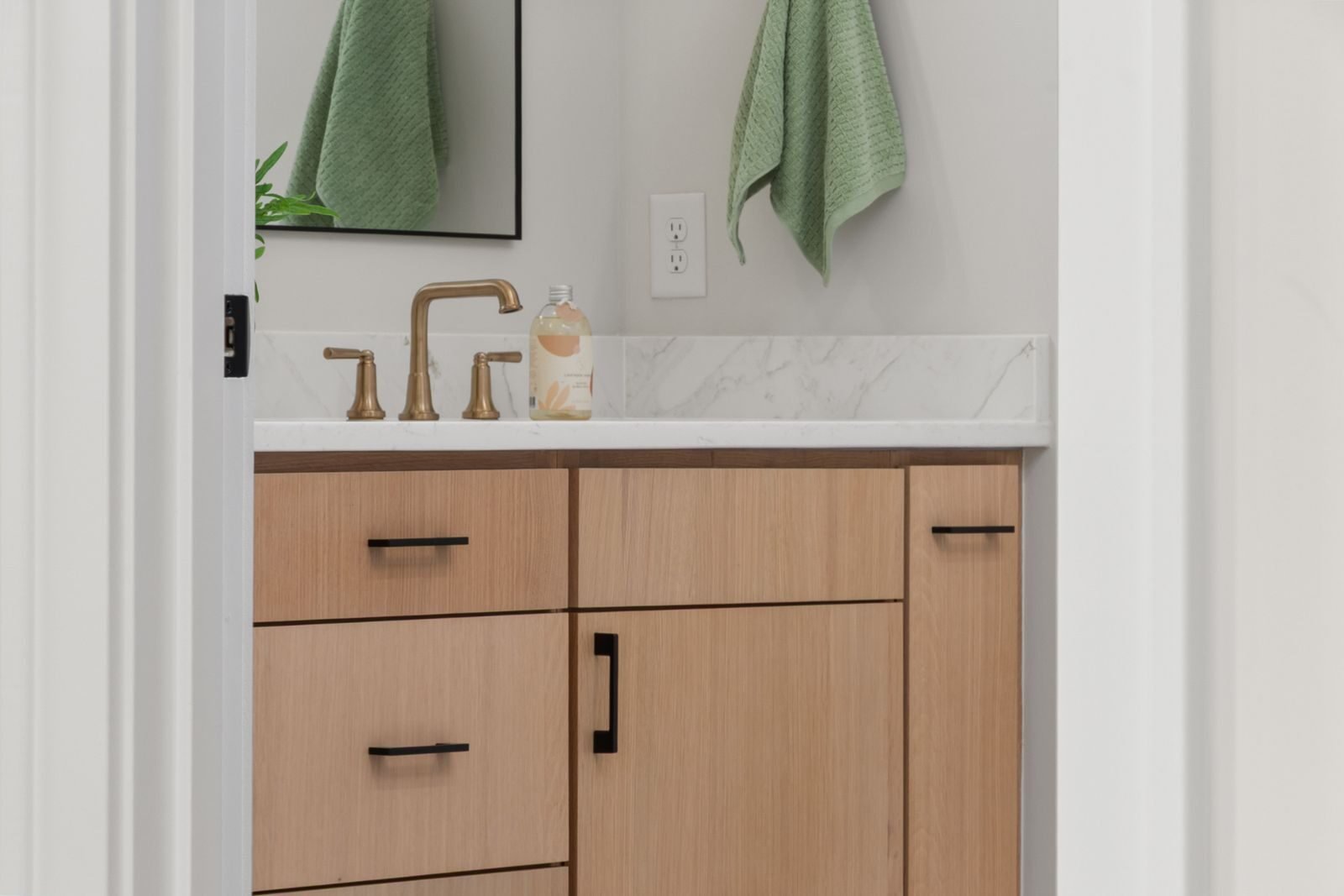
The image that sells a Japandi bathroom is always the same: a pale timber vanity, a stone basin, one branch in a vase, and light coming in sideways. It works because wood is the only warm thing in a room otherwise made of hard, cold, wet surfaces. That is the entire job it is doing, and it is worth understanding before you buy anything, because wood in a bathroom is a maintenance decision dressed as a style decision.
Why the wood matters more here than anywhere else
Every other surface in a bathroom reflects light and holds no texture. Tile, glass, mirror, porcelain, chrome. Put six of those together and you get a room that is technically clean and emotionally like a clinic. Introduce one large timber element and the temperature of the room changes immediately, without adding a single decorative object.
This is why Japandi bathrooms look calm rather than sparse. The restraint works because one material is doing all the warming. Add a second warm material — a rug, a bamboo ladder, a wicker basket, a wooden stool — and the effect starts to dilute rather than compound.
Which timbers actually survive a bathroom
Humidity is not the problem people expect. Constant humidity is survivable. Repeated wetting and drying is what destroys timber, which is why the vanity front is usually fine and the bottom edge nearest the floor is where failure starts.
- Teak. The most reliable, historically used on boats for exactly this reason, and priced accordingly. If the budget allows it anywhere, put it where water lands.
- White oak. The realistic choice for most bathrooms. Dense, closed-grain, takes a hard-wax oil well, and it is the timber in most of the photographs that made you want this.
- Ash and beech. Workable and affordable, but they move more with humidity. Fine on a vanity door, risky as a worktop.
- Engineered board with a real wood veneer. Better than solid timber in one specific way: it moves less. Worse in another: once the veneer is breached at an edge, the board underneath swells and there is no repair.
Sealing, honestly
A hard-wax oil finish looks correct for this style, feels like wood rather than plastic, and can be repaired in place with a cloth. It also needs re-oiling roughly once a year on surfaces that get wet. A two-pack lacquer will outlast it by years and looks slightly less alive.
Choose based on whether you will actually re-oil it. The oiled vanity that nobody maintains looks worse after three years than the lacquered one nobody loves.
Where wood is the wrong answer
Inside the shower enclosure, on the floor immediately in front of the basin, and as a bath surround in a family bathroom. These are not aesthetic judgements, they are drainage ones. The Japandi answer in those places is not more timber, it is a large-format tile in a warm off-white and a very narrow grout line, so the wood elsewhere still reads as the warm thing in the room.
The three details that do most of the work
A vanity that floats clear of the floor, so the wet zone at the bottom never touches it and the floor reads as continuous. Tapware in a single warm metal, brass or brushed bronze rather than chrome, because chrome is the coldest thing you can put next to timber. And a mirror wide enough to reach the full width of the vanity, which doubles the perceived width of the room and puts the light where a face is.
Common questions
Is a wooden vanity practical in a family bathroom?
Yes, if it is floating, sealed properly and has a stone or ceramic top rather than a timber one. The failure point in family bathrooms is always the horizontal surface that stays wet, not the vertical one that gets splashed.
Does Japandi have to be pale?
No, though pale is where it started. A darker walnut against off-white walls holds the same restraint and reads warmer in a north-facing room. The rule that matters is the count of materials, not their value.
Related reading
The rest of our bathroom ideas cover the decisions that come before finishes — layout, storage and lighting at face height. For the thinking behind the restraint, Japandi goes into what it actually asks of a room. And if you like the timber but not the minimalism, farmhouse uses the same materials with entirely different manners.