How to Give Your Coastal Kitchen a Custom, Collected Feel
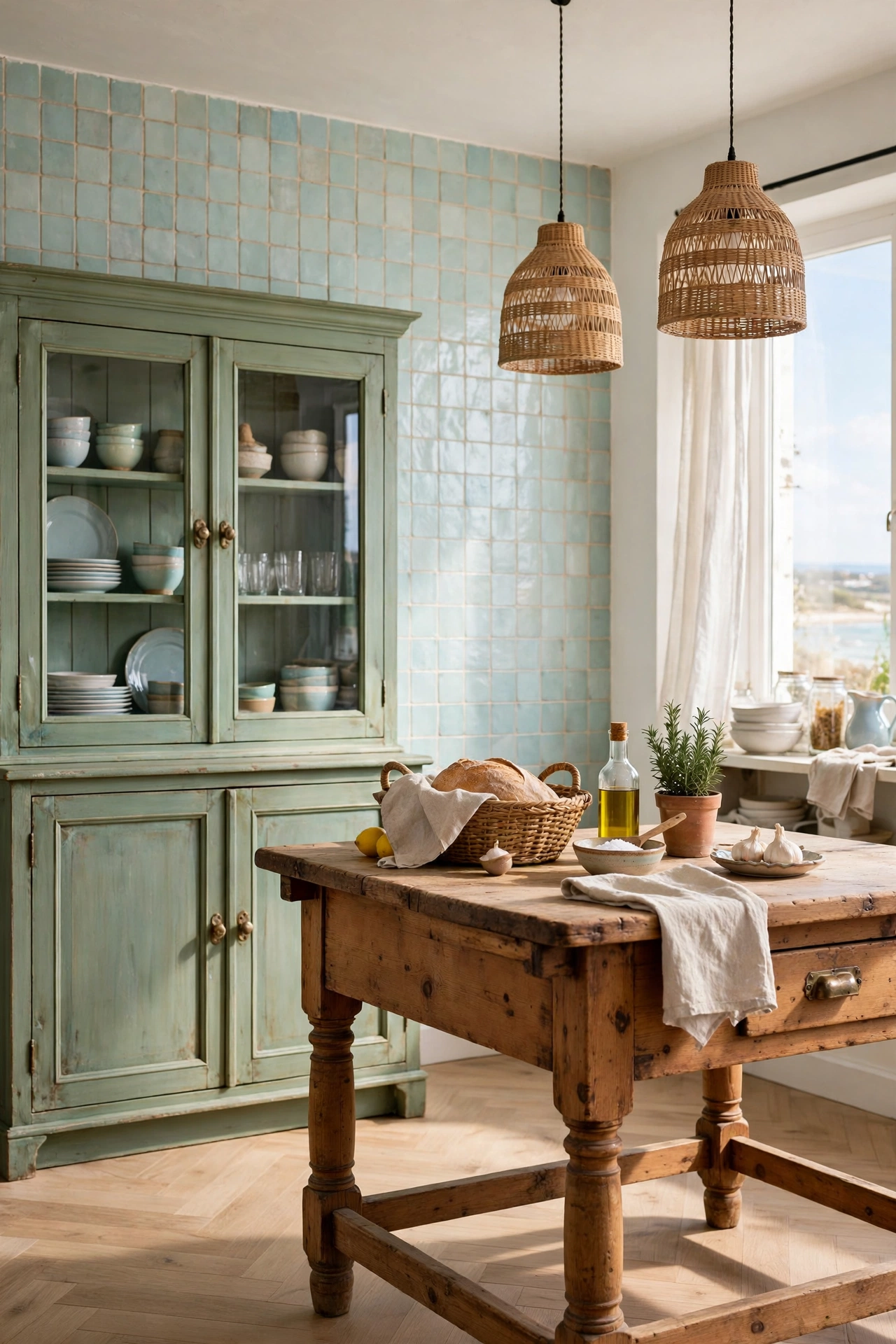

The best coastal kitchen designs don’t look like they came from one showroom. They look gathered over time. Think an old worktable, a wall of handmade tile, and pottery that doesn’t quite match. The good news is you can build that feeling into a brand-new kitchen too. These twelve ideas show you how, with the key pieces and simple steps for each look.
Go Unfitted With a Freestanding Painted Hutch
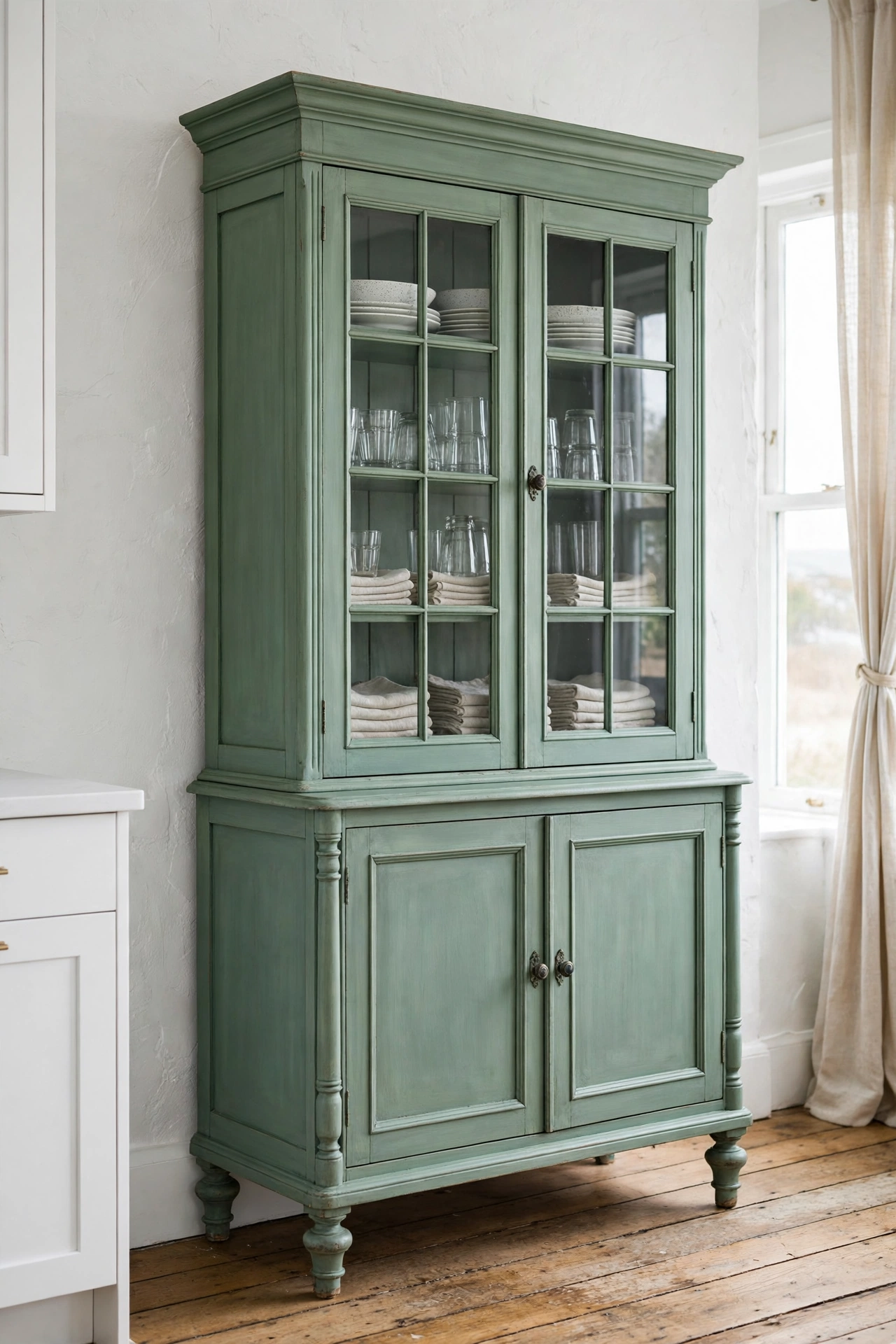
Unfitted kitchens are one of the biggest design shifts right now. Instead of wall-to-wall cabinets, you mix in standalone furniture. A tall glazed hutch in washed sea-green is the easiest place to start. It instantly makes the room feel less factory-made.
Use it to hold everyday plates, glasses and linen napkins. Let it stand a few centimetres off the wall with its feet showing. That small gap tells the eye it’s a found piece. If you can’t find an antique, a new unfinished hutch painted in a flat, chalky green works just as well.
Run Handmade Tile All the Way to the Ceiling
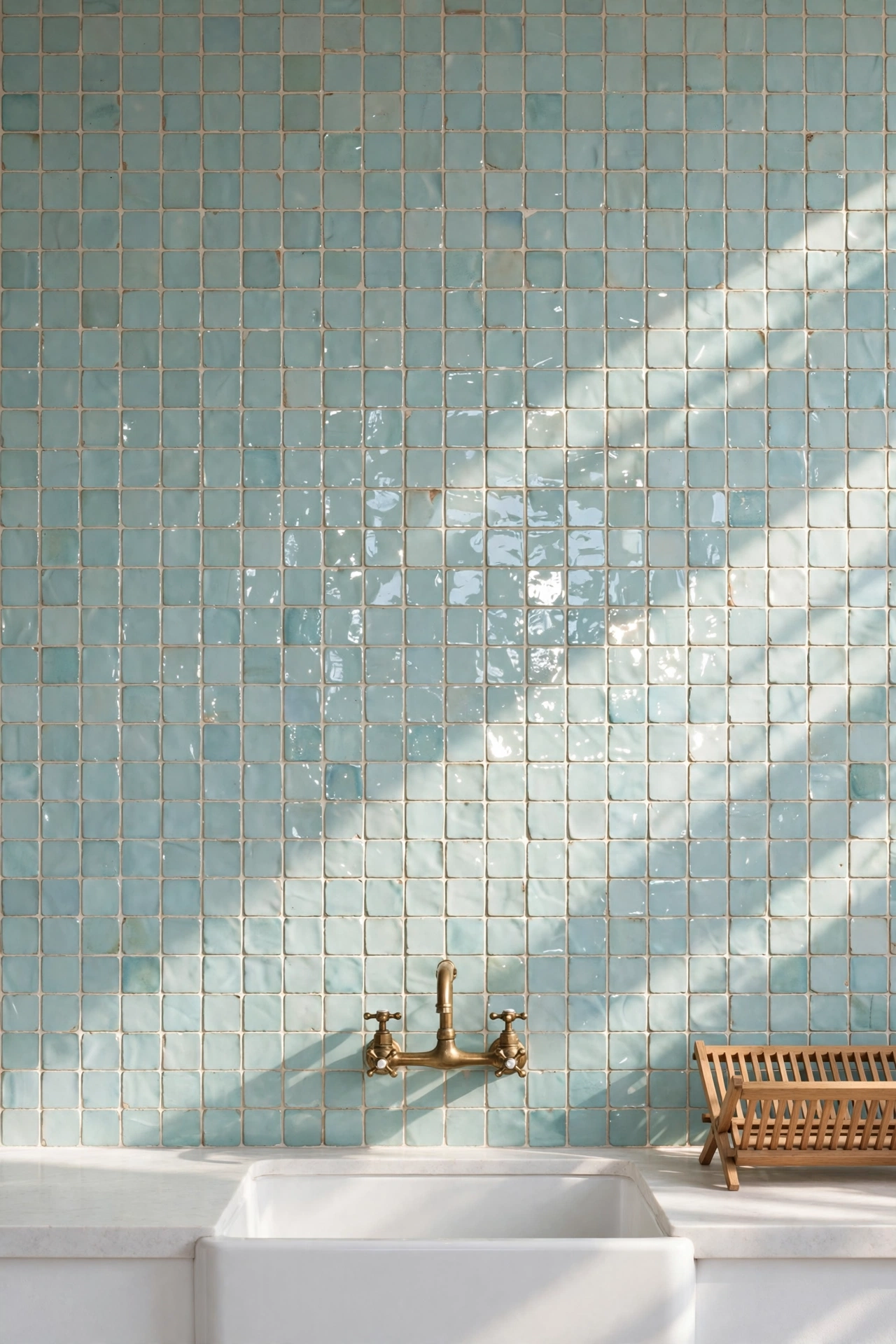
Skip the short backsplash and tile one whole wall instead. Glossy zellige in pale aqua or sea-salt white is perfect here. Each tile reflects light a little differently, so the wall almost looks like water. Keep the grout thin and close to the tile colour. Then leave the wall mostly bare, because the tile is the decor.
Use an Antique Worktable as Your Island
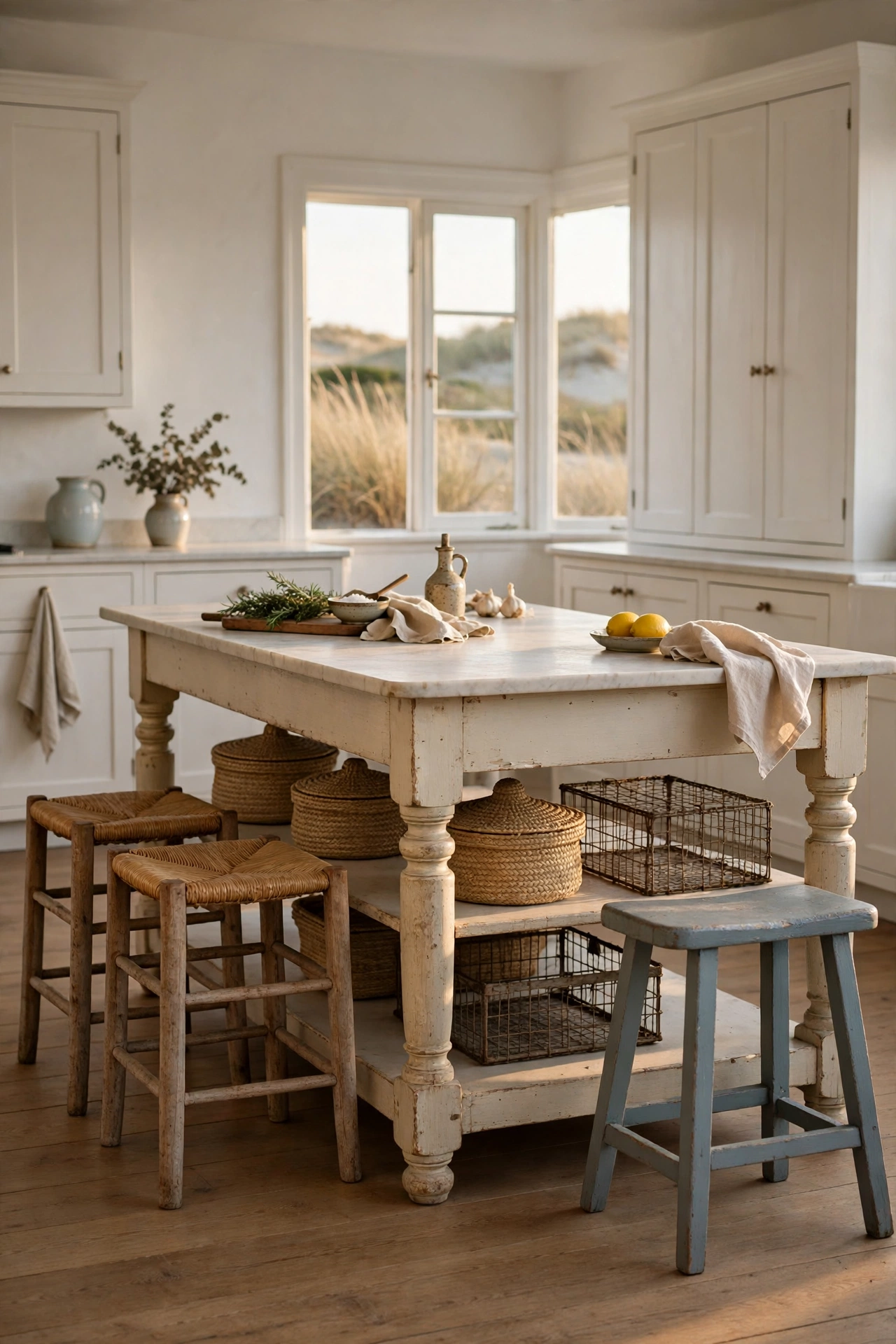
A fitted island with doors on every side is practical. It’s also the most showroom-looking thing in most kitchens. A long antique worktable feels far more personal. Look for one with chunky turned legs and a little wear on the base.
Add a honed marble top if you want a better surface for baking. Store lidded baskets or vintage wire crates on a low shelf underneath. Then pair it with mismatched stools, maybe two rush-seat ones and one painted. The slight mismatch is exactly what makes it feel collected.
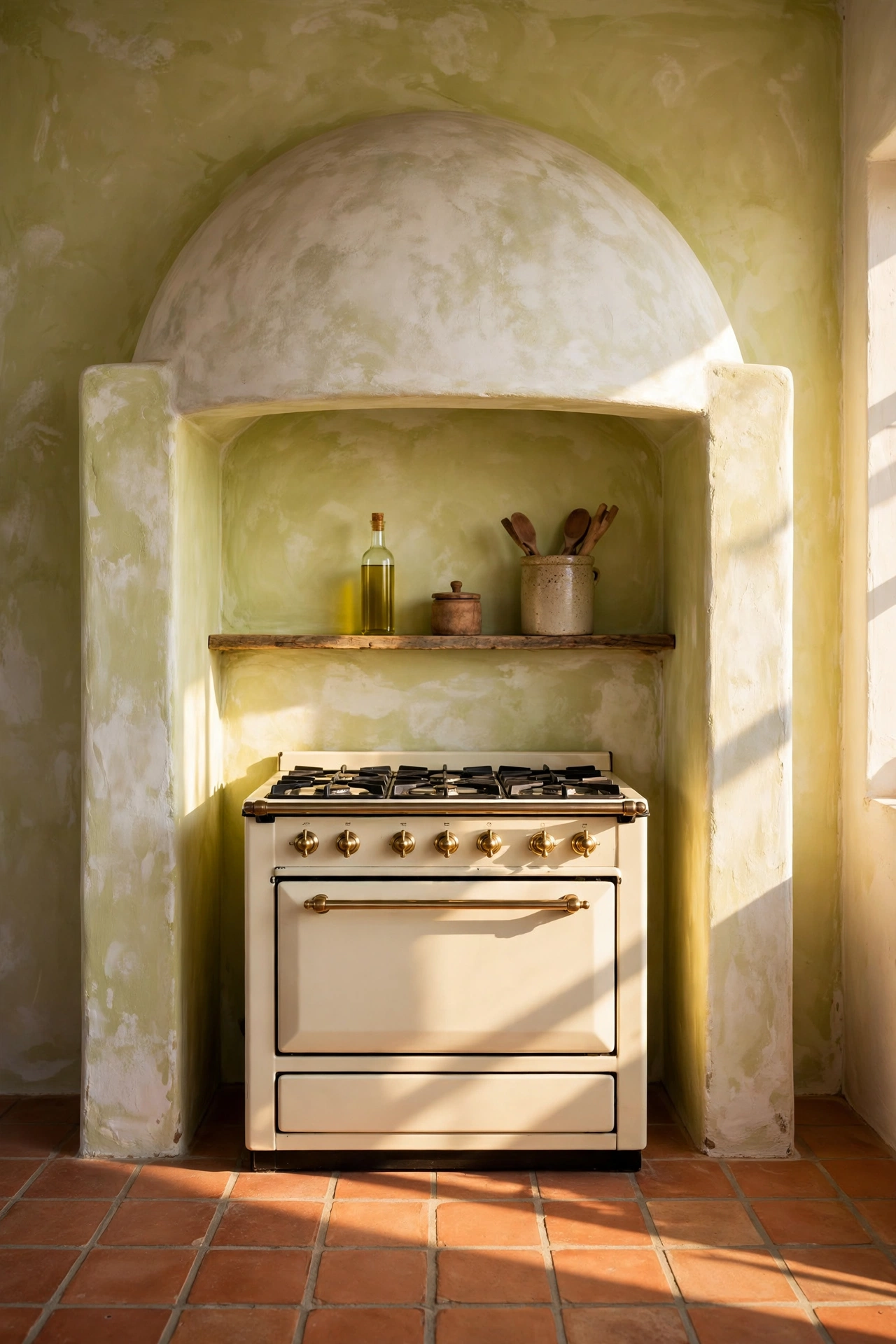
Build a Limewashed Plaster Range Alcove
This idea turns your cooker into the heart of the room. Frame the range in a plaster alcove with a curved hood above. Finish it all in limewash for a cloudy, hand-made texture. It’s a modern take on a Mediterranean fishing cottage.
Run a thin stone or timber ledge along the back wall. Keep olive oil, salt and a crock of wooden spoons there. Your cooking basics stay close, and the counter stays clear.
For colour, stick to bone, chalk white or pale sand. These shades glow beautifully in morning light. If a full build isn’t possible, a plasterer can wrap your existing hood for a similar finish.
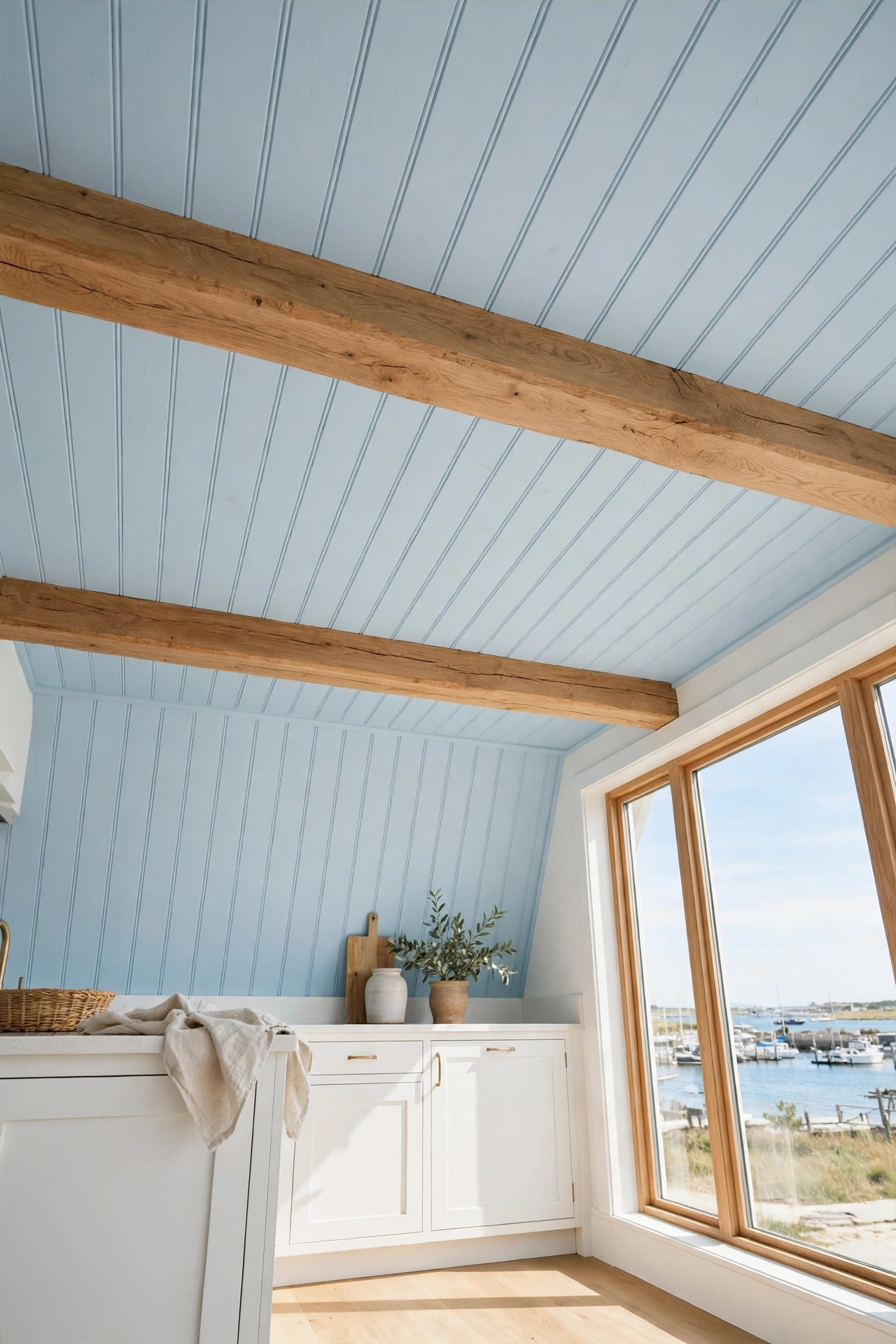
Clad the Ceiling in Painted Timber Boards
Most people forget the ceiling, but it can do a lot of work here. Tongue-and-groove boards overhead give a kitchen an instant boathouse feel. Paint them shell white or a very pale sky blue. If your ceiling height allows, add one or two exposed timber beams.
This works especially well in new builds that feel a little flat. It adds texture and character above, so the rest of the room can stay simple. Keep the walls plain and let the ceiling be the star.
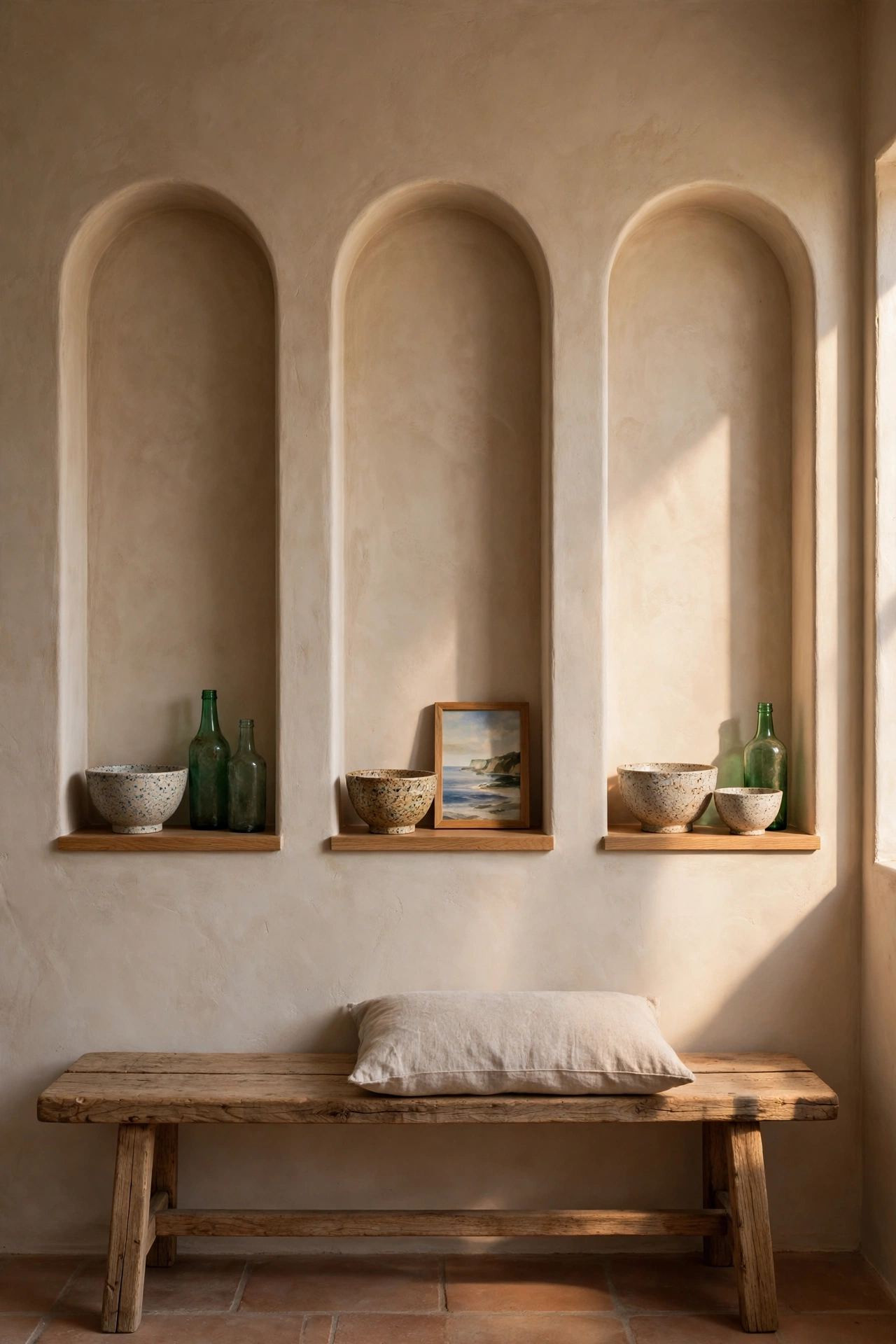
Carve Arched Niches Into the Wall
Arched niches are a modern Mediterranean favourite, and they suit a collected kitchen perfectly. Build two or three into a plastered wall, beside a window or next to the dining area. Line the base of each with timber or stone. Then fill them with handmade bowls, old glass bottles and a small painting. They give your collection a proper home without open shelves everywhere.
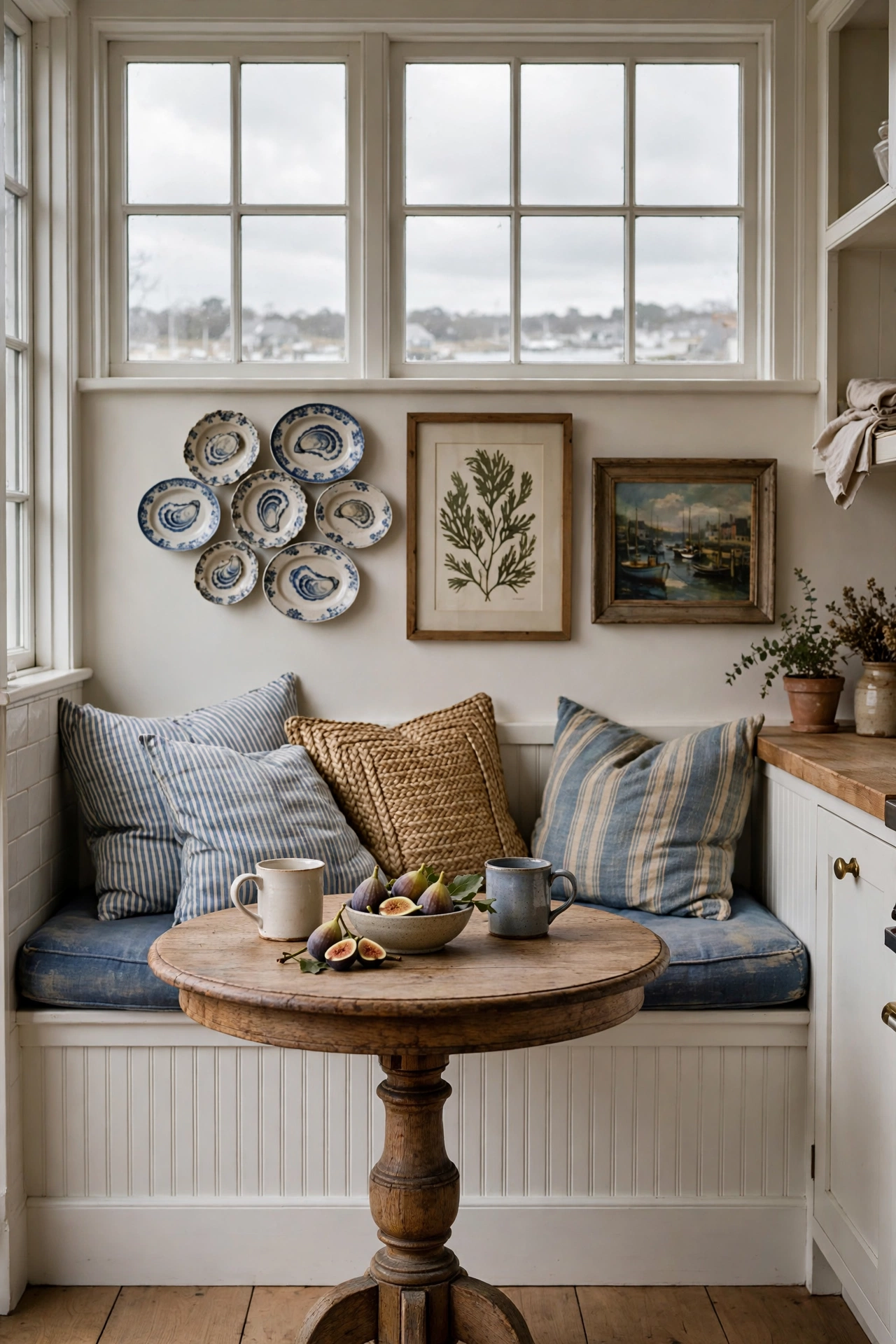
Create a Window Banquette With a Mini Gallery
A built-in bench in a window corner quickly becomes everyone’s favourite seat. Panel the base in beadboard and add a thick cushion in faded indigo. Pile on cushions in different stripes and weaves. A round oak pedestal table makes it easy to slide in and out.
Now use the wall above as a small gallery. Mix old oyster plates, a framed seaweed print and a little harbour painting. Collected art is what makes this corner feel truly yours.
Paint the Floor in a Large Sandy Checkerboard
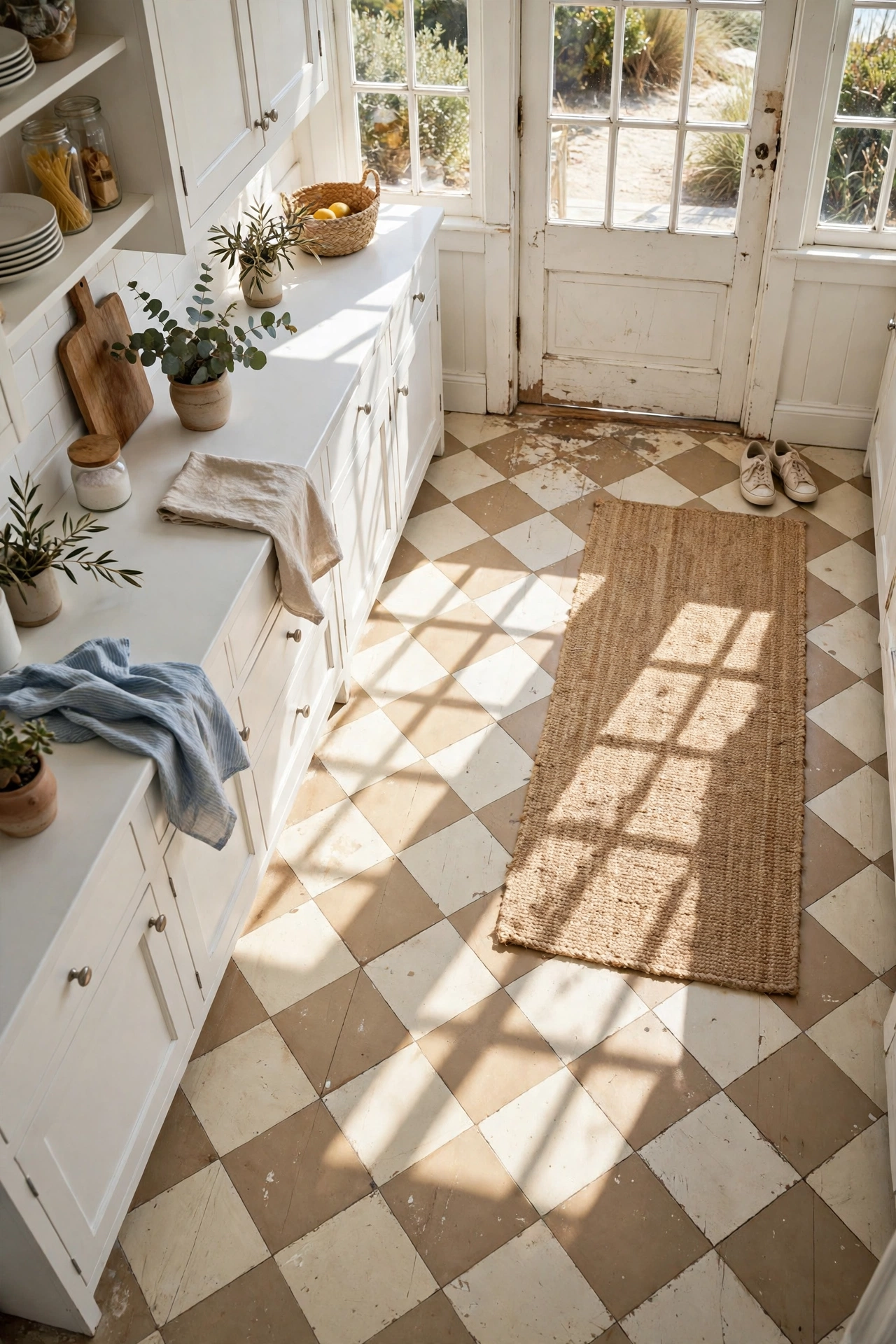
Checkerboard floors are having a big moment, and they look especially good near the sea. Paint large squares in sand and cream on old floorboards. Big squares of around forty to sixty centimetres feel calmer than small ones.
Use proper floor paint and finish with a matte topcoat. Expect a little wear near the sink and back door, because that’s part of the charm. It also hides sand better than you’d think. On concrete floors, terracotta and cream tiles in the same pattern give a similar look.
Hide a Scullery Behind Reeded Glass
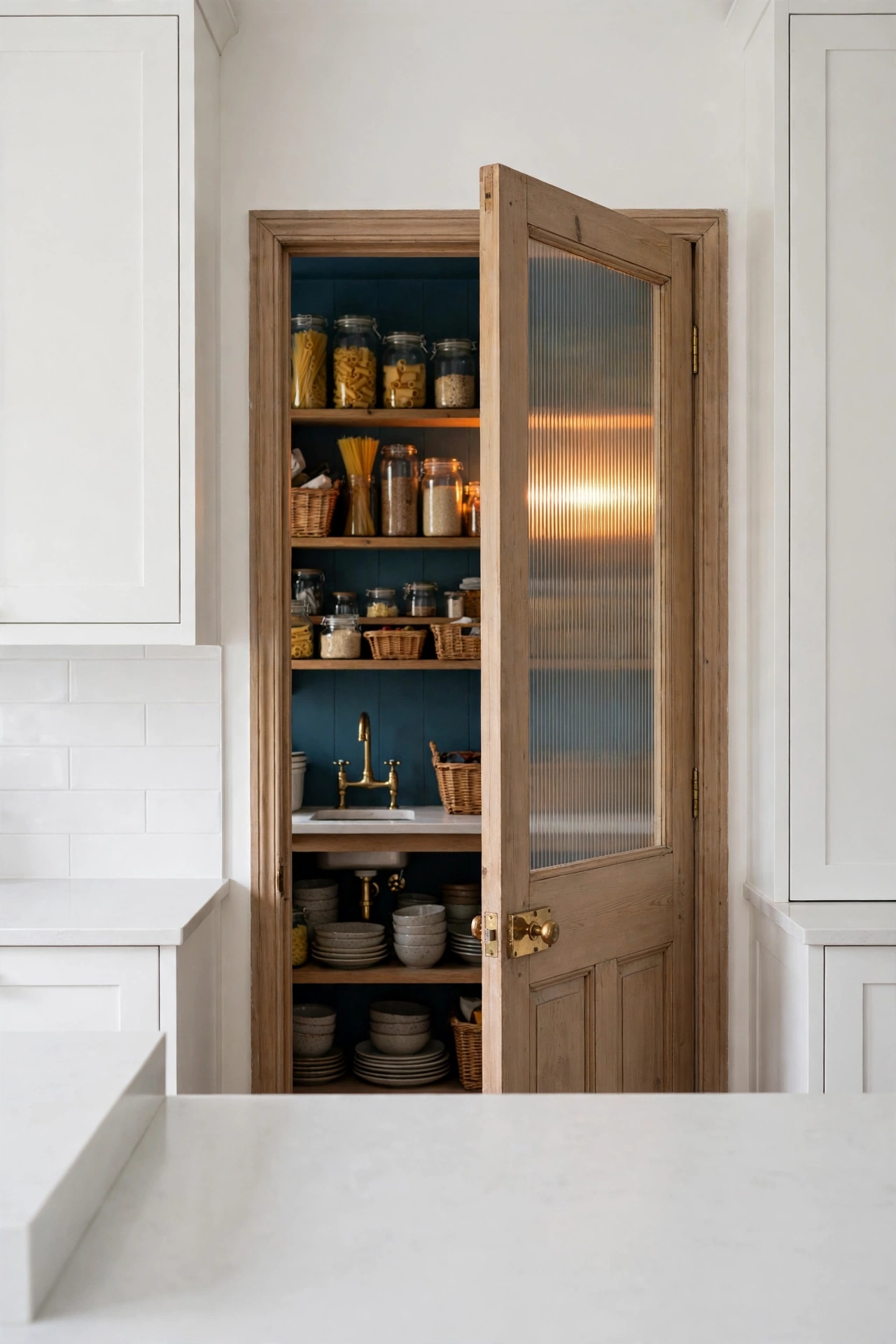
Collected style looks best when the mess is out of sight. A small scullery or walk-in pantry gives you that hidden working space. Close it off with a reeded glass door. The ribbed glass blurs the clutter but still lets light through.
Inside, keep it practical. Add open timber shelves, glass jars, rattan baskets and a small second sink if you can. Paint the walls deep sea blue or seaweed green for a lovely surprise when the door opens.
Mix Cabinet Finishes as if They Were Added Over Time
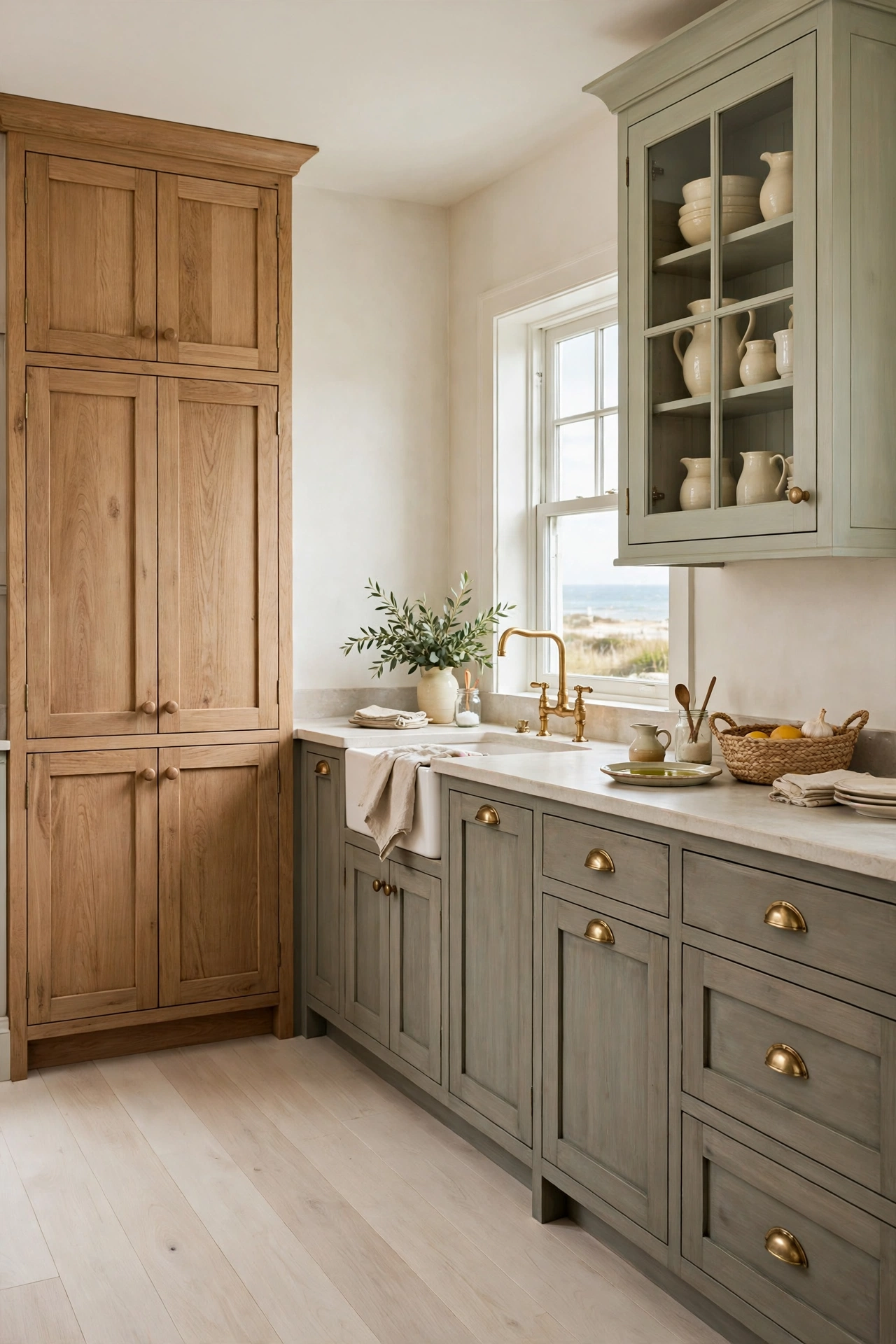
One colour on every cabinet looks fitted. Two or three finishes look collected. Try driftwood grey-green on the main run, natural oak on a tall pantry, and one glass-front cabinet in a paler shade. Vary the hardware too, with brass cup pulls on painted doors and wooden knobs on the oak. Just keep every finish in the same muted family so it looks planned.
Open One Wall to the Outdoors
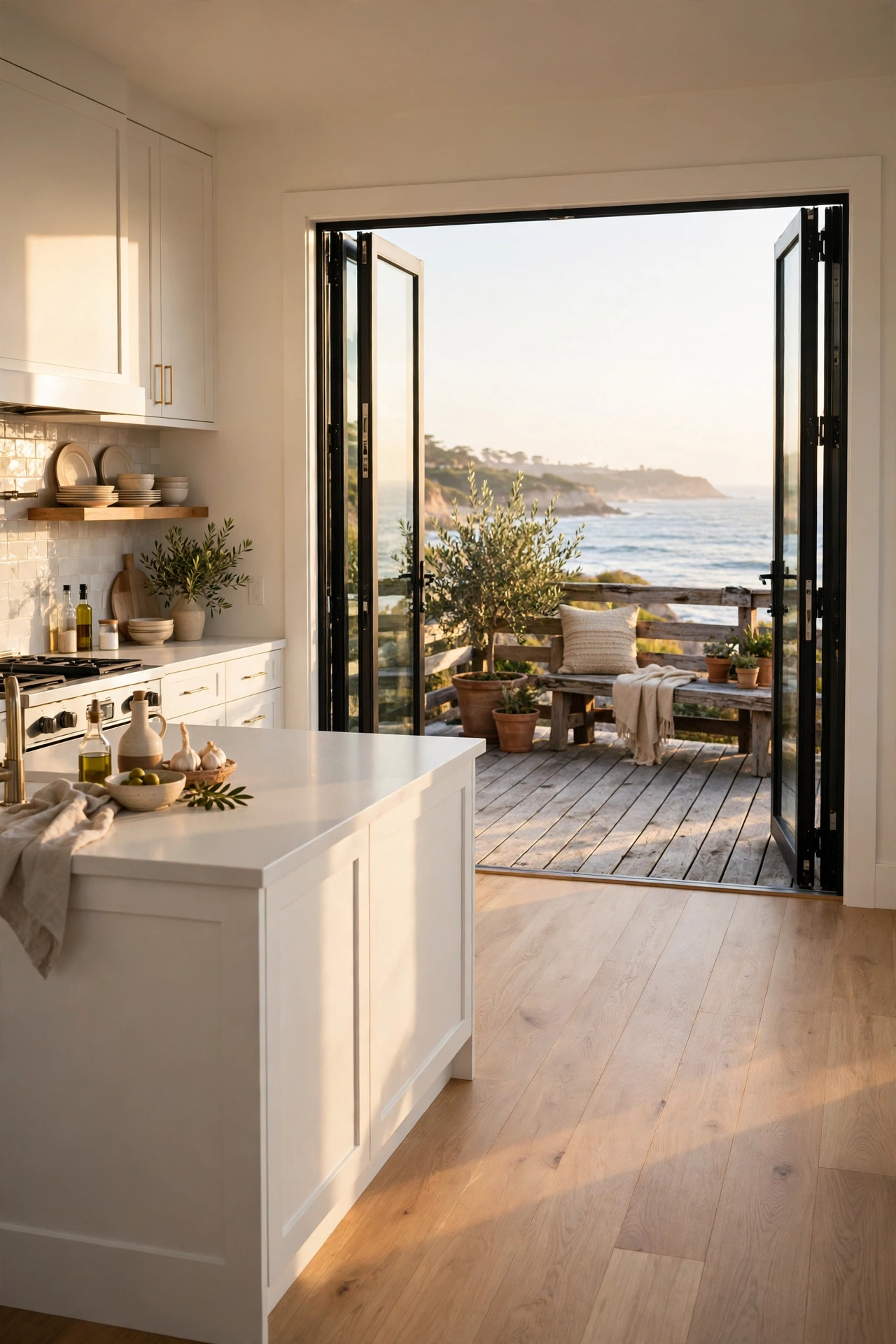
Nothing feels more coastal than a kitchen that spills outside. Swap a solid wall or small window for black steel-framed glass doors. On warm days, open them to a deck or courtyard. Suddenly the kitchen and outdoor table feel like one space.
Place a long bench or a potted olive tree just outside to link both areas. Use a similar flooring tone inside and out if you can. The room will feel bigger, and the light and sea air do the rest.
Light the Room Like an Old Boathouse
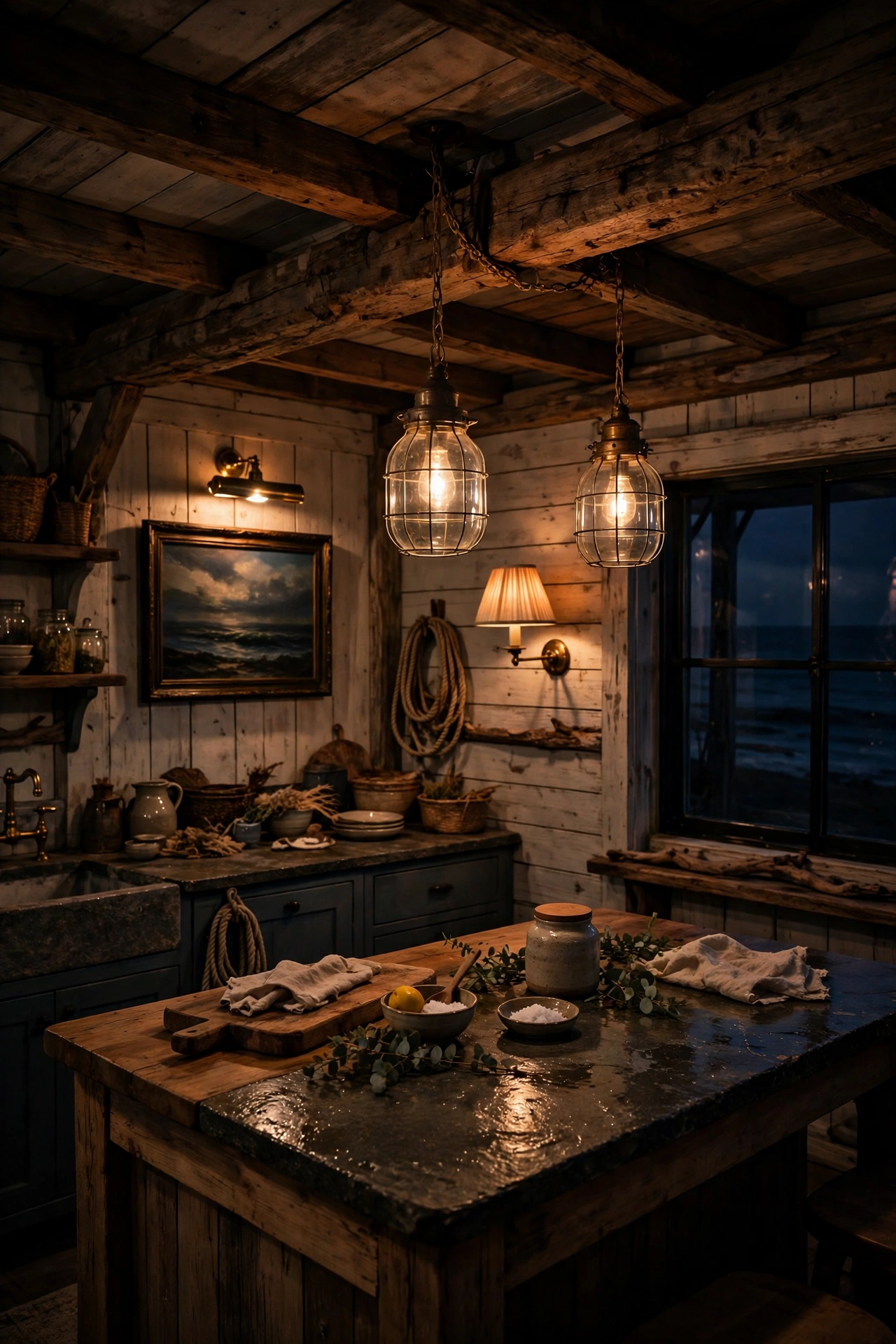
Matching pendant sets are the quickest way to a catalogue look. Mix your lighting instead, as if each piece came from a different place. Hang caged glass pendants over the island. Add a swing-arm sconce with a pleated shade by the window. Finish with a brass picture light over a painting.
Aim for at least three light sources at different heights. This layered glow is what makes coastal kitchen designs feel cosy after dark. Put the sconces on dimmers so you can set the mood for evening meals.
Frequently Asked Questions About Coastal Kitchen Designs
How do you make a coastal kitchen look collected, not themed?
Skip anchors, rope and “beach” signs. Focus on natural materials, faded colours and a mix of old and new pieces instead. The best coastal kitchen designs hint at the sea through texture and light.
What colours work best for a collected coastal kitchen?
Weathered shades work better than bright nautical blue. Try sea-glass green, driftwood grey, sand, bone white and faded indigo. Keeping colours muted helps different finishes sit together nicely.
Can I get this look in a rental or on a budget?
Yes, more easily than you’d think. A freestanding hutch, mixed vintage lighting, a banquette with loose cushions and collected art can all move with you. Start with these pieces and save the bigger building work for later.
A kitchen like this is never really finished, and that’s the fun of it. Start with one big move, like the worktable island or the tiled wall. Then let smaller pieces arrive slowly, from holiday finds to market treasures. In a year or two, your coastal kitchen will feel like it truly belongs to you.