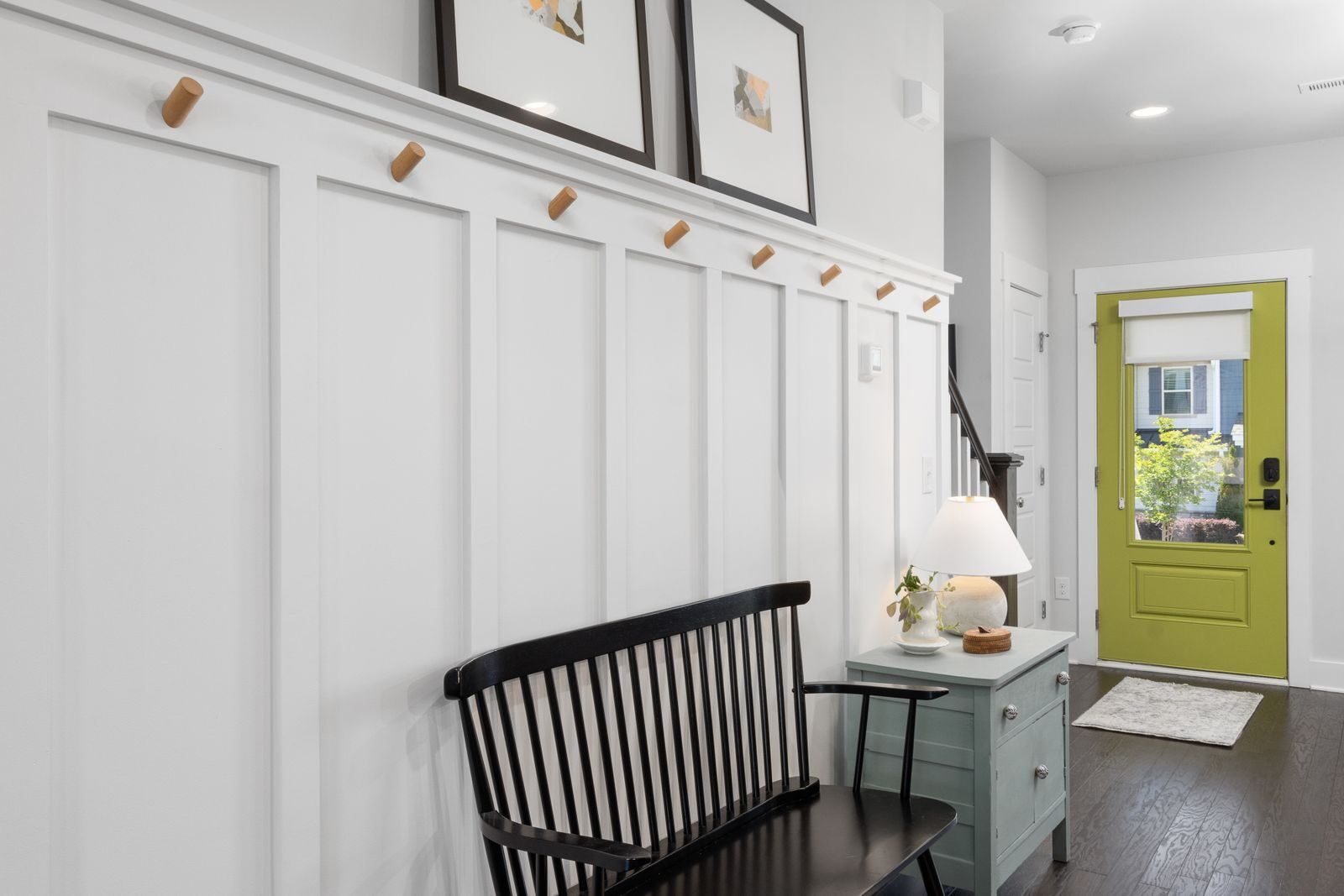
An Entryway Bench Is Only as Good as What Goes Under It
The entryway is the first thing anyone experiences of your house and the last thing anyone designs. It absorbs shoes, coats, bags, post, keys, parcels and sports kit, and it is then blamed for looking cluttered, as though the clutter were a character flaw rather than a storage failure.
A bench is the standard answer and it is a good one, but only in combination with what goes underneath it. A bench on its own is a shelf at shin height that shoes accumulate around rather than in.
Start by counting
Before buying anything, count the pairs of shoes that are actually in the hallway on an ordinary Wednesday. Not the shoes you own — the ones in circulation. For most households it is between six and twelve pairs, and almost every entryway storage solution sold is sized for four.
Do the same for coats. The number of coats in daily use in winter is usually three or four per person, not one. Storage designed for the number you wish were there will overflow within a week and you will conclude that you are untidy, which is not the problem.
What goes under the bench
- Open baskets, one per person. The most reliable system, because it requires no aim. A shoe goes in the general direction of a basket and the job is done. Closed boxes fail because opening them is a step too many.
- A low open shelf, not a shoe rack. Angled shoe racks hold half what they claim and fall over. A plain shelf 20 cm off the floor takes two rows of shoes and takes them in any orientation.
- Nothing at all, if the bench lifts. A lift-top bench is excellent for the seasonal layer — gloves, hats, the scarf nobody wears in June — and poor for daily shoes, for the same reason as closed boxes.
Hook height is the detail everyone gets wrong
Hooks mounted at adult eye level look correct on the wall and get used by exactly one member of the household. Two rails of hooks — one at about 165 cm and one at about 110 cm — will halve the number of coats on the floor, because the people who were leaving them there could not reach.
Space hooks further apart than looks right, too. Coats are thick. Hooks at 15 cm centres hold one coat every other hook in practice, which means half your wall is decorative.
The surface that stays clear
Every entryway needs one horizontal surface, and it will fill with post and keys unless something else claims those two things. A small bowl or tray for keys, and a defined place for post that is not the surface — a wall pocket, a drawer, anything with a mouth. Give the two worst offenders a home and the surface stays clear on its own.
If there is genuinely no room for a console, a narrow shelf at 90 cm above the bench does the job and keeps the floor clear for the bench.
Lighting and the mirror
Most hallways have one ceiling light directly overhead, which is the least flattering position for the one place in the house where people check their appearance before leaving. A mirror with light beside it rather than above it — a wall light, or a table lamp on the console — fixes both the light and the ten-second reason people stop here.
Common questions
What if the entryway is a corridor with no space for a bench?
Go vertical and shallow. A 25 cm deep unit with hooks above and a bottom shelf for shoes takes almost nothing from a corridor and still gives you the three functions that matter. Sitting down to put shoes on is a luxury, not a requirement.
Open or closed shoe storage?
Open for daily shoes, closed for the rest. The moment daily shoes need a door opened, they stop going in. This is the single most common reason expensive hallway joinery goes unused.
Related reading
More on the transition spaces in our entryway and hallway ideas. If the front of your house is next on the list, choosing a front door colour that works with the brick you already have is the other half of the same first impression. And for benches, hooks and baskets in the worn, practical register, farmhouse has the most useful examples.